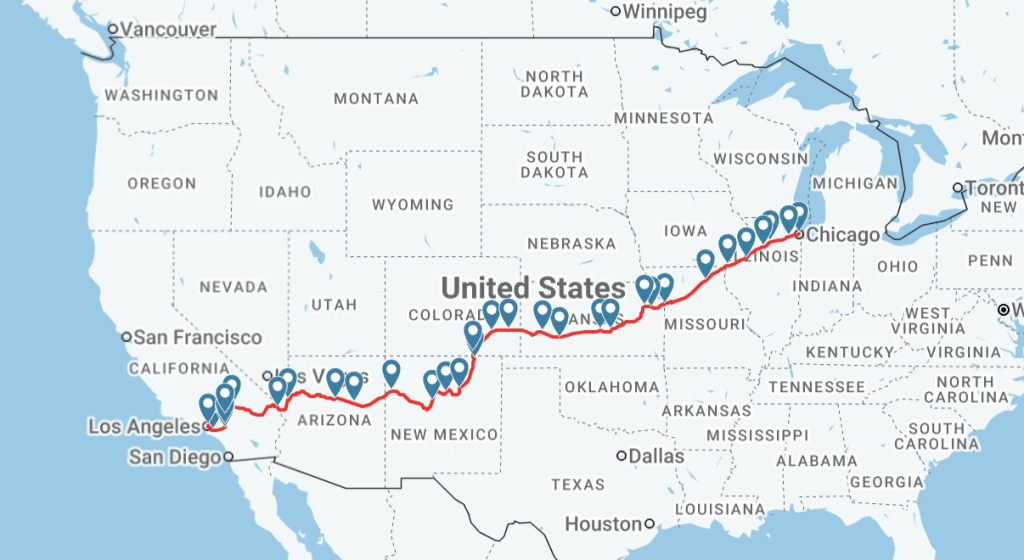
I had an opportunity to travel the full length of Amtrak’s Southwest Chief from Los Angeles to Chicago. The trip is a scheduled 43 hours (took me about 47 hours) over a reported 2,265-miles (3,645 km) across the US Southwest and Midwest.
The route passes through parts of California, Arizona, New Mexico, Colorado, Kansas, Missouri, Iowa and Illinois over two days and two nights.
California
I boarded the train at Los Angeles’ historic Union Station, dating from the 1930s. Unfortunately, I was running late for my train (thanks LA traffic!!) so had to rush straight to my train for its Saturday 5:19pm departure rather than being able to check out the station lounge. I had previously taken trains south on the Pacific Surfliner to San Diego (in 2017) and north on the Coast Starlight (in 2016) from this station.
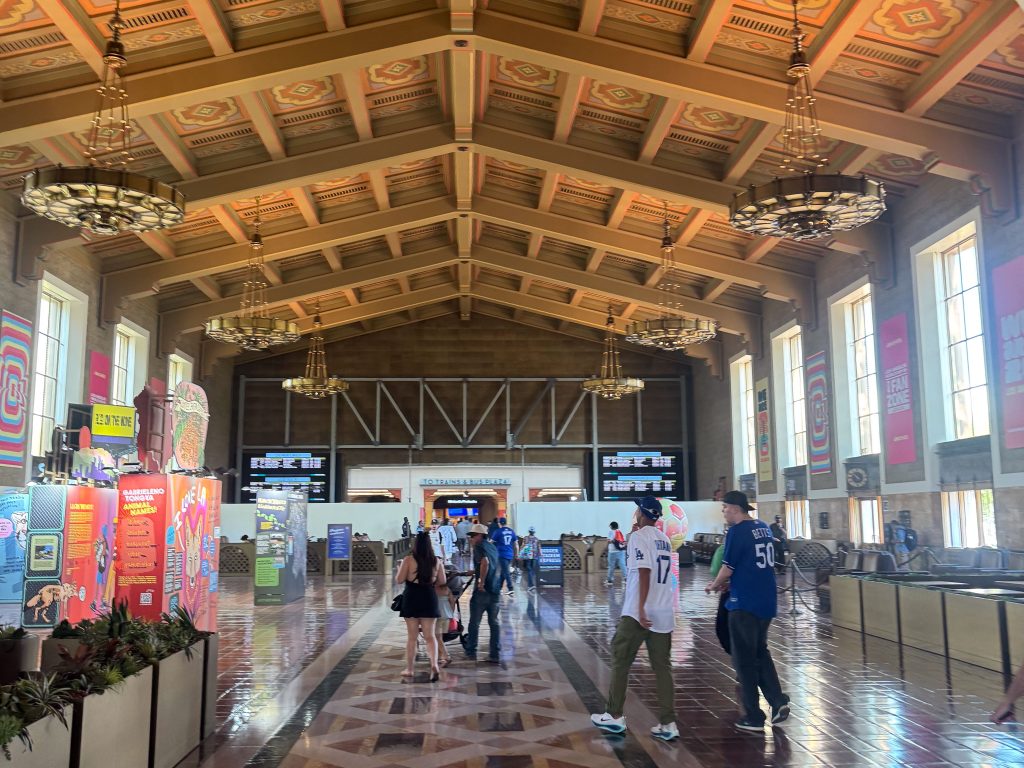
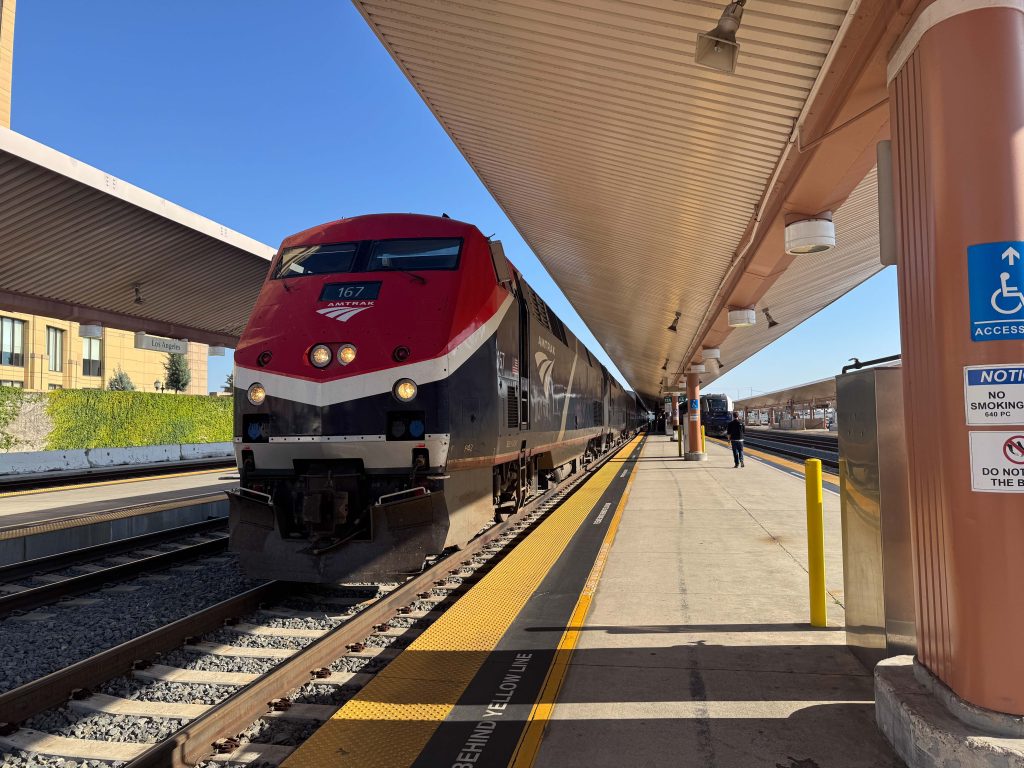
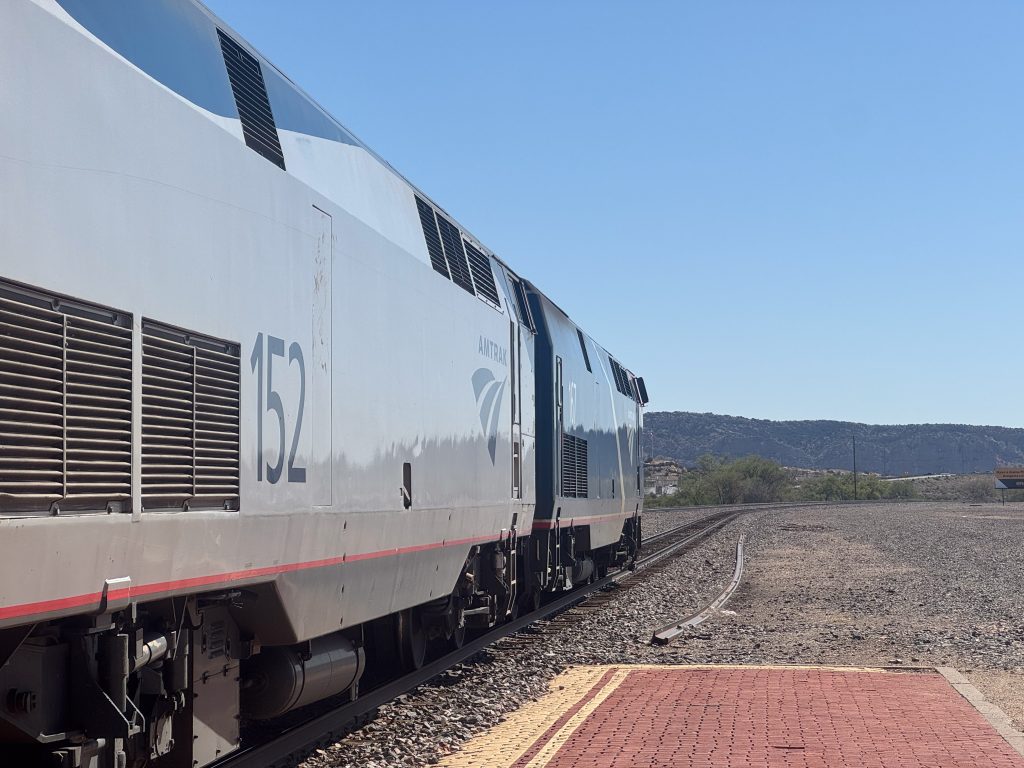
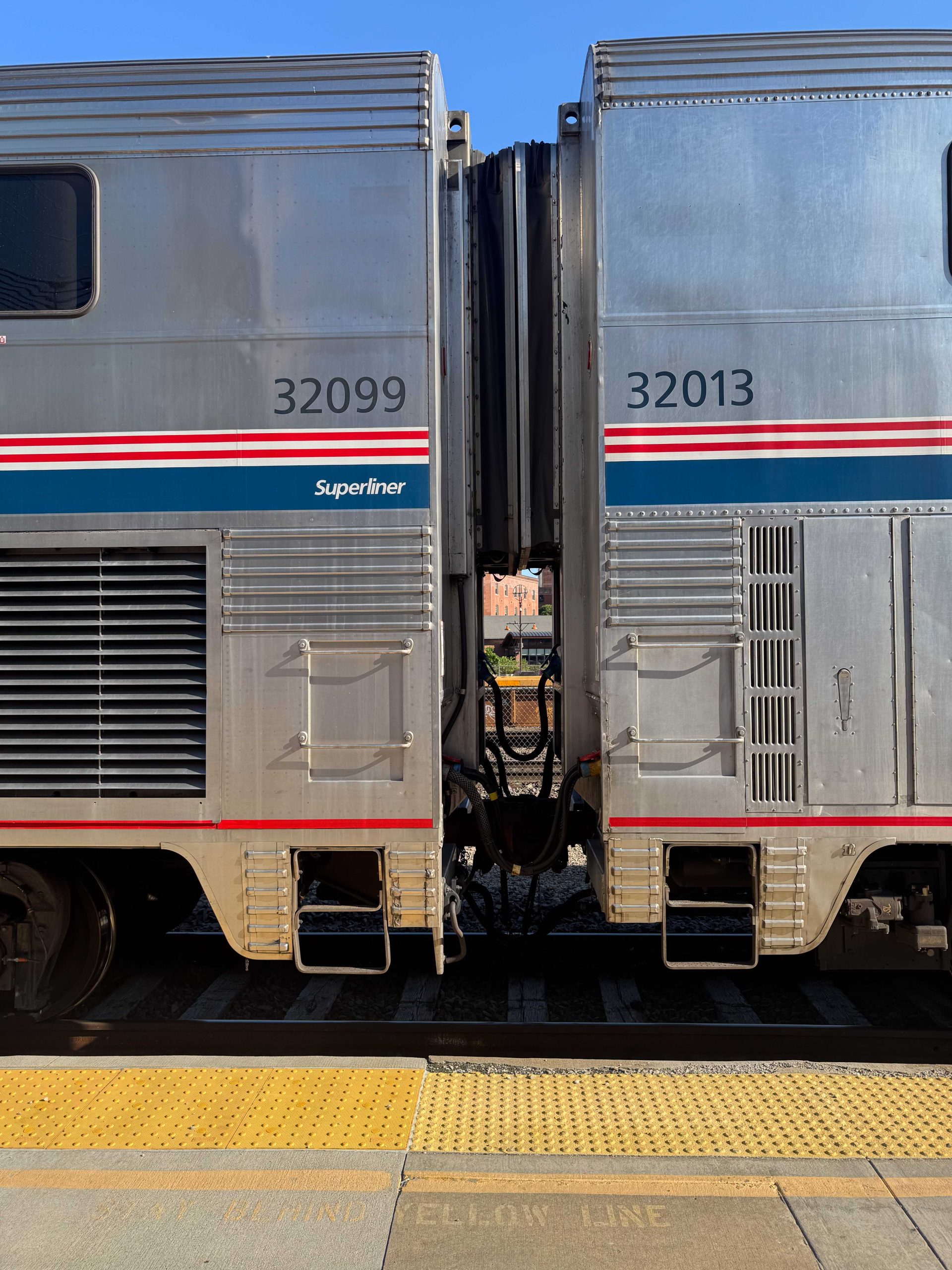
Our train had 11 cars (44 axles according the hot box detectors). I was in the middle sleeper in an upper floor roomette.
- 2x locomotives
- 1x baggage car
- 3x sleeper cars
- 1x dining car
- 1x sightseer/cafe car
- 3x coach cars
The first part of the trip was through the urban suburbs of LA. We saw a commercial being filmed in the concrete LA River.
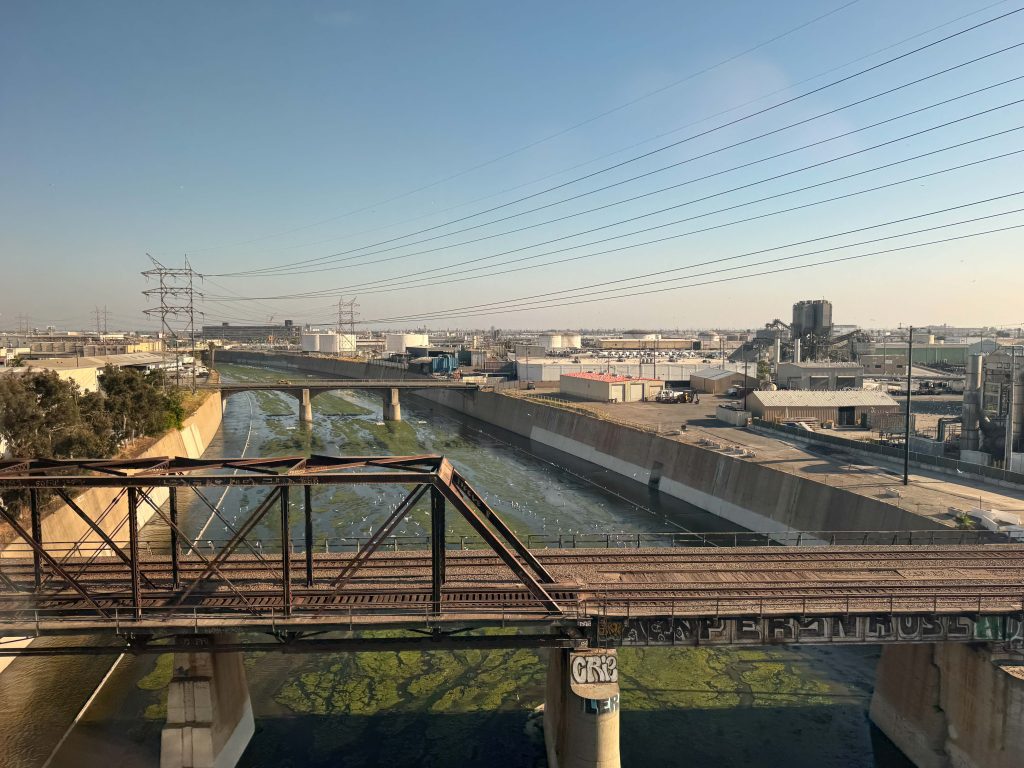
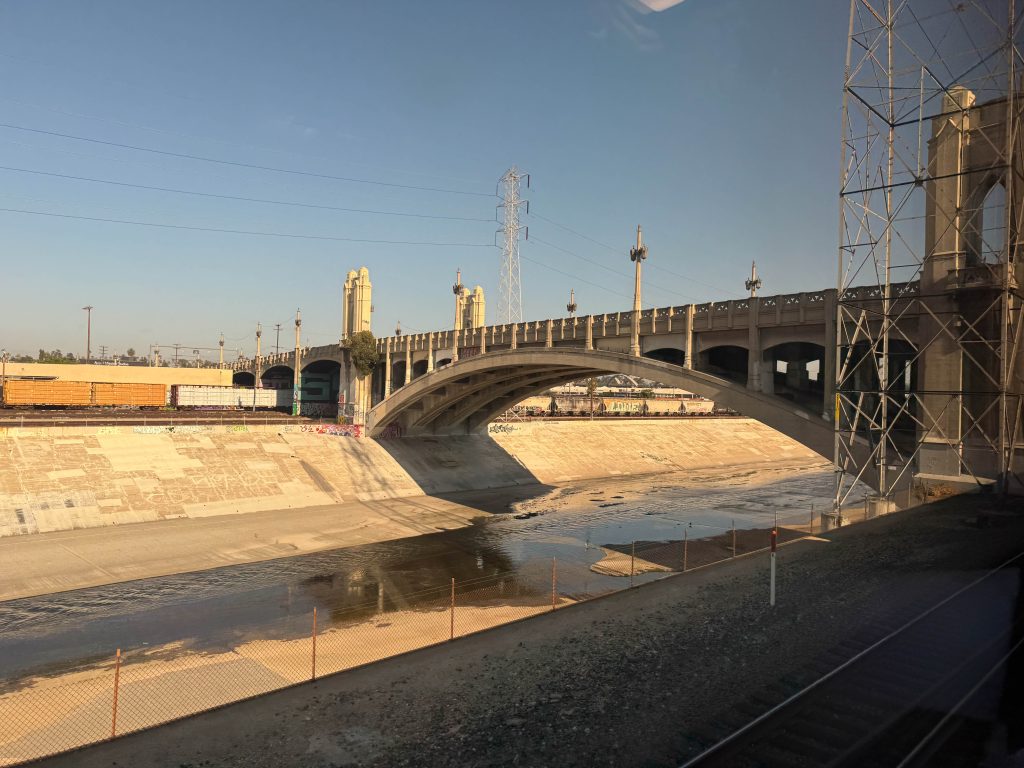
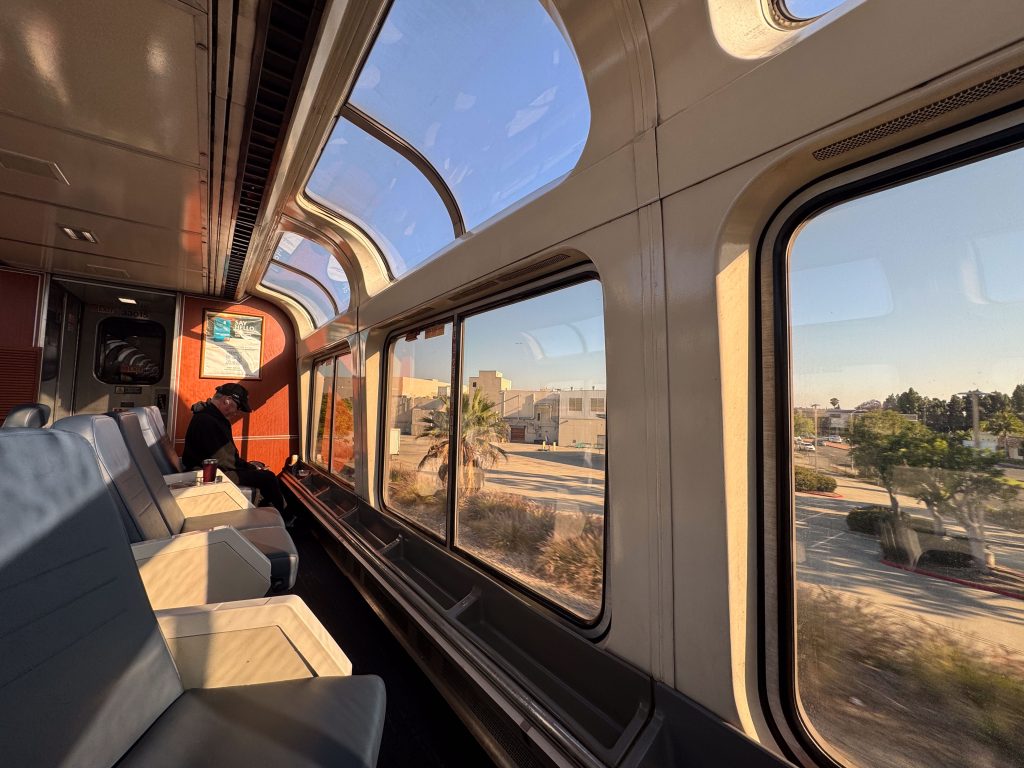
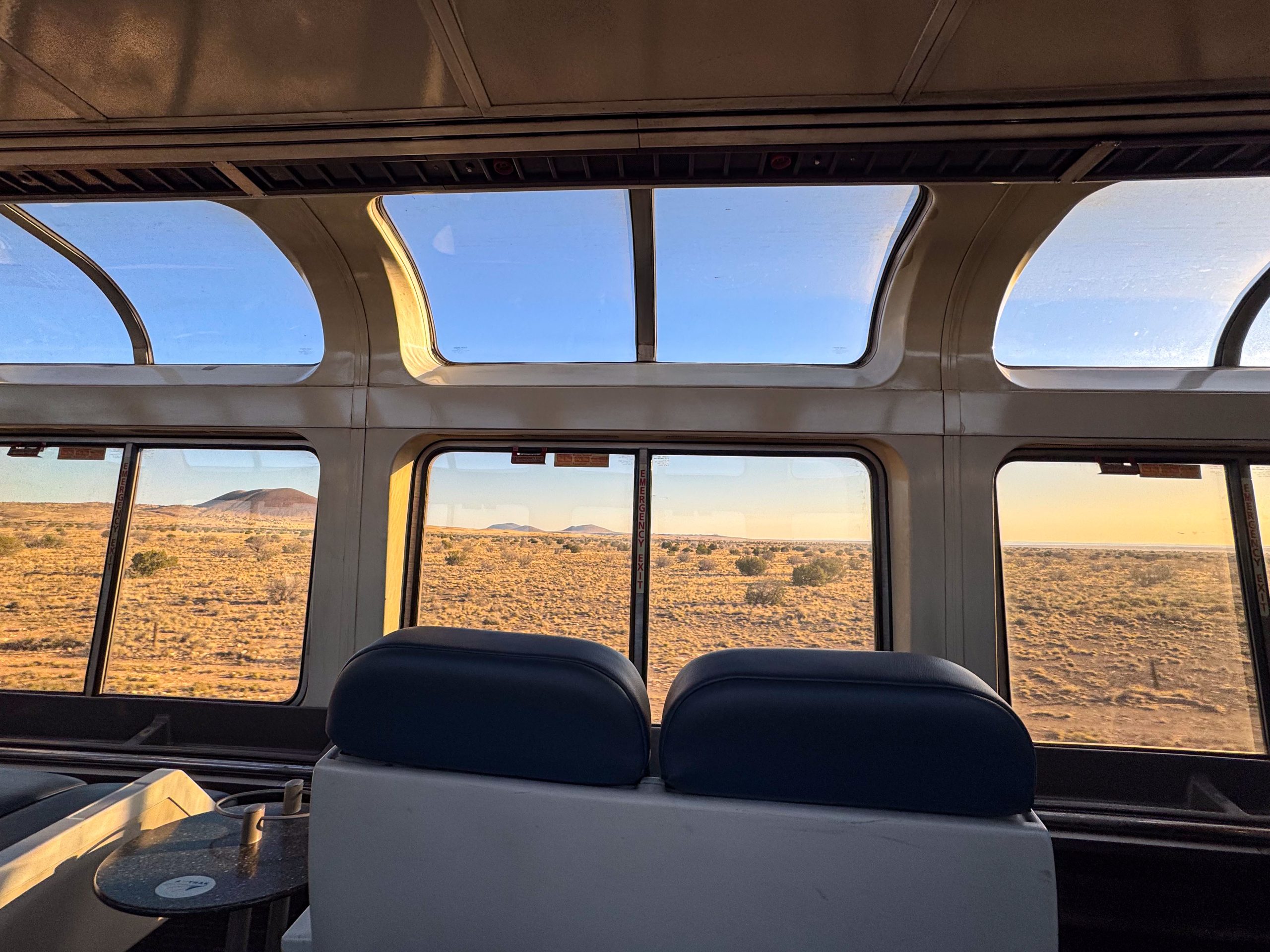
The sightseer lounge had large windows and seats facing the windows. It was great for watching the scenery scroll by and conversations with the other passengers. It was mostly used by coach passengers who wanted more space than their seats. Unfortunately, the window reflections made it difficult for photography so I would go back and forth from the lounge to my roomette.
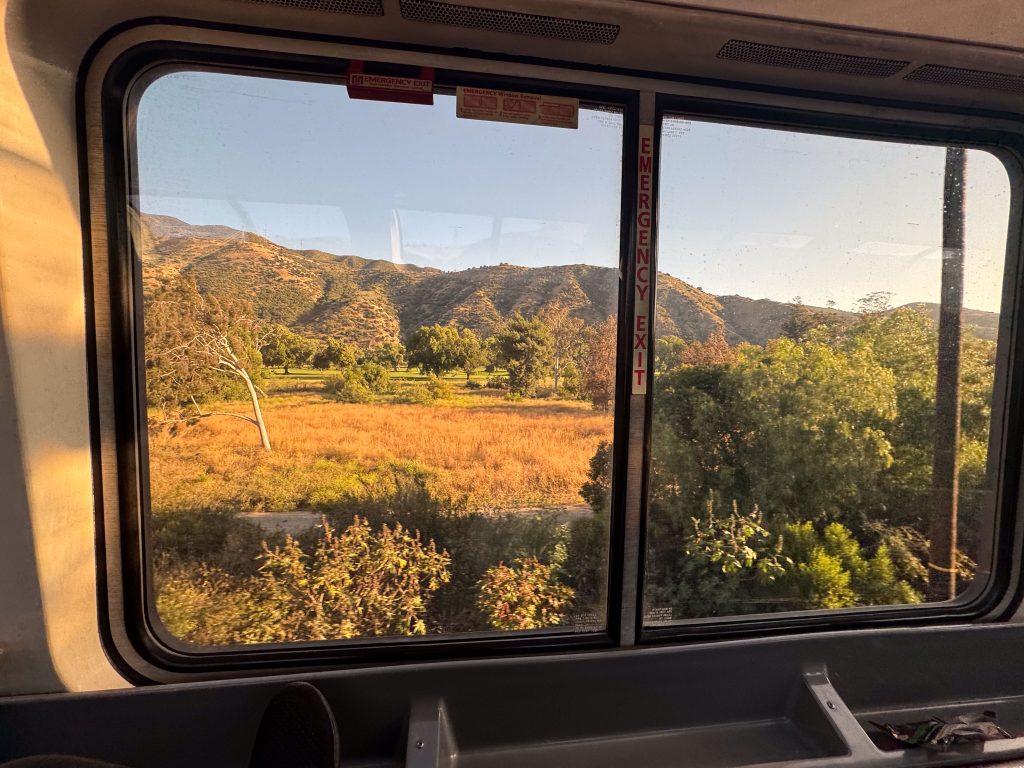
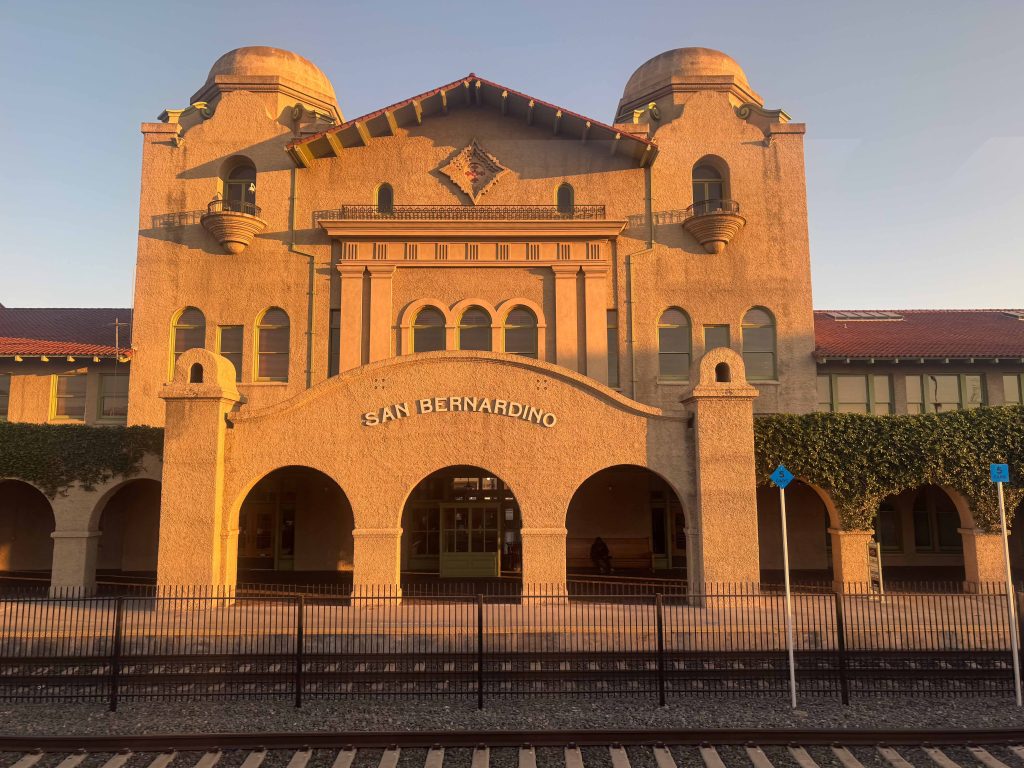
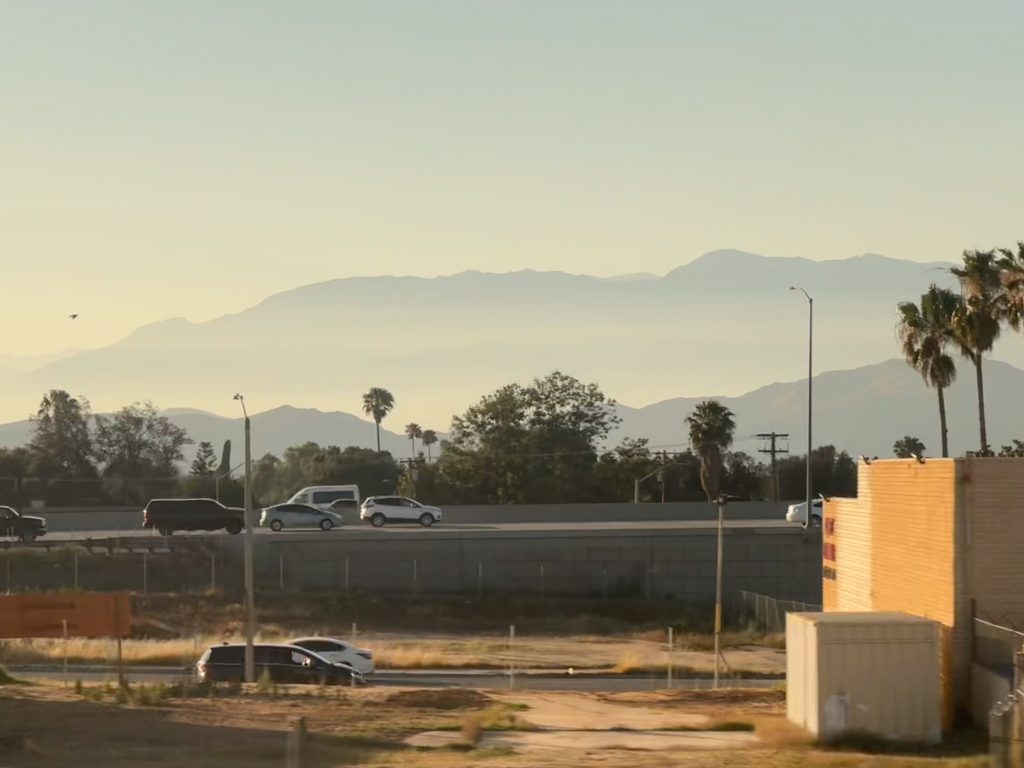
San Bernardino was the last stop before we started the climb into the desert country. Some haze made for dramatic views of the mountains.
With a setting sun lighting up the hills, we climbed up Cajon Pass to the Mojave Desert. A benefit of doing this trip in May is that this stretch is done in daylight.
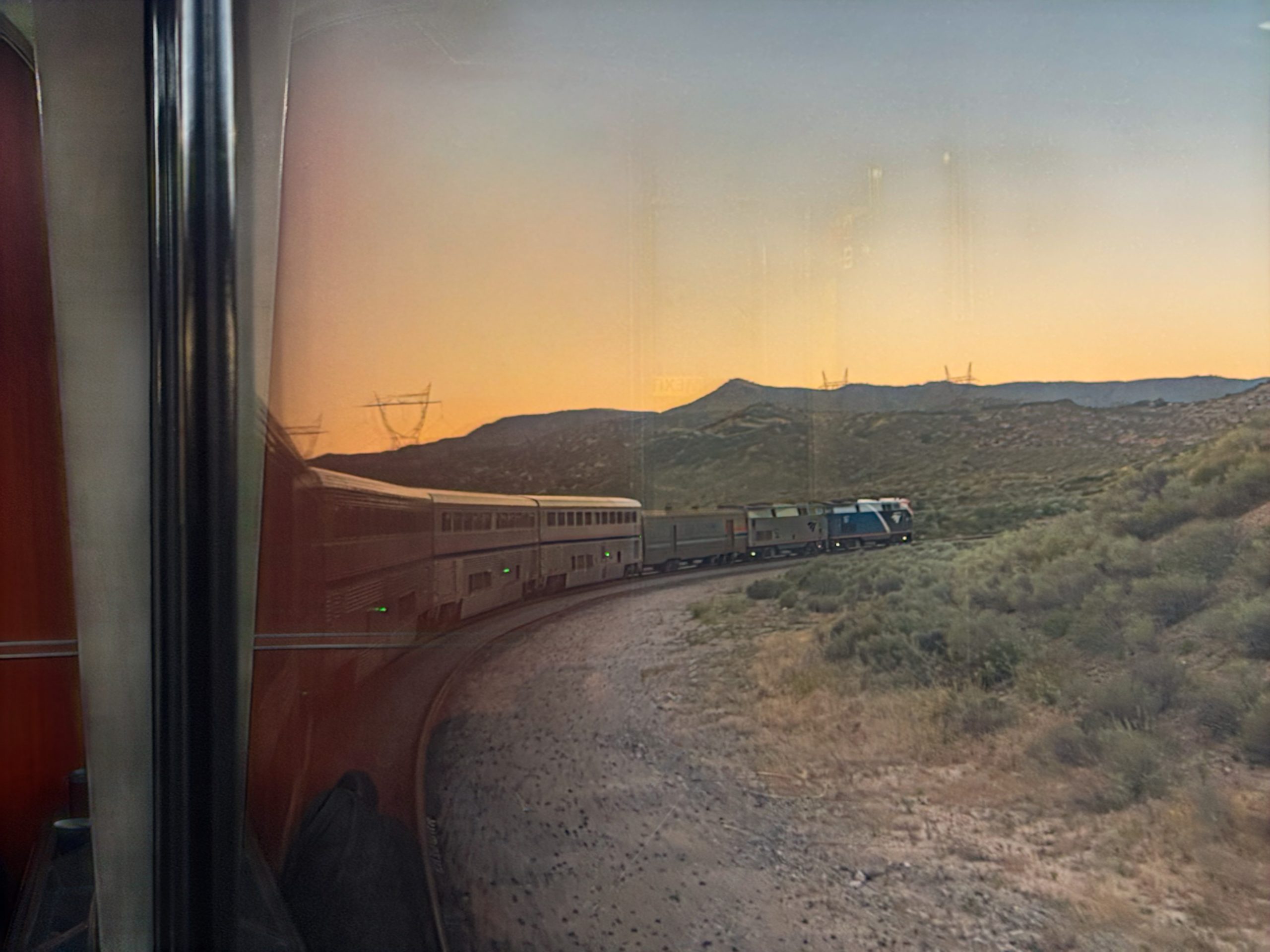
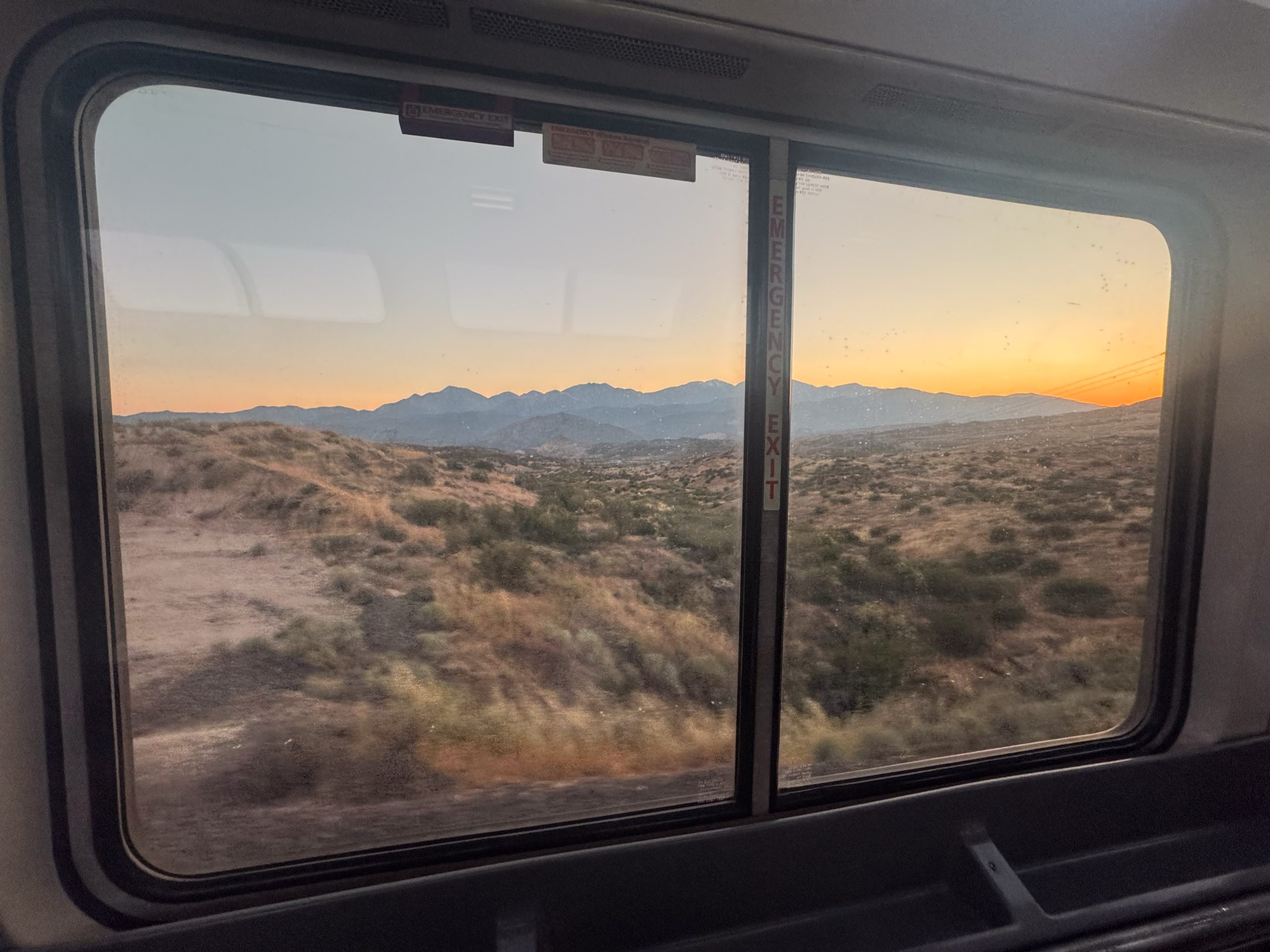
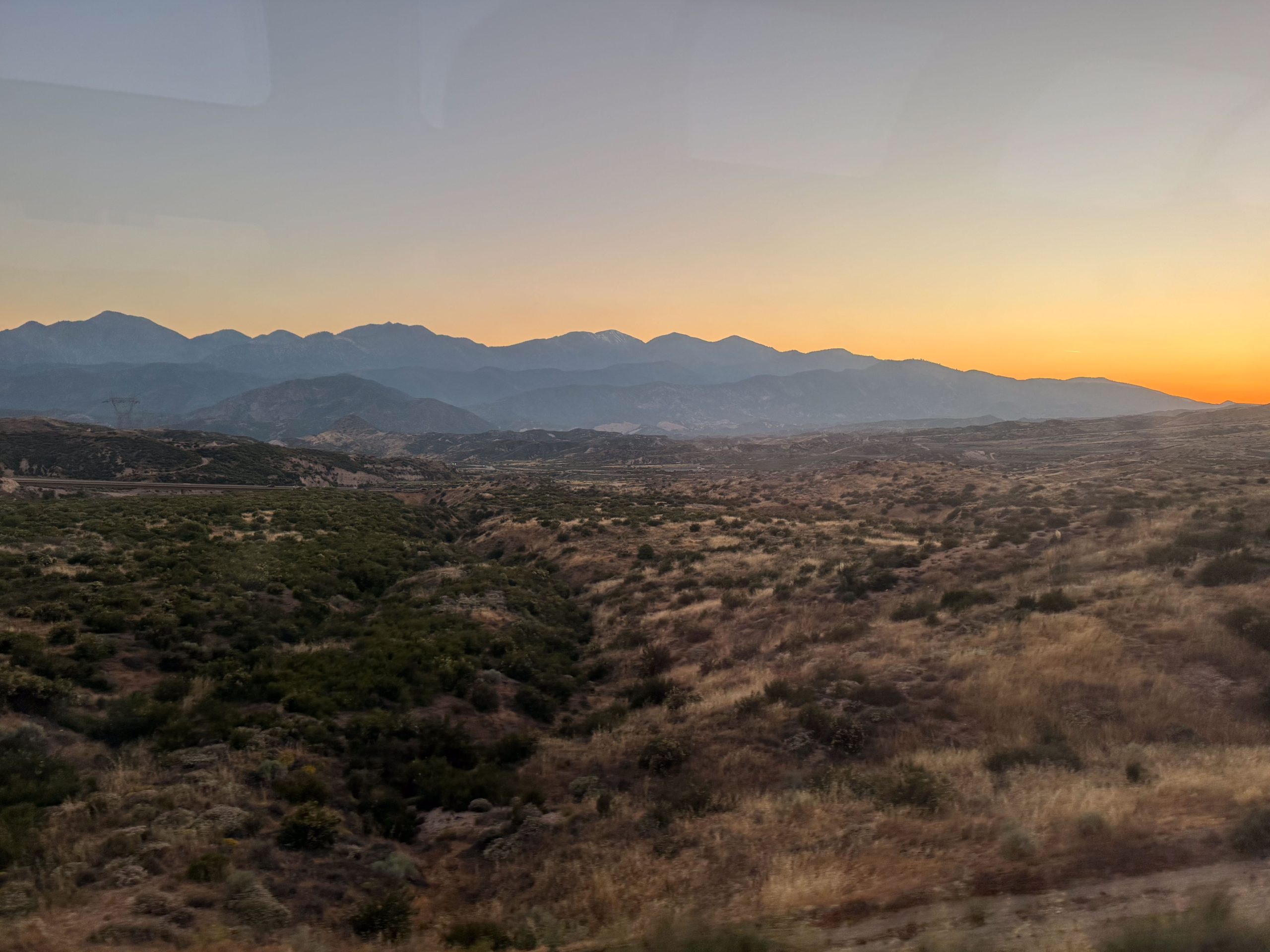
After watching the sunset, I had my first meal on the train as we continued across the desert in the dark.
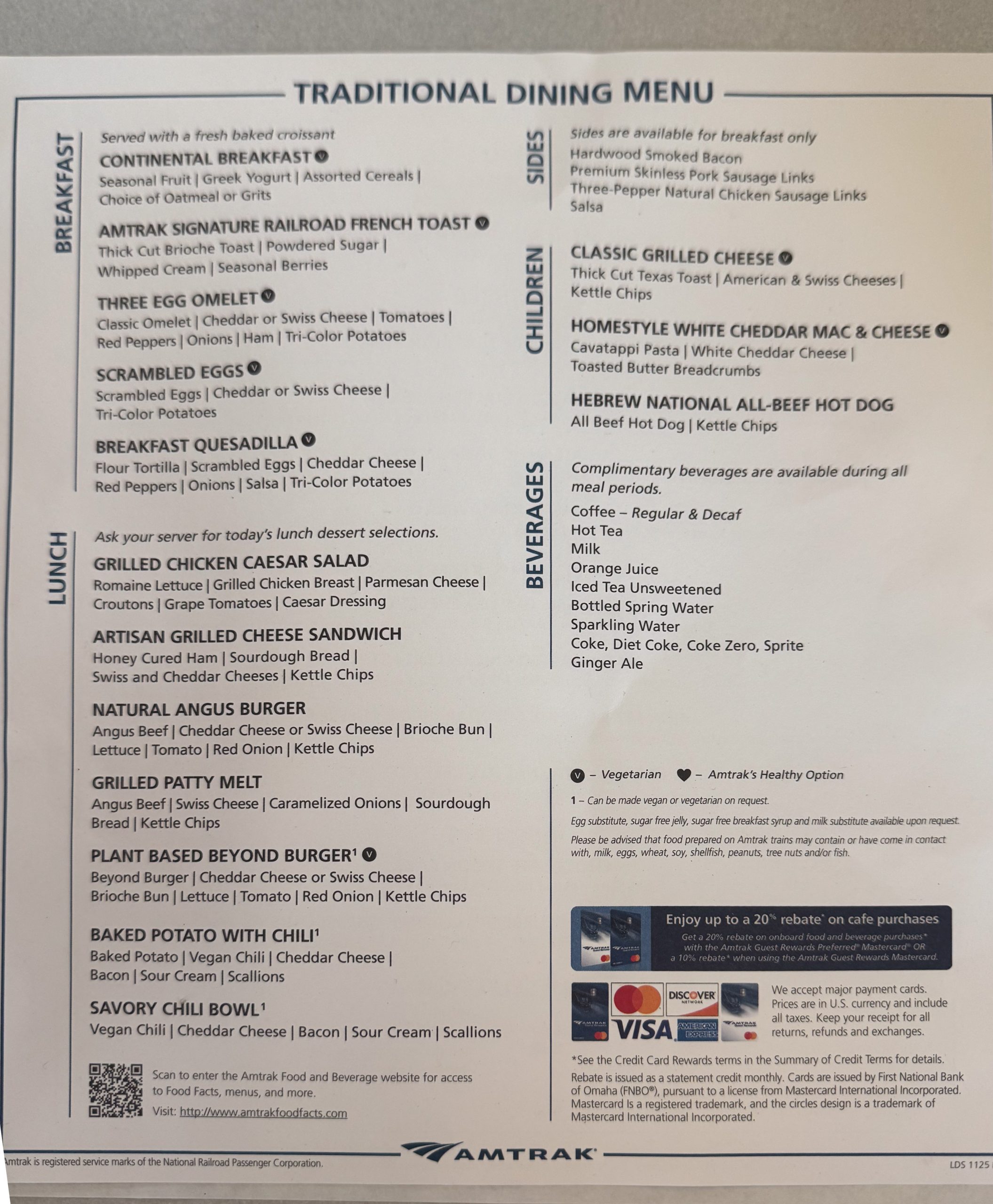
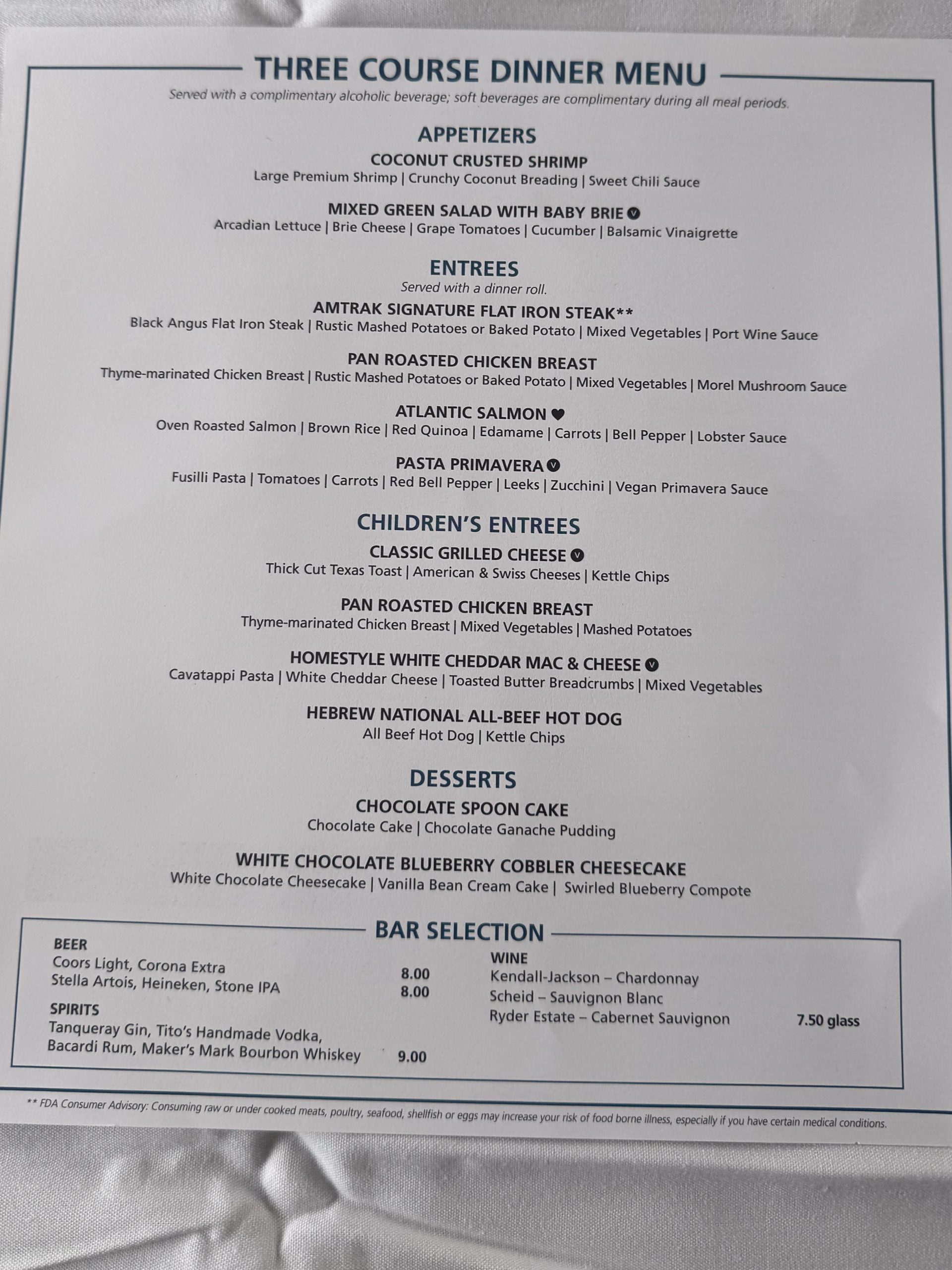
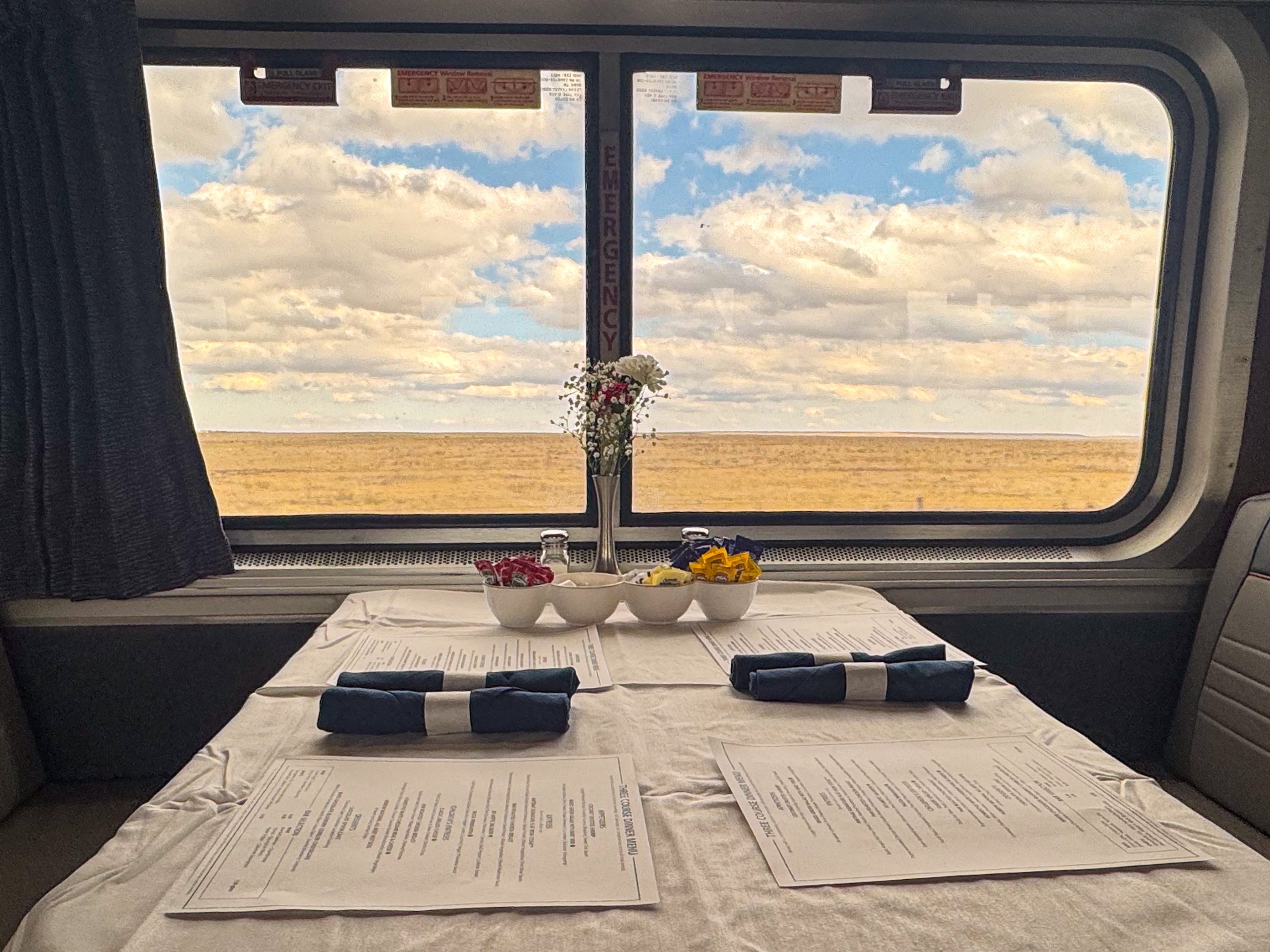
Sleeper car passengers get all their meals included, either seated in the dining car or delivered to their cabins. I had all my meals in the dining car and got to meet some of the other passengers – the staff always seat the tables with four passengers as they arrive for dinner, “communal seating”. Lunch and dinner are served in three seatings by reservation, and I tried to pick my time based on stops and scenery.
For my first dinner, I had the last seating, starting at 8pm, after the sun had set and shared my table with three other solo travellers. It was always interesting to find out why people were travelling by train and where. At dinner was man was from LA, traveling to the Grand Canyon via a bus connection from Flagstaff. He was going to visit the national park for the day before catching the train back. Another traveller was on an Amtrak 30-day rail pass and trying to make the most of his pass by completing a Chicago->Seattle->LA->Chicago loop. The third man was traveling home to Connecticut after suffering a burst ear drum on the flight to LA and so was under doctor’s orders not to fly. Two of the diners were travelling coach and had to pay for their dinners separately.
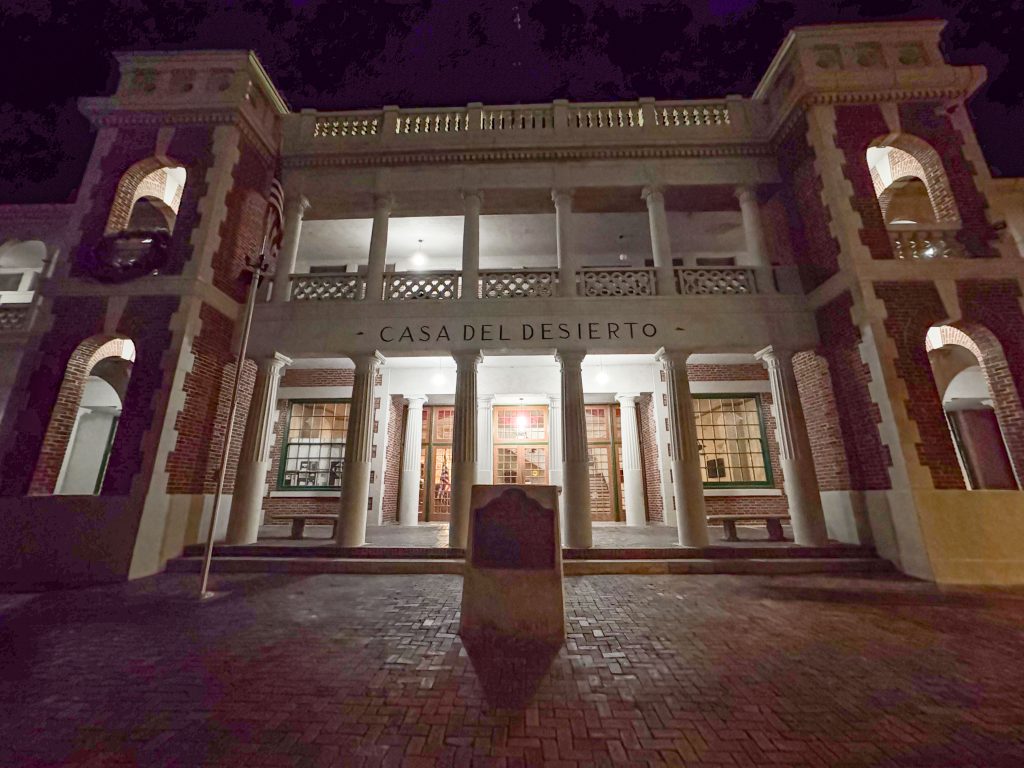
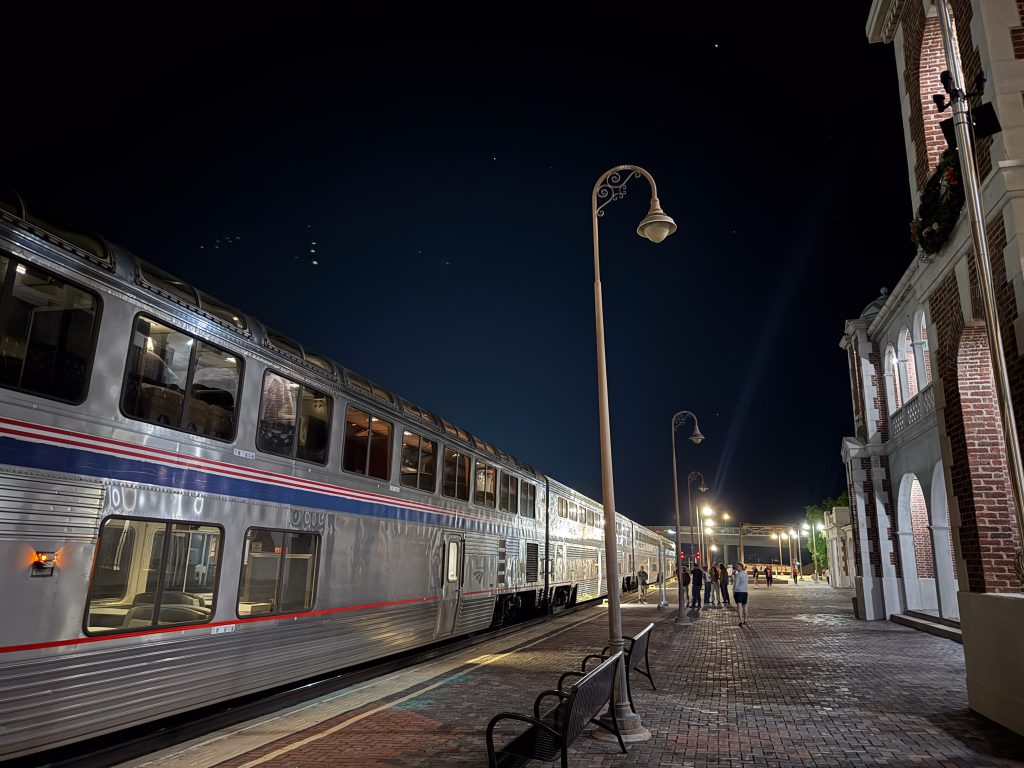
The last stop I saw in California was Barstow. The station is famous for having a restored “Harvey House” built by the Santa Fe in the early 1900s to provide accommodation and meals to their passengers, embossed with the name “Casa del Desierto”.
The site was made more dramatic by the clear skies and stars above the train as we paused to stretch our legs.
Arizona
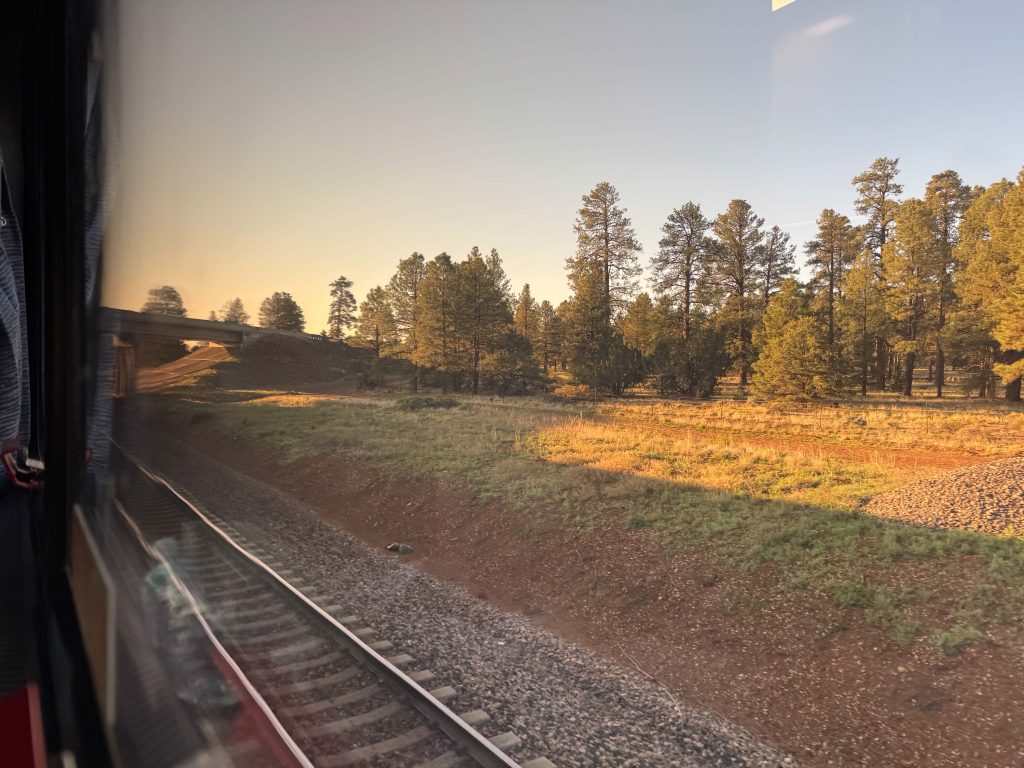
I didn’t sleep well overnight and was up before sunrise as we zoomed through Arizona desert near the town of Seligman. We had visited this town and the section of “Route 66” to the west of this town in 2025 on the way to the Grand Canyon. In the dawn light in the lounge car, I spotted some deer in the forests near Williams and watched the scenery roll by.
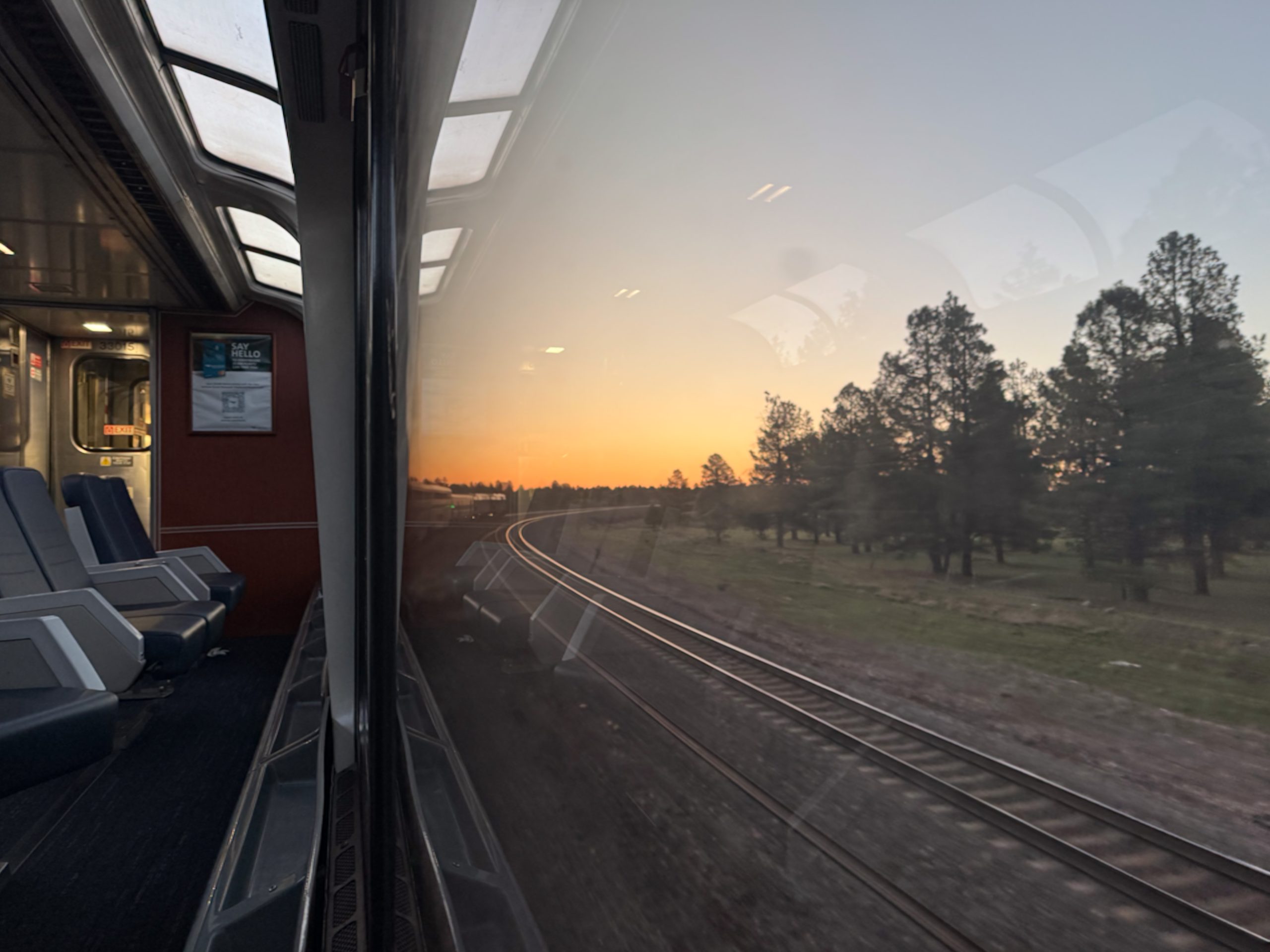
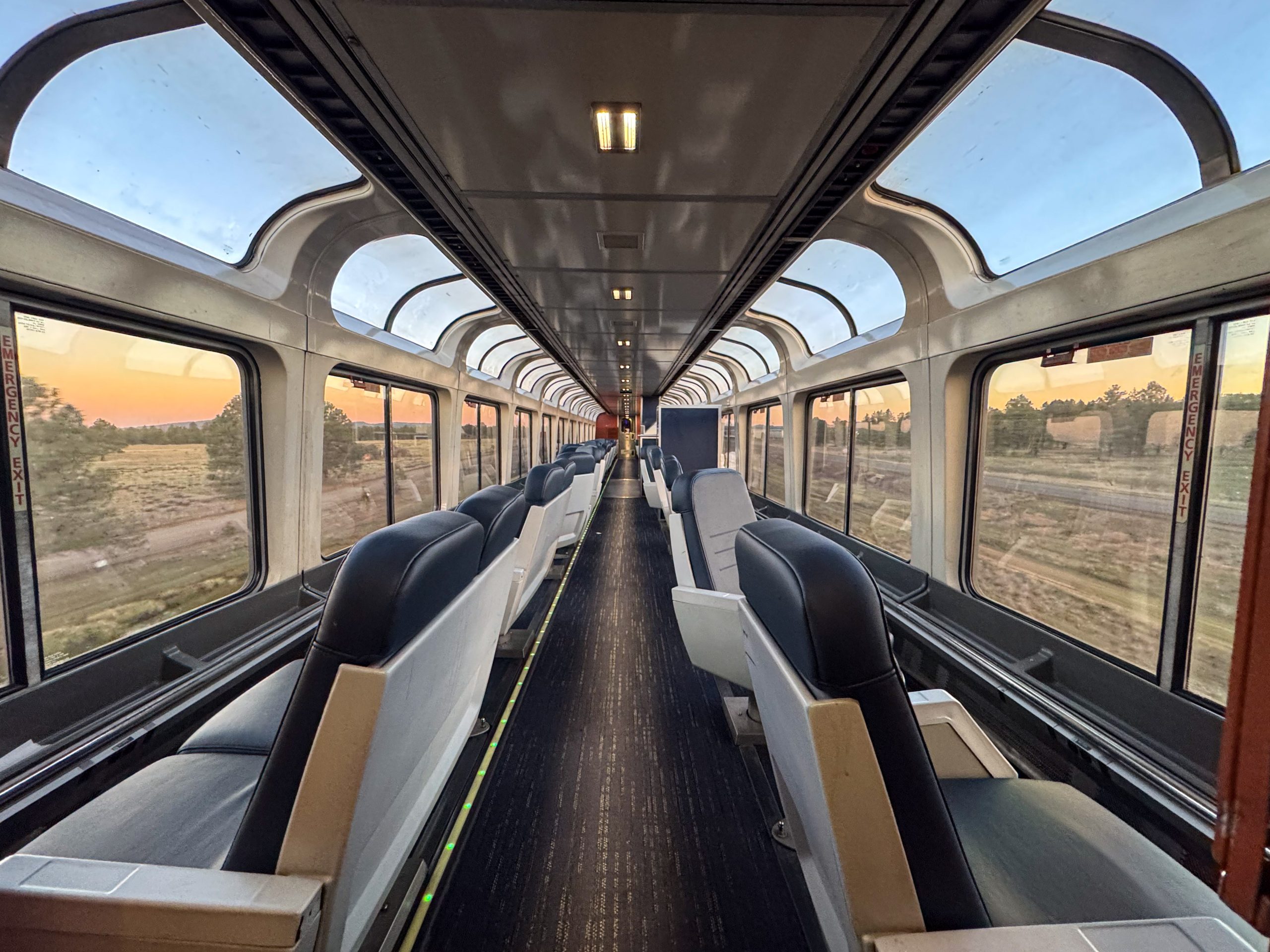
During the night the train had been delayed by freight traffic somewhere east of Kingman and was now over an hour and a half late – a delay that the train never regained.
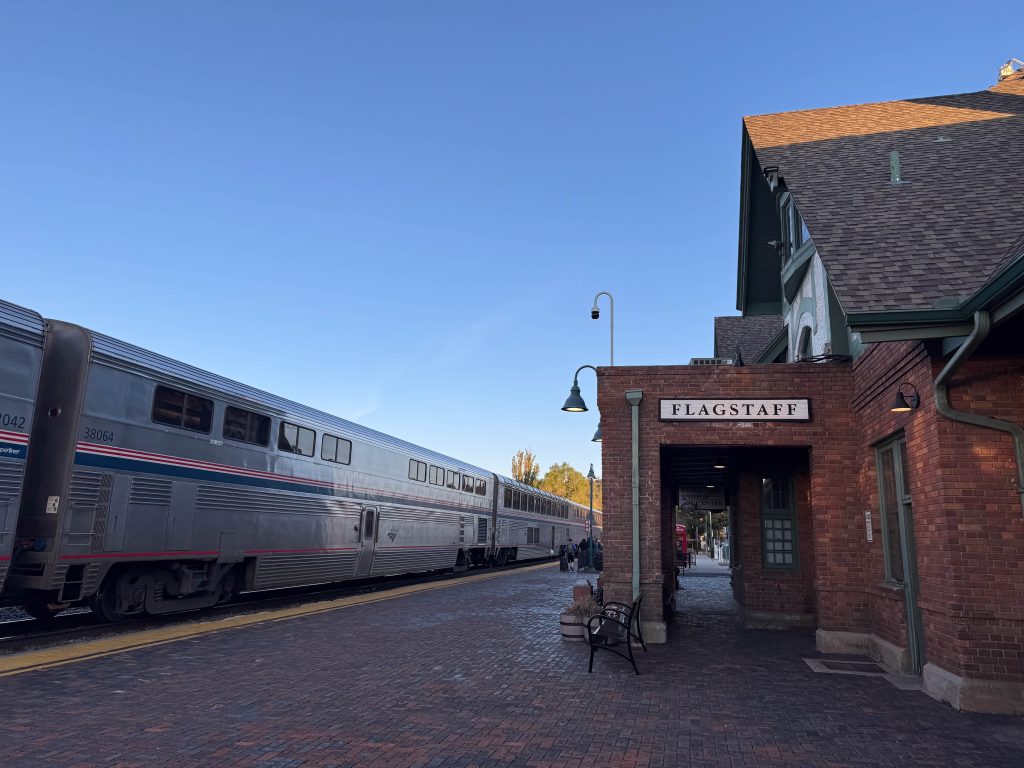
Instead of a scheduled 4am stop in Flagstaff in the dark, it was now a stop in sunrise to stretch our legs.
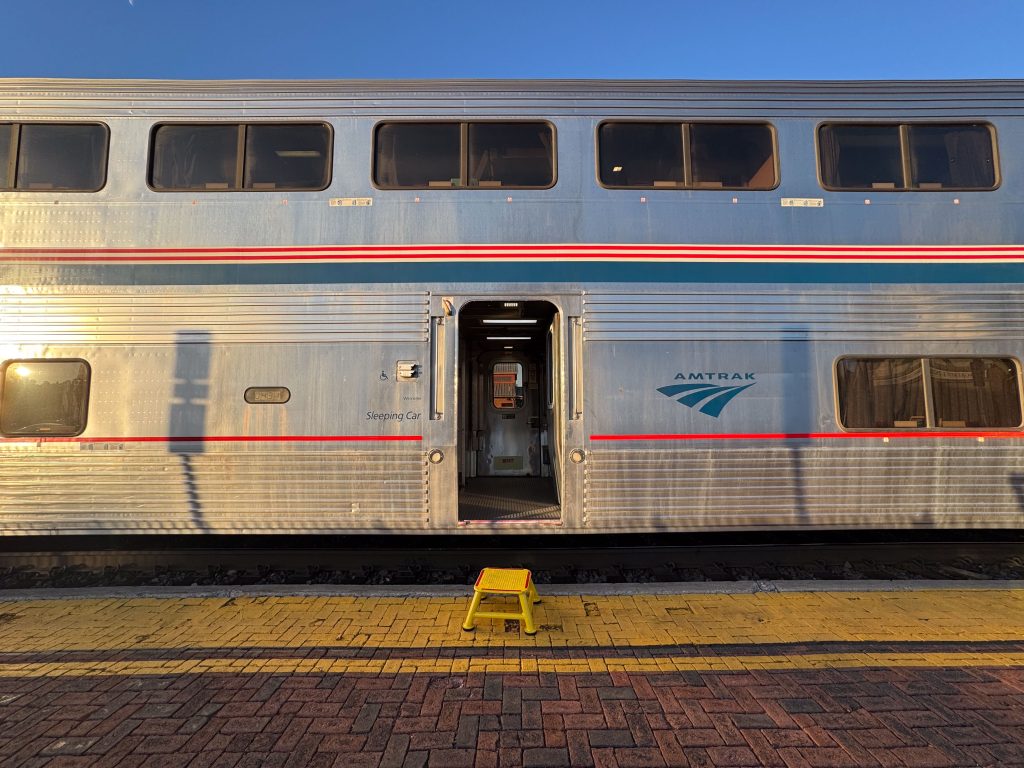
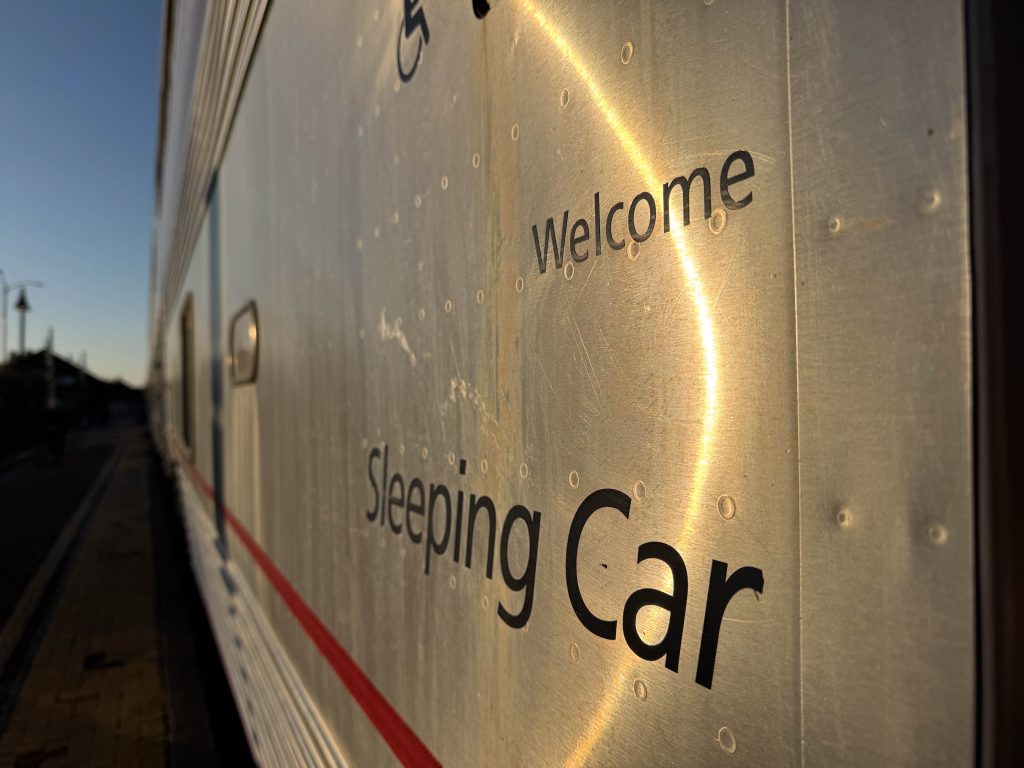
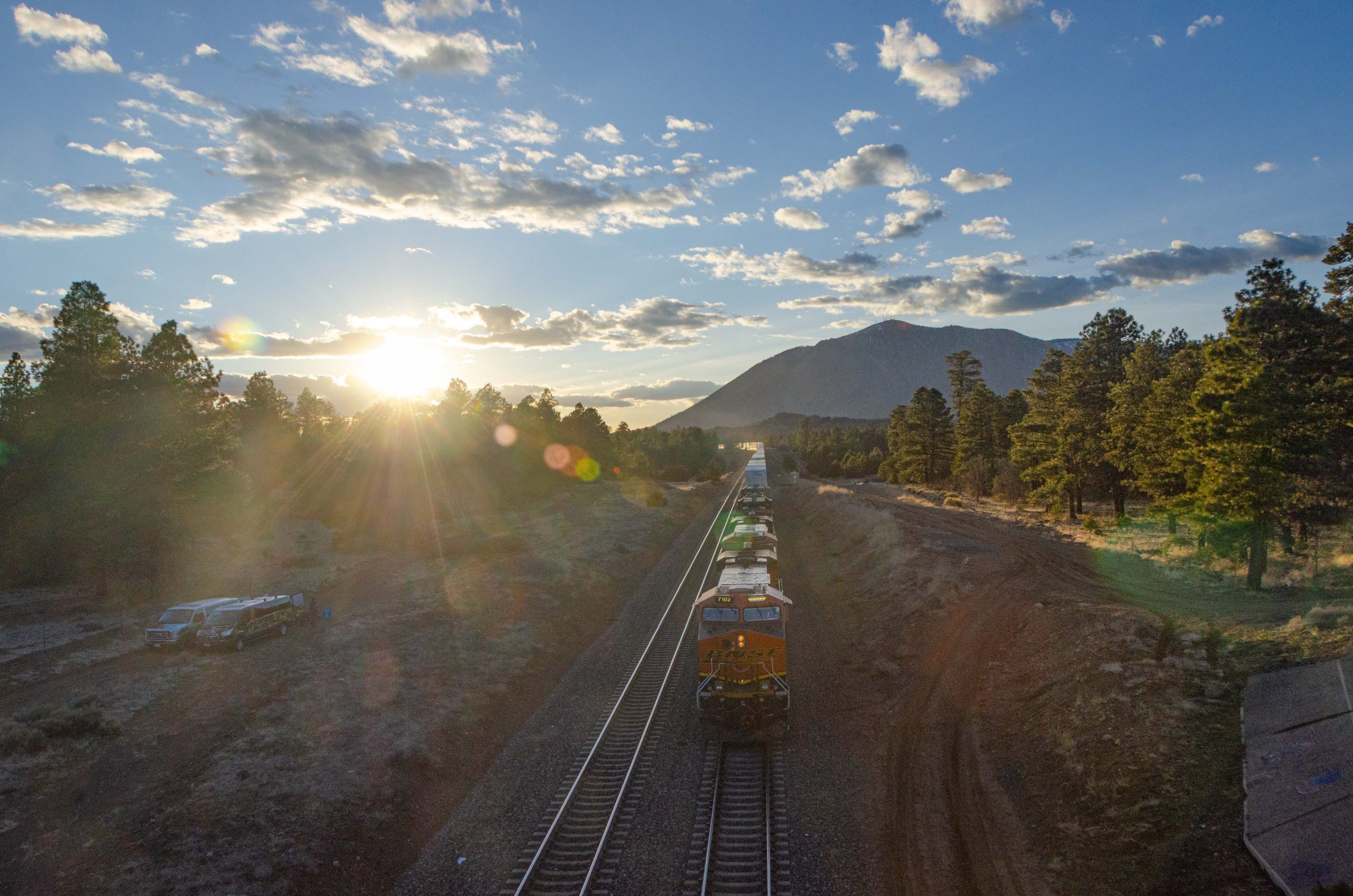
Shortly after our stop in Flagstaff, we passed a train watching spot we had visited while eating dinner with our campers in 2025. I made sure to delay my breakfast so I could watch it go by!
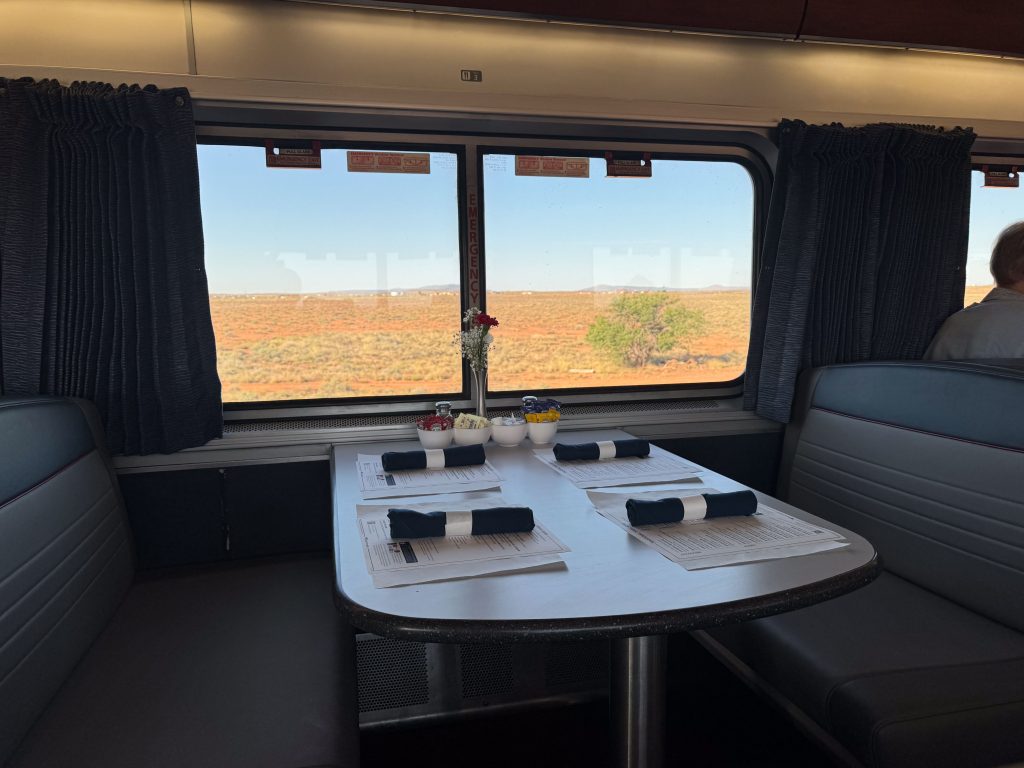
During breakfast, there was a brief stop in Winslow which was unusual in that the train stopped in a stub siding and had to back up to get back on the mainline – didn’t help with getting us back on schedule!
Breakfast was with the same rail pass guy from dinner, along with a man heading to Buffalo, NY to see his mom, and a woman travelling to Santa Fe to visit her sister. We had some interesting conversations about solo travelling.
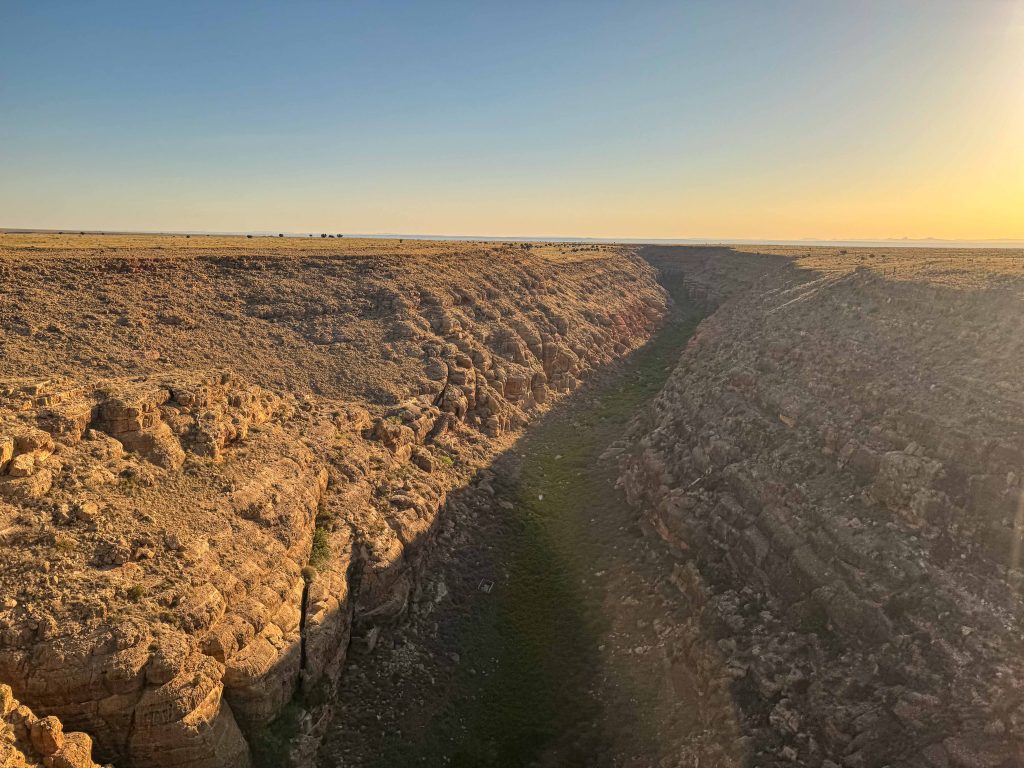
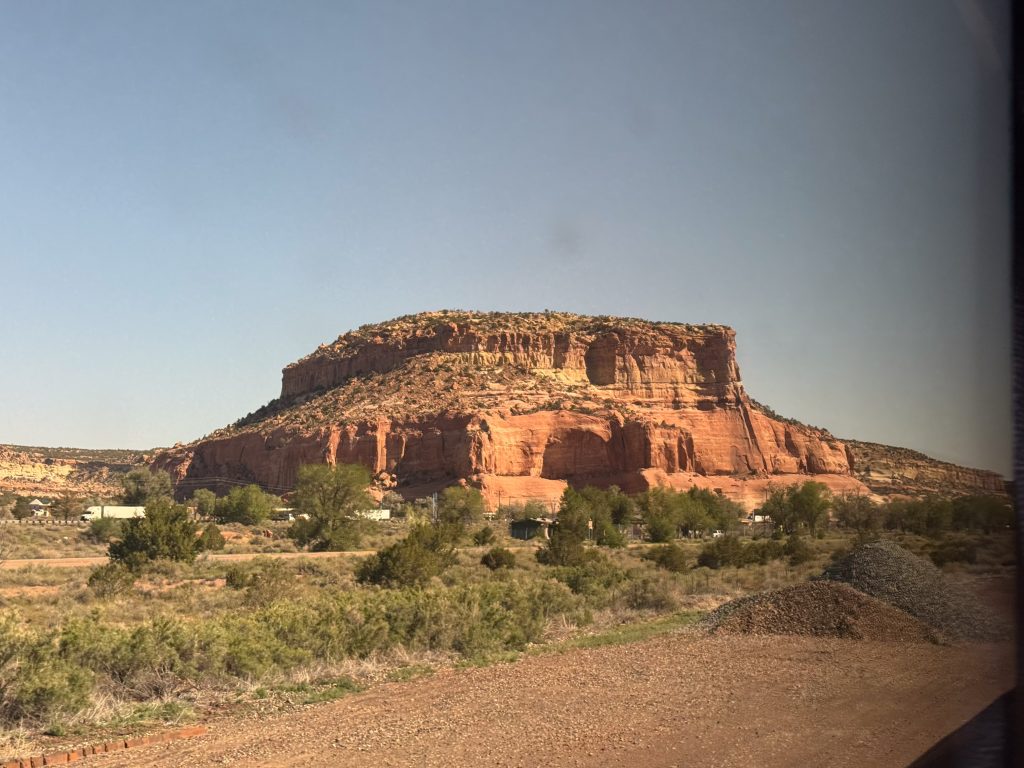
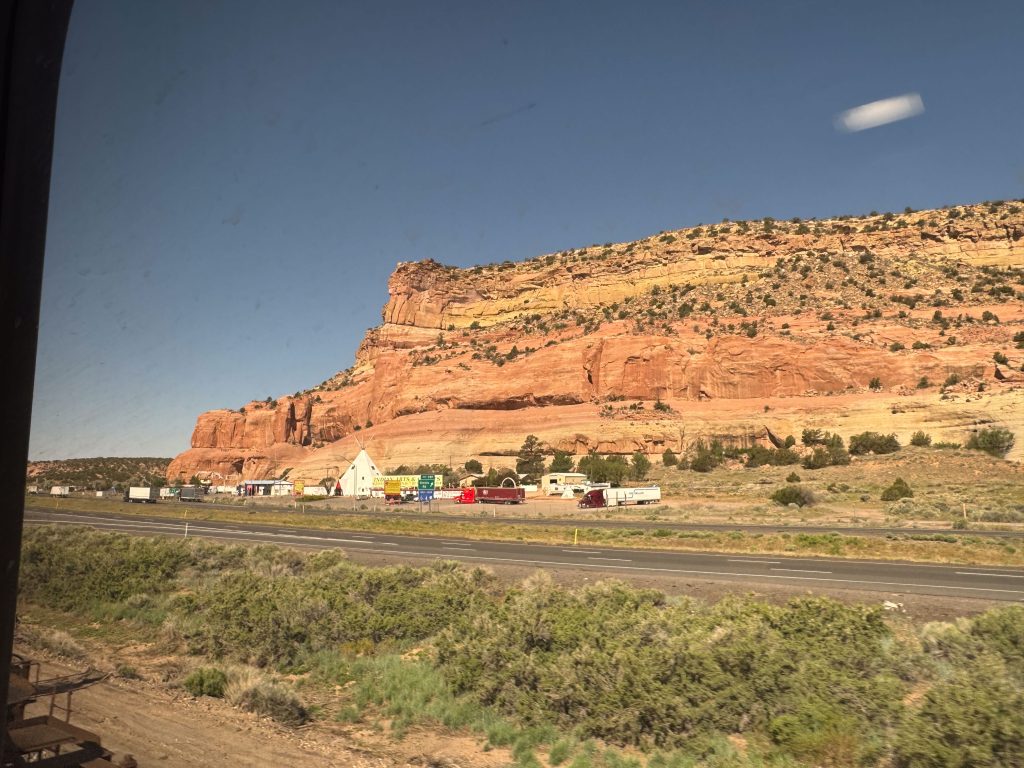
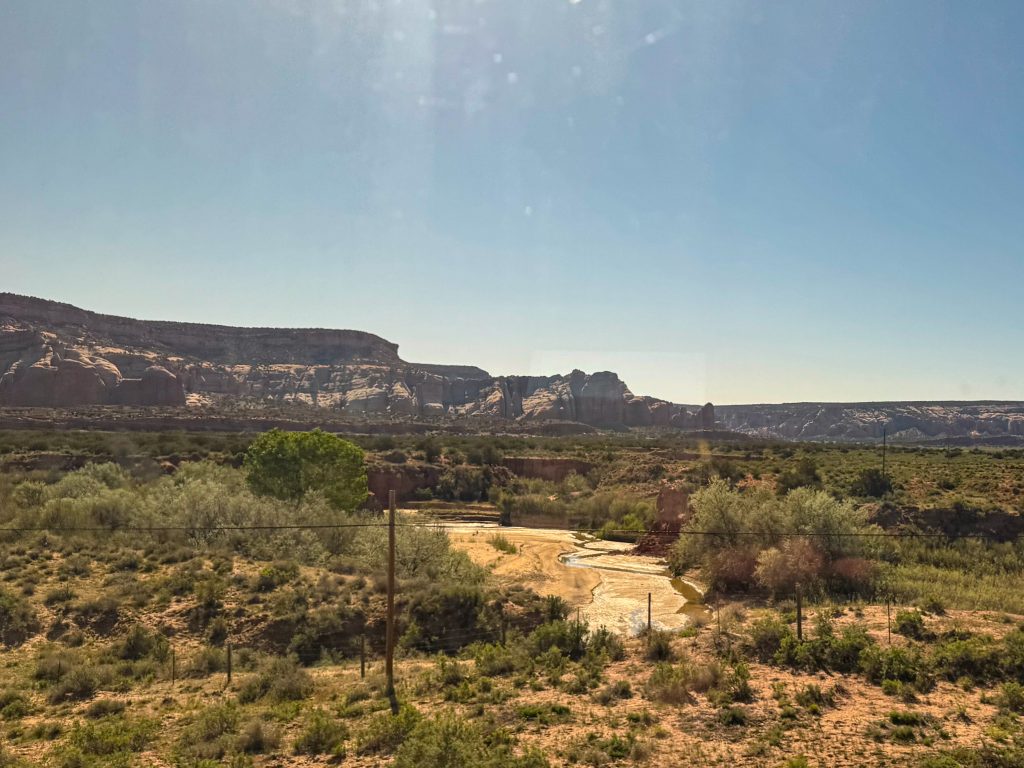
Miles of open desert with increasing trees, along with red cliffs encompassed the rest of Arizona as we left Winslow.
New Mexico
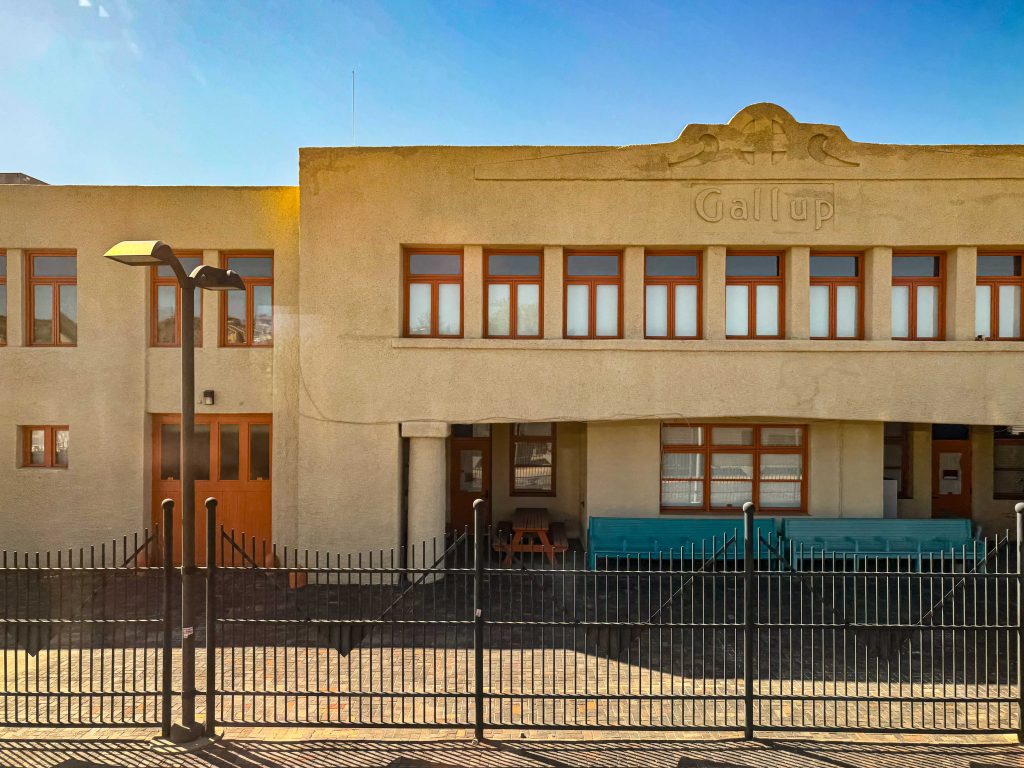
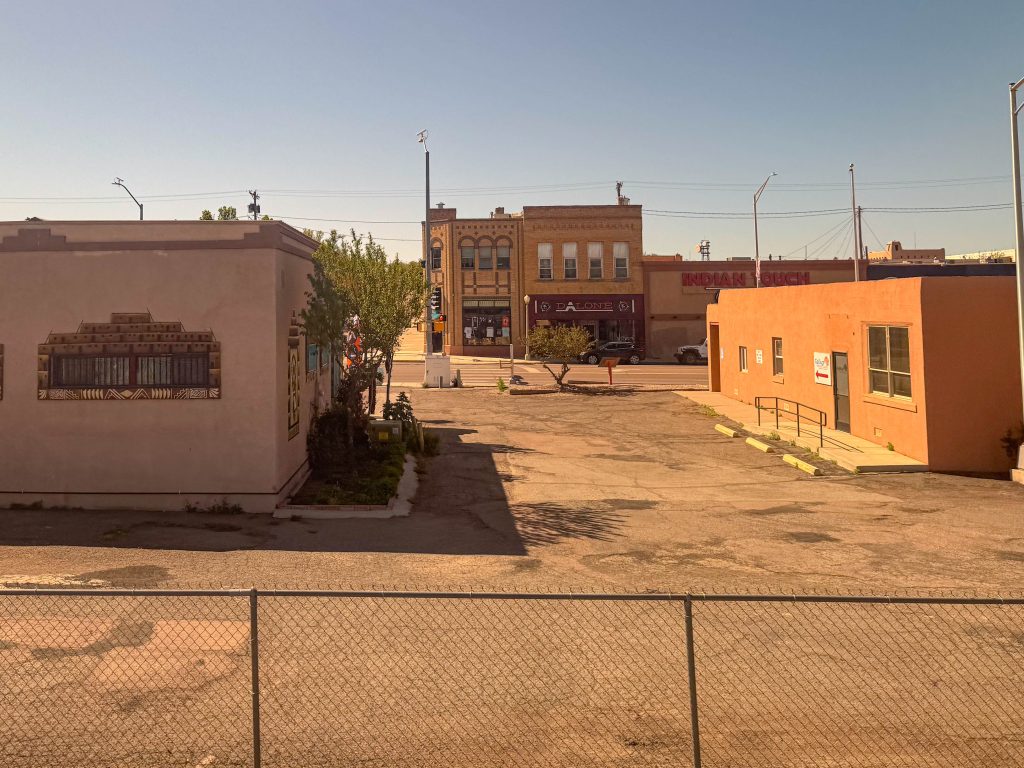
Shortly after crossing the border into New Mexico, we arrived in Gallup. It was only a brief stop and the dusty town looked like it hadn’t changed much since the 1950s! The engines idled briefly, before we continued east.
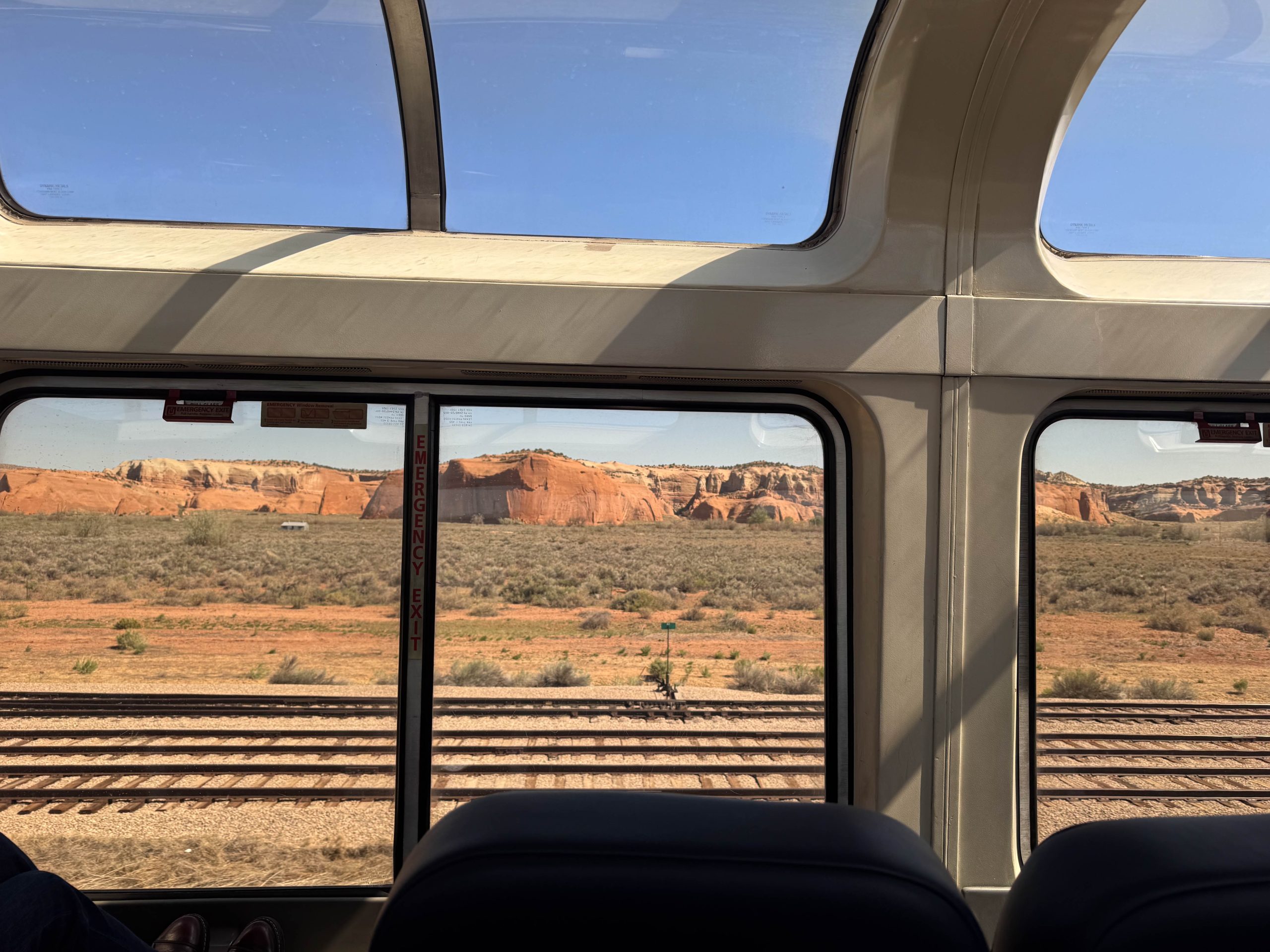
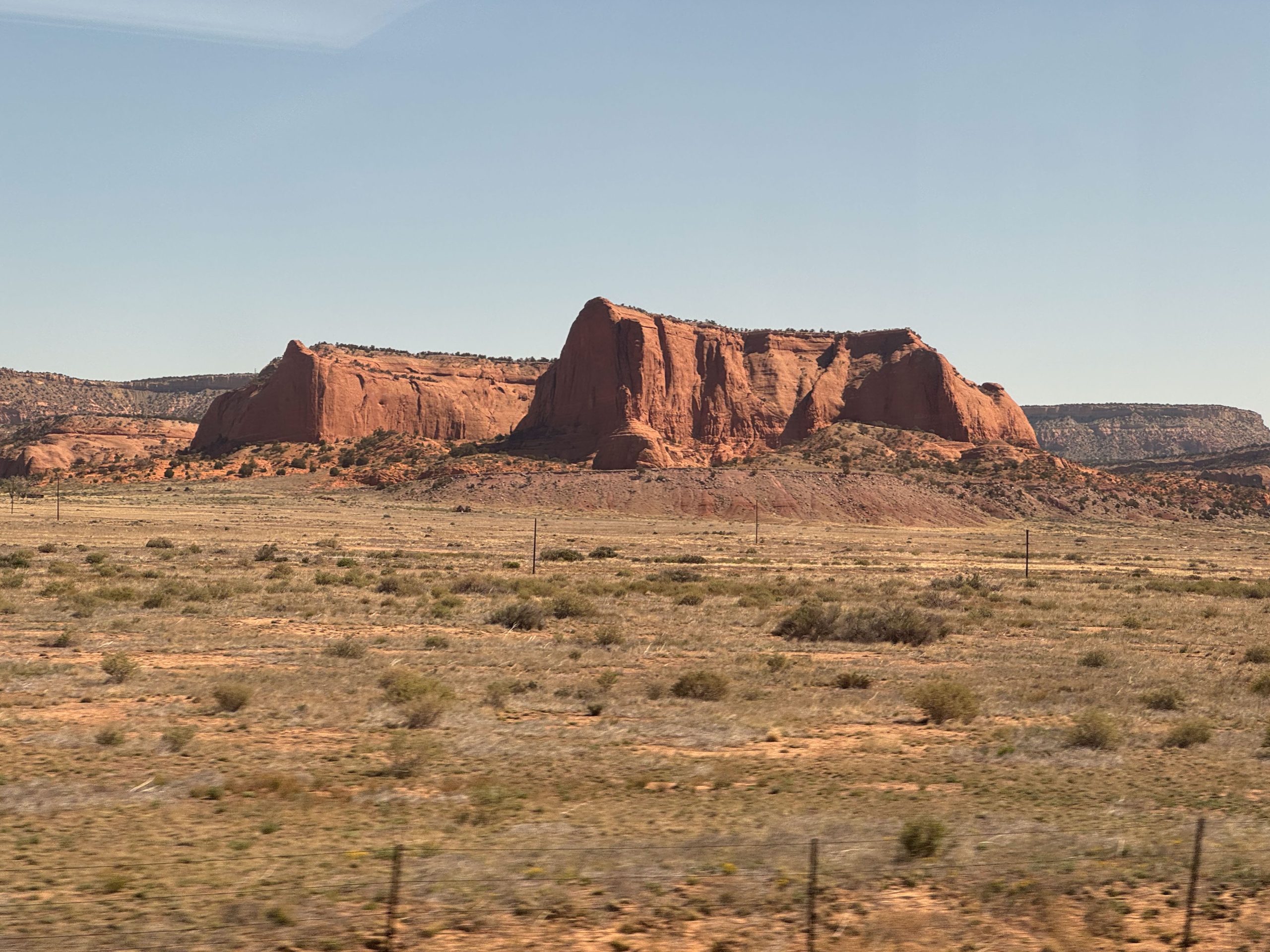
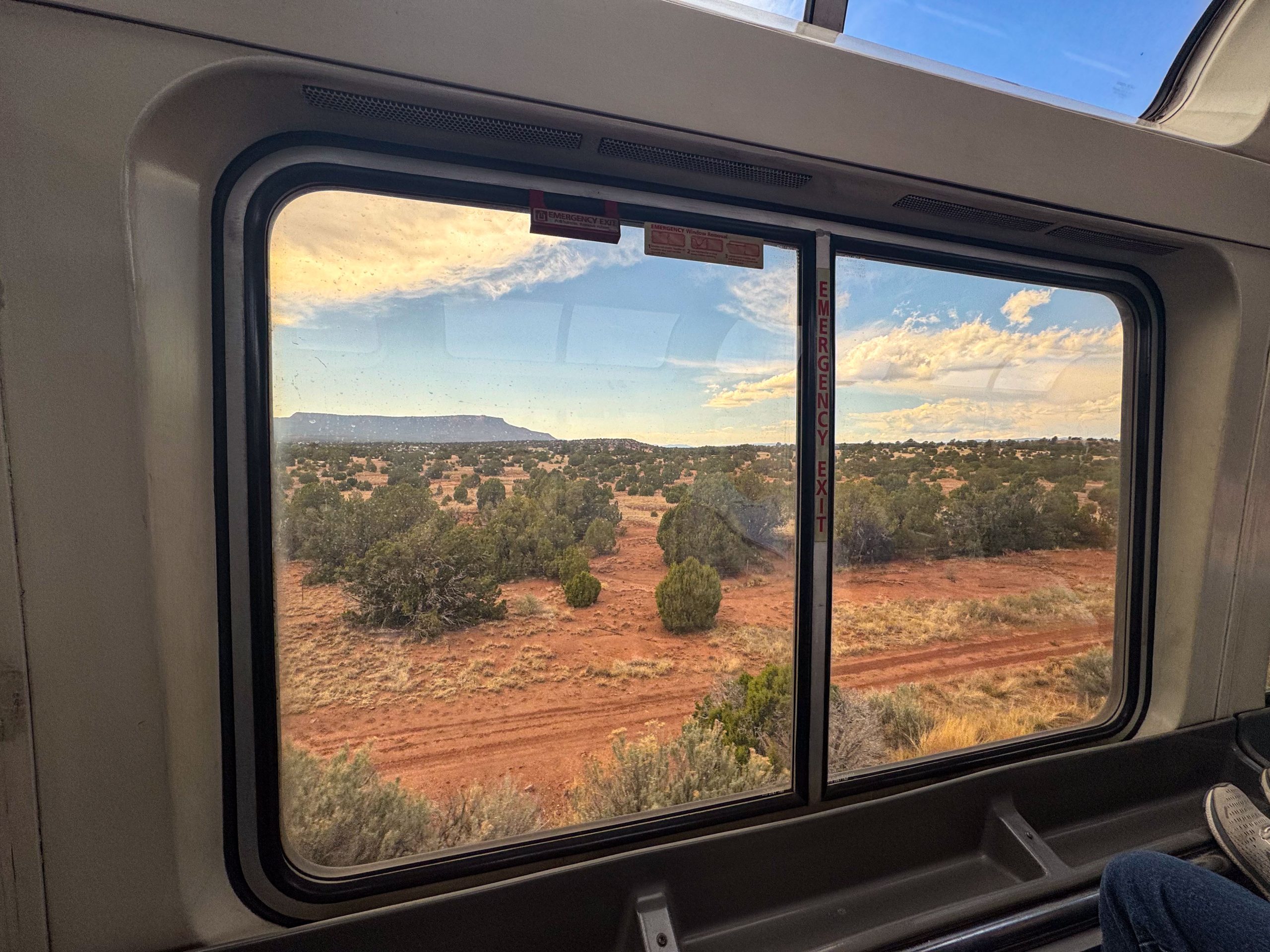
About an hour east of Gallup, there were views of dramatic red sandstone cliffs.
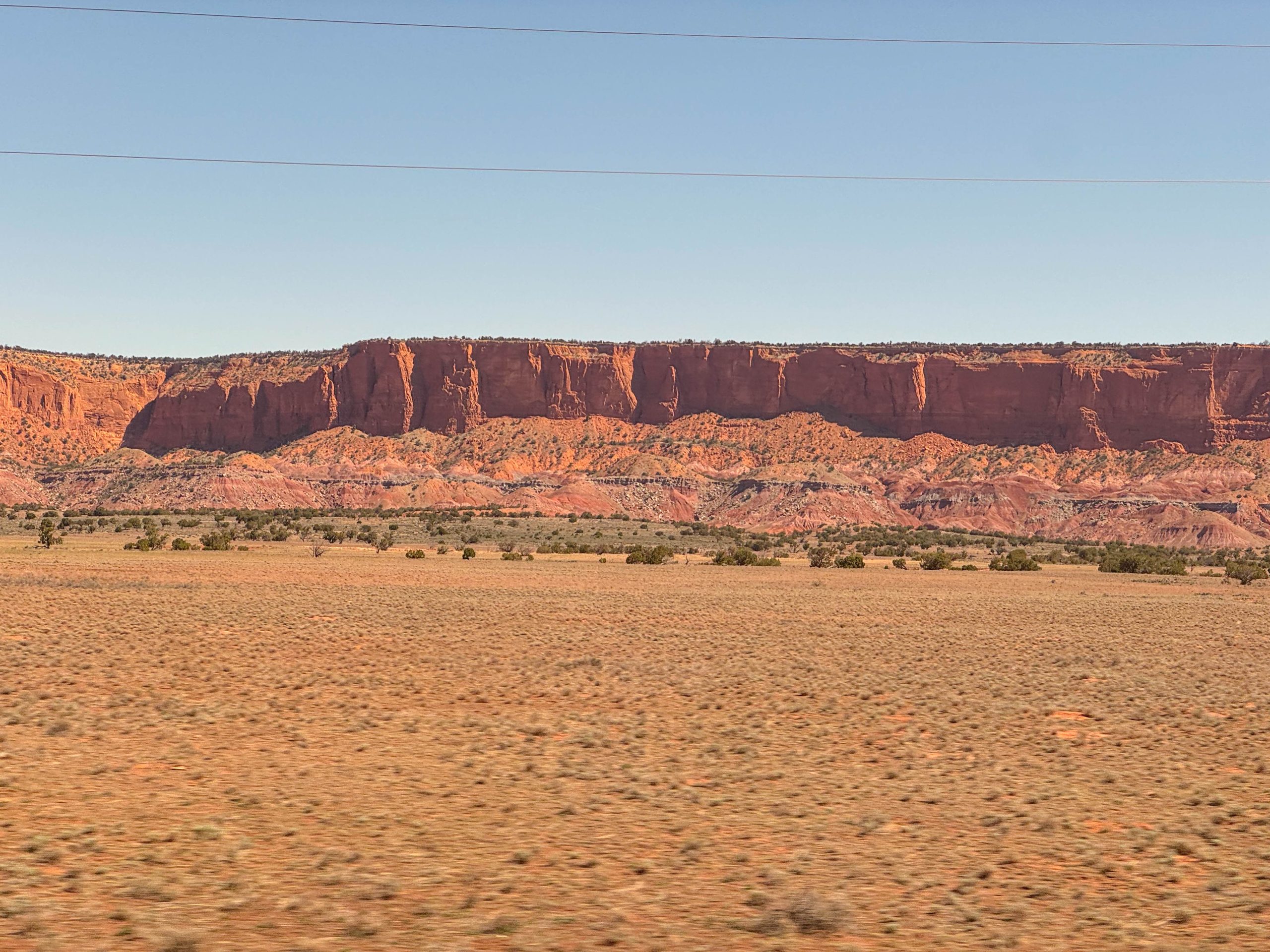
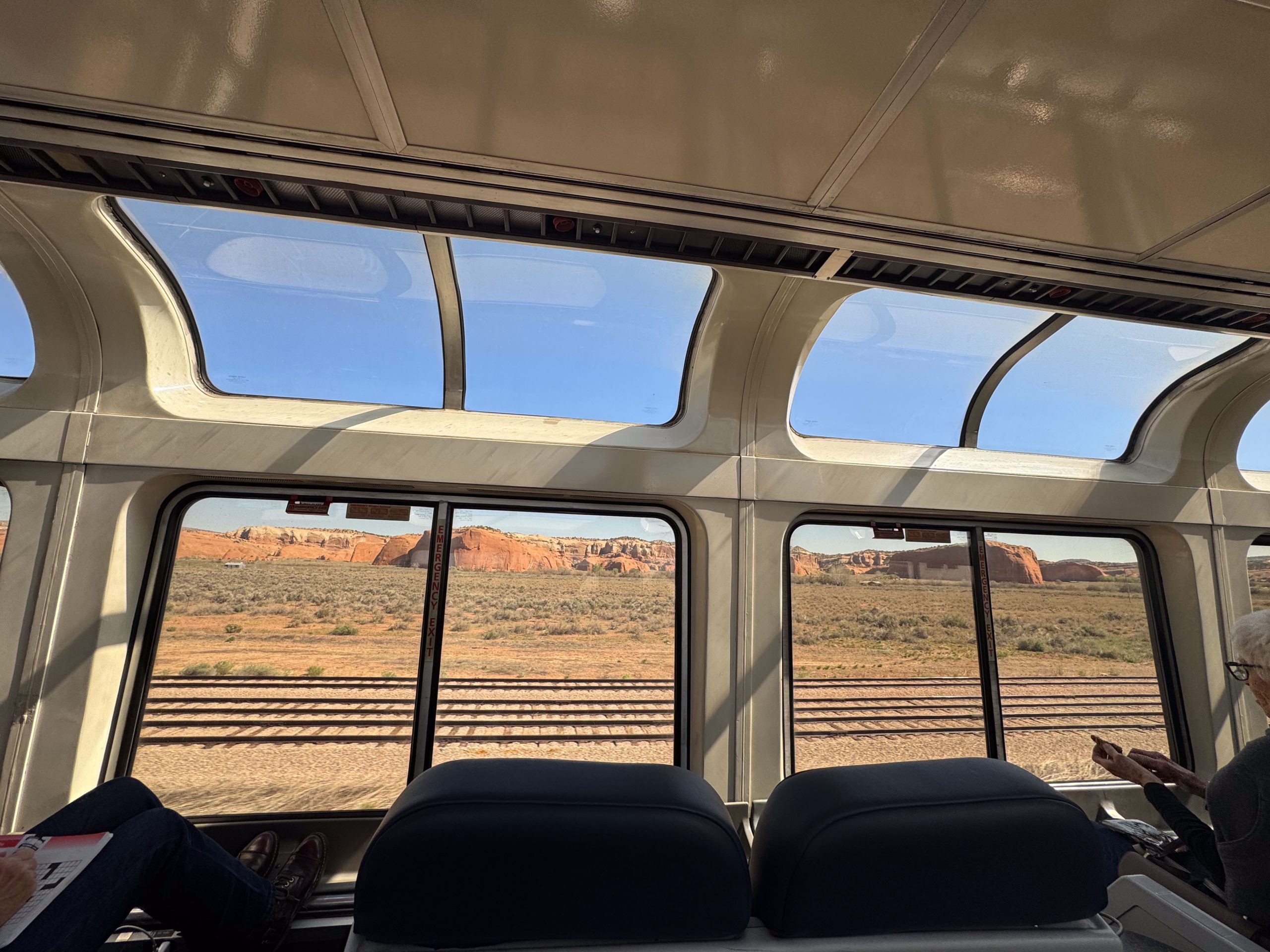
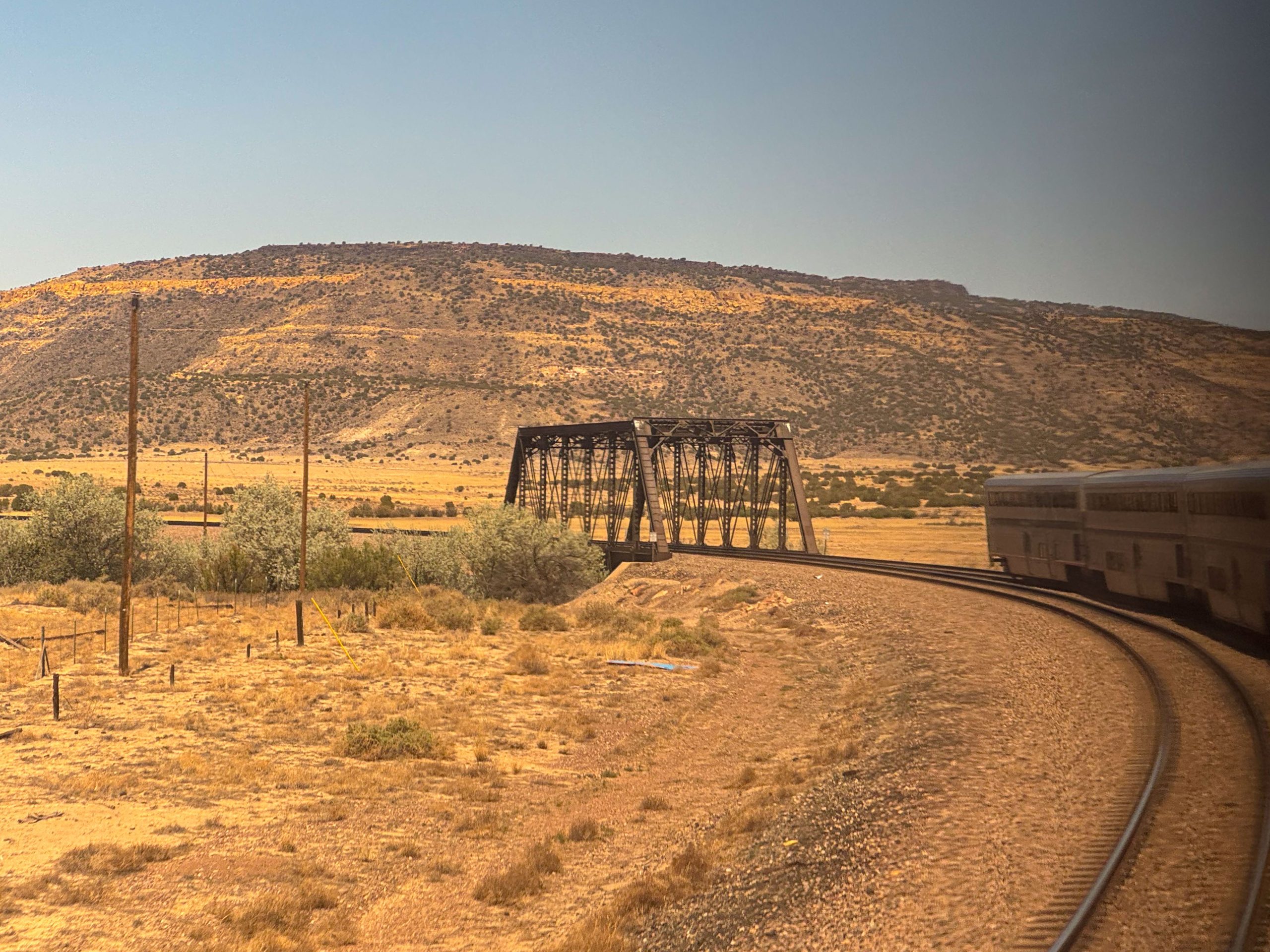
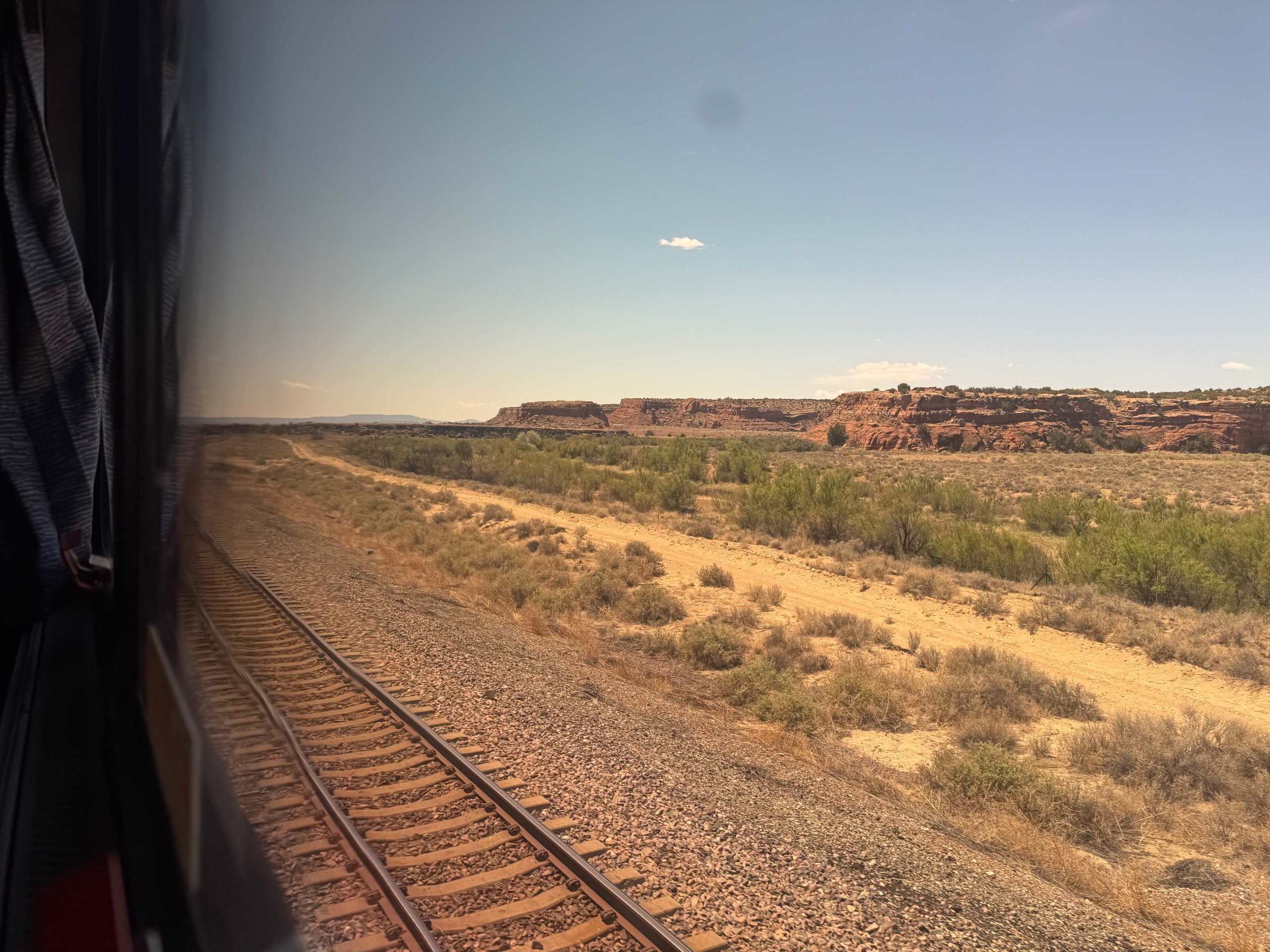
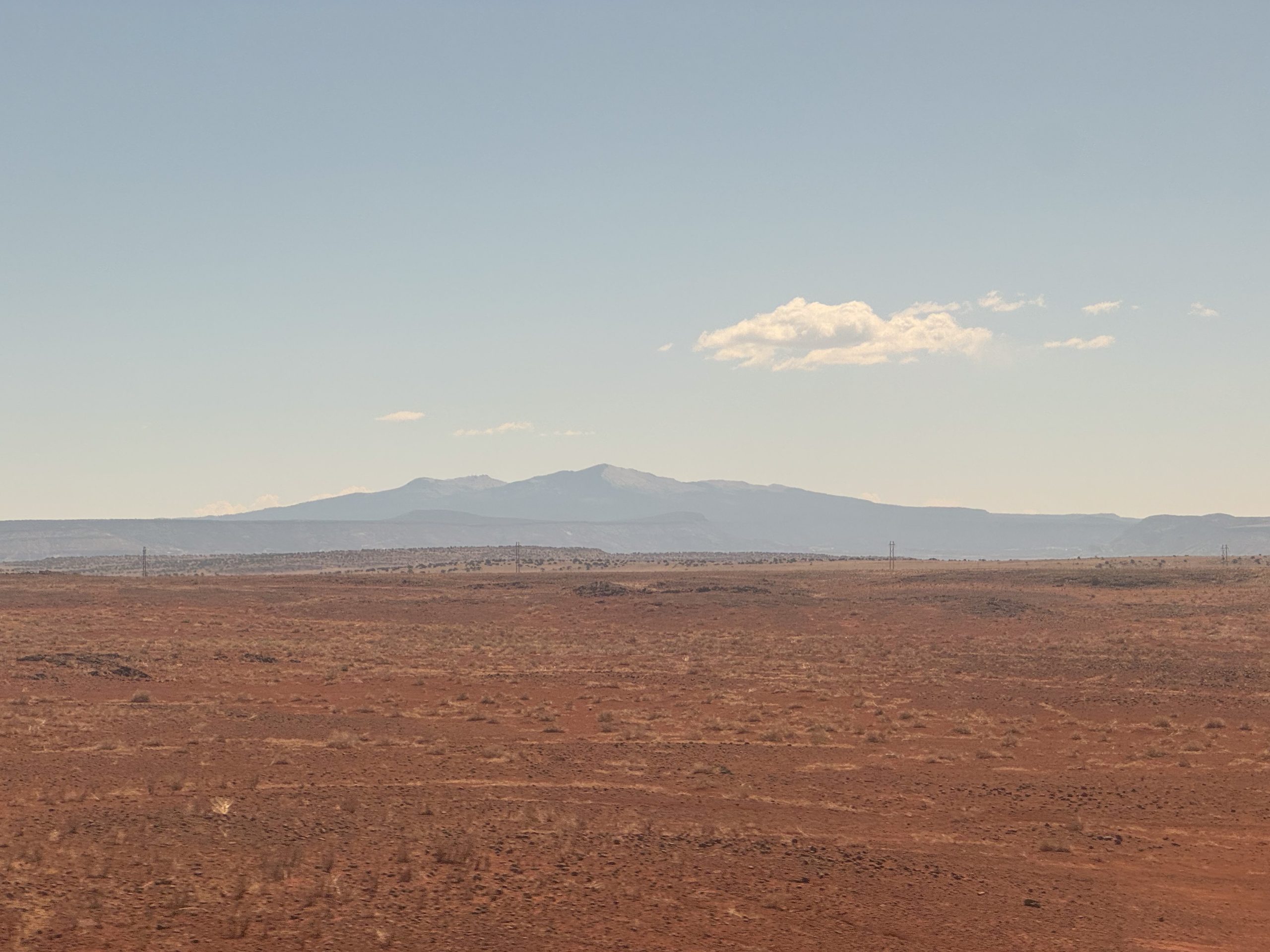
In addition to the scenery, from a railway perspective, we also passed Prewitt Junction where coal trains headed north to several coal mines. And just before Albuquerque, we left main BNSF Transcon (for now) as it heads through the Belen Cutoff, while we went north to Albuquerque and the Raton and Glorieta subdivisions towards Colorado.
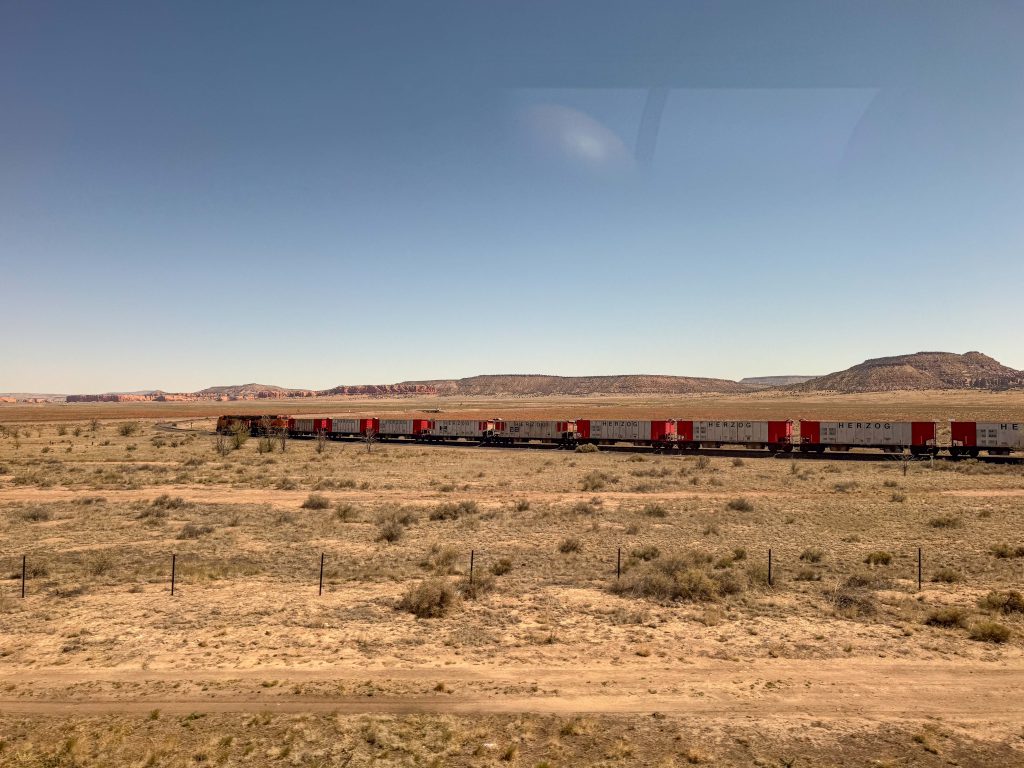
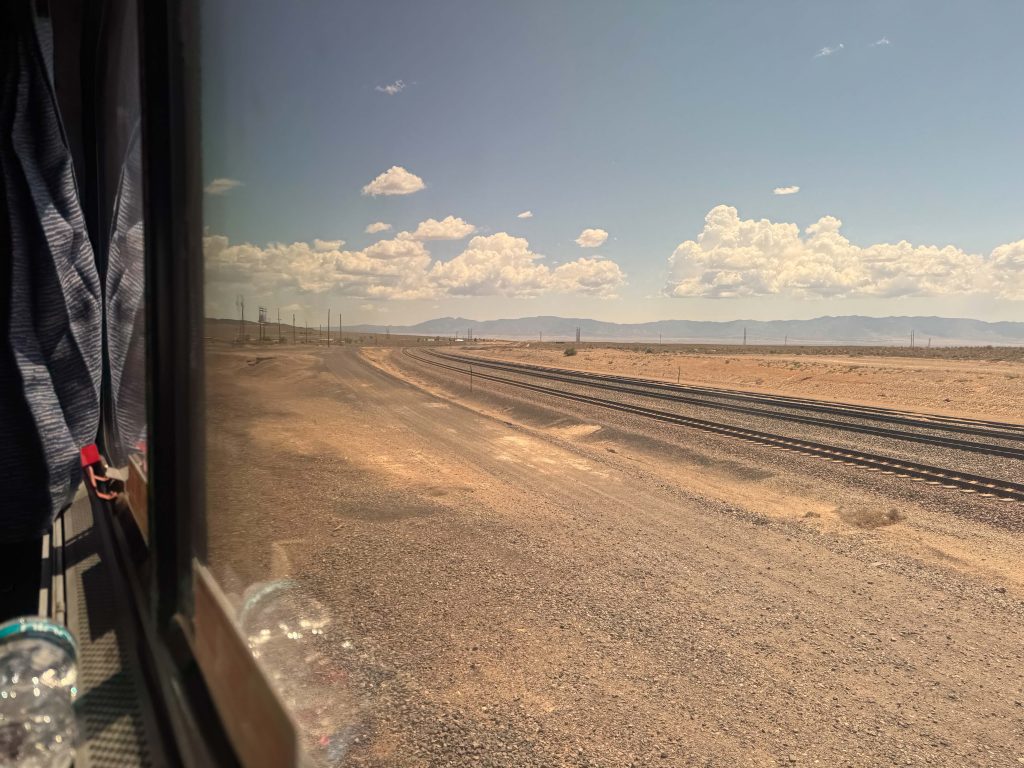
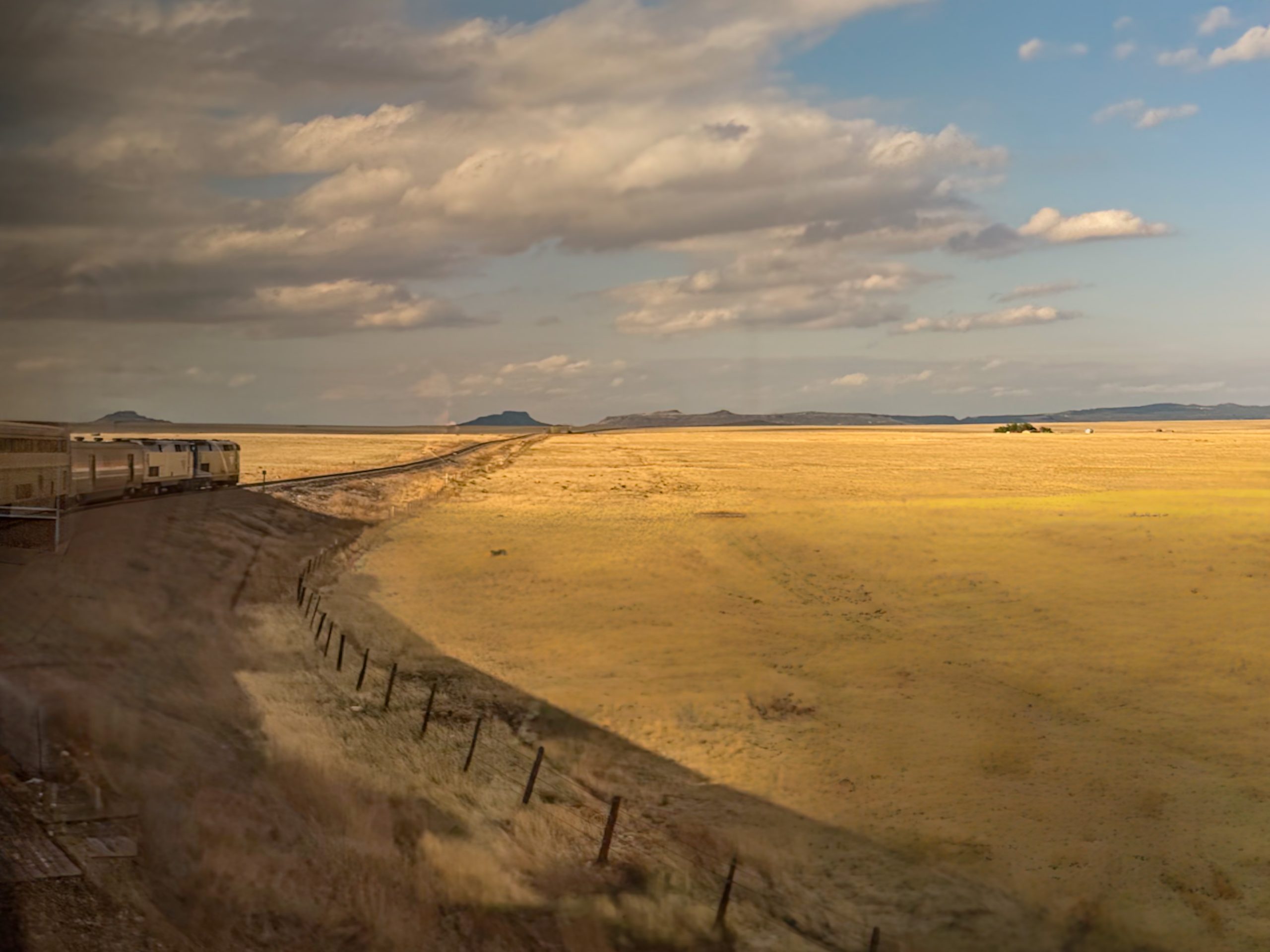
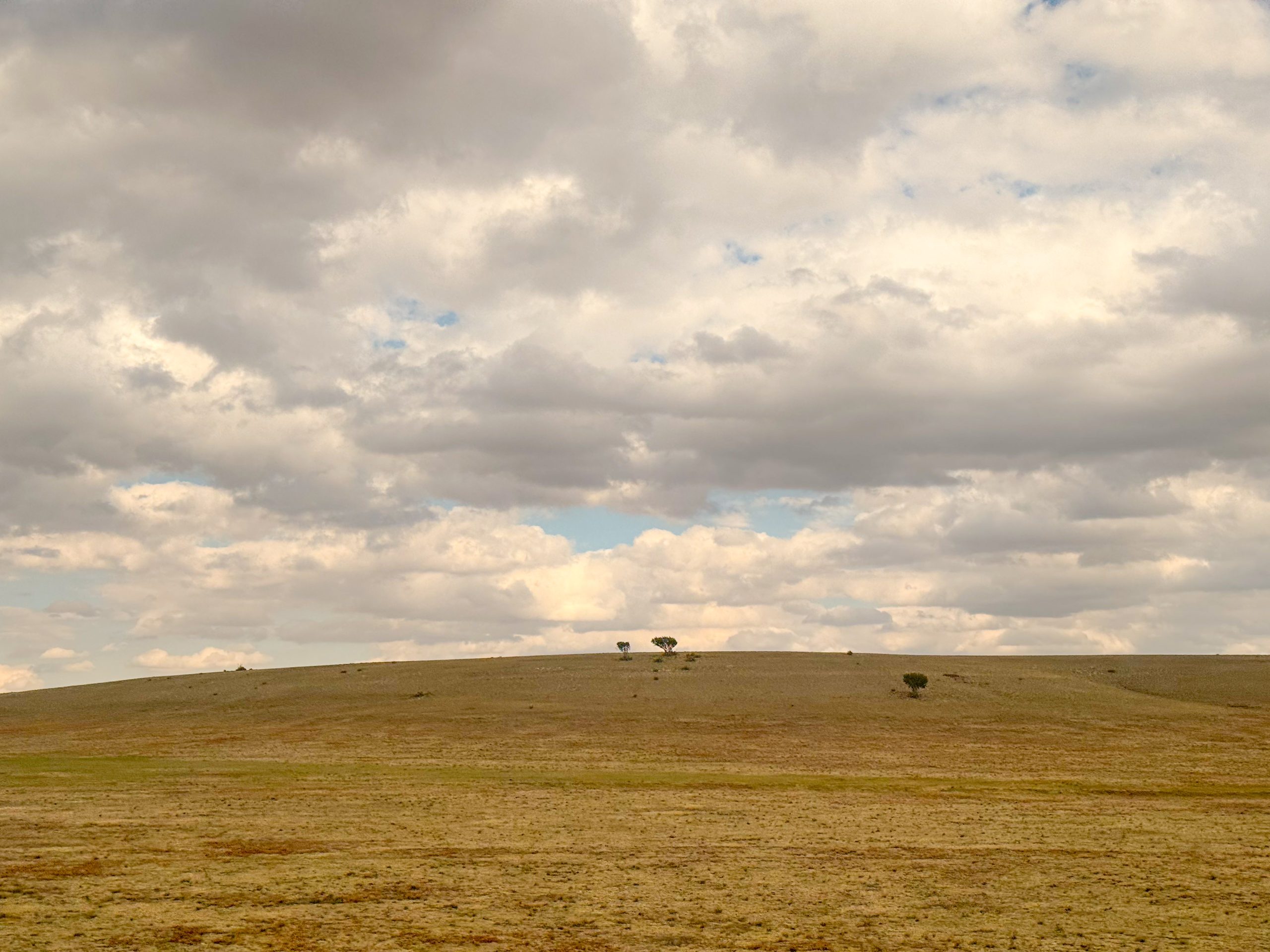
Big skies as we cross New Mexico:
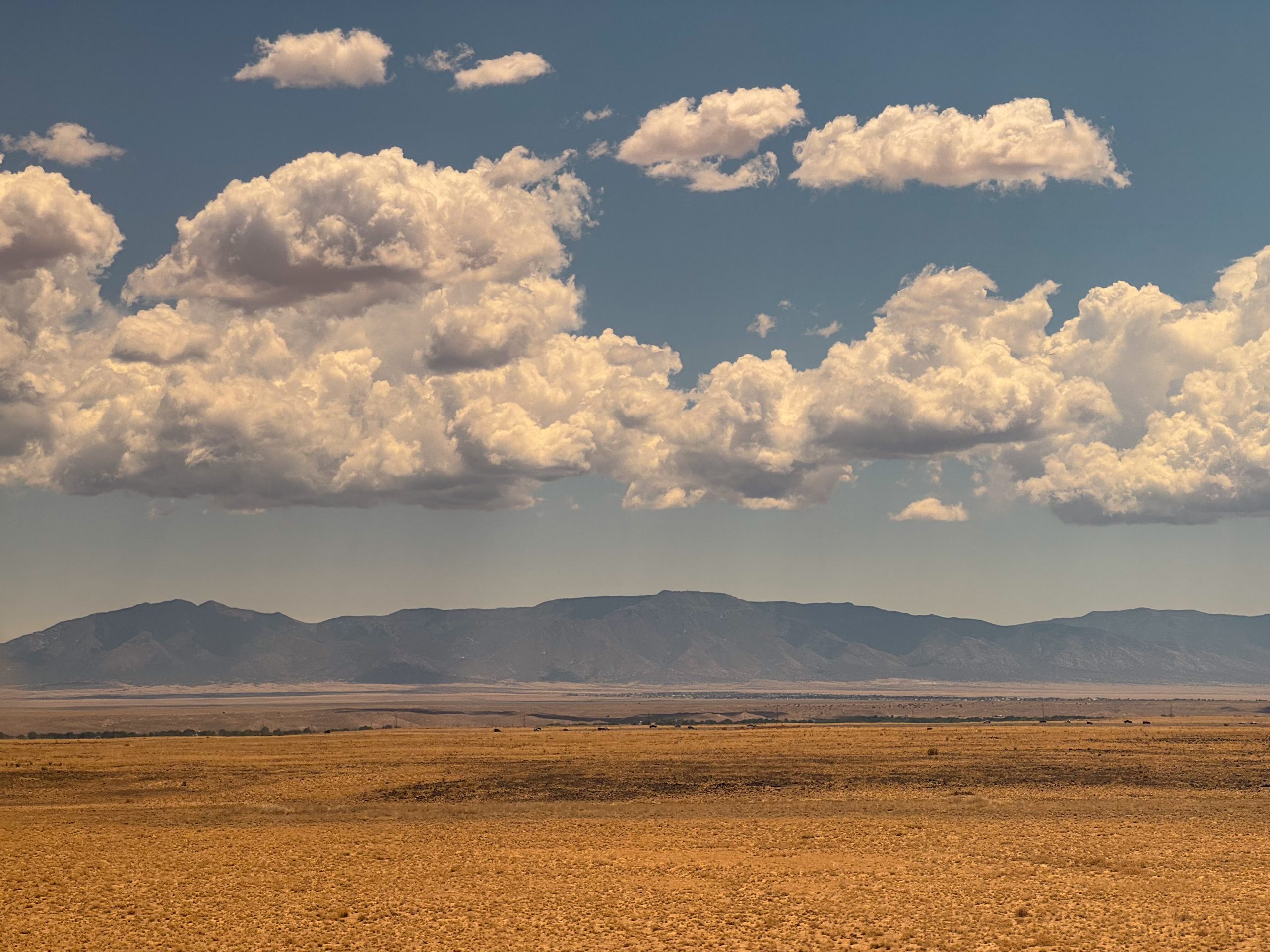
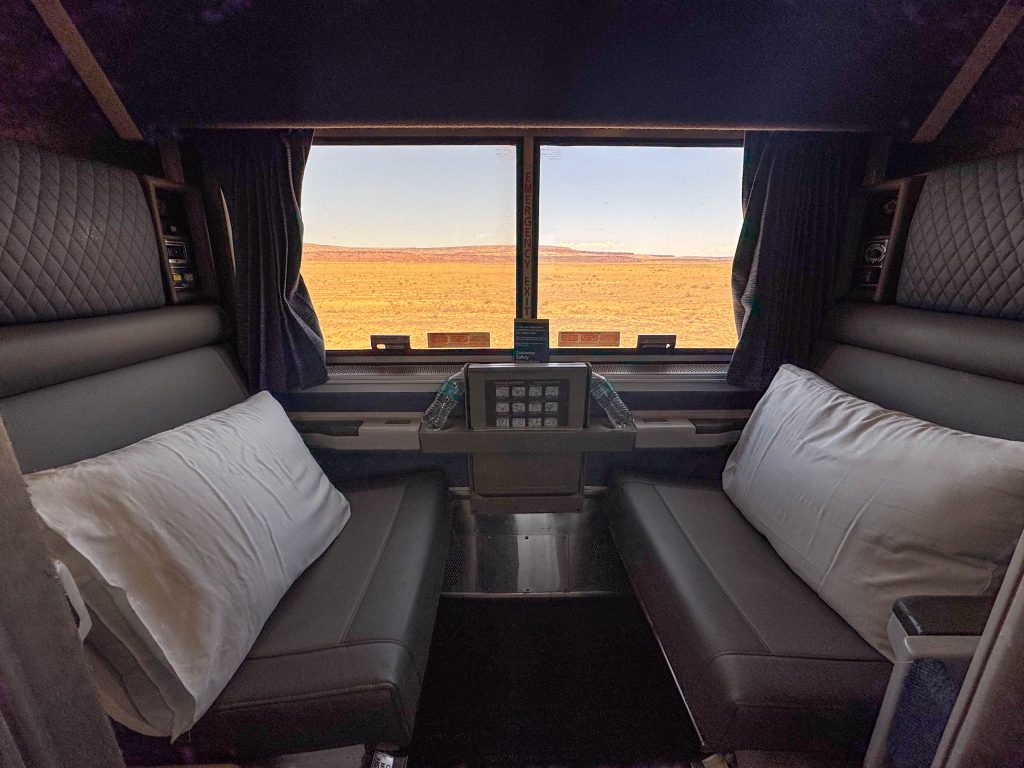
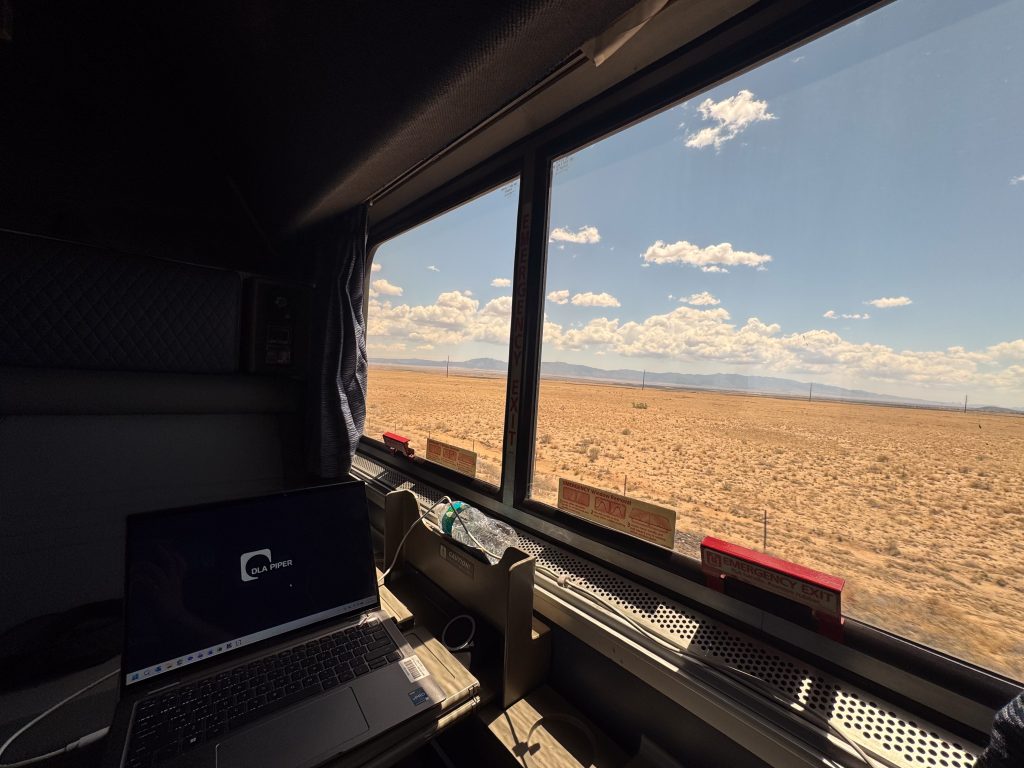
My roomette compartment was designed for two people to share so was relatively spacious for just me. I was trying to get some work done while watching the world go by out the window. The track was noticeable bumpier once we left the BNSF Transcon west of Albuquerque.
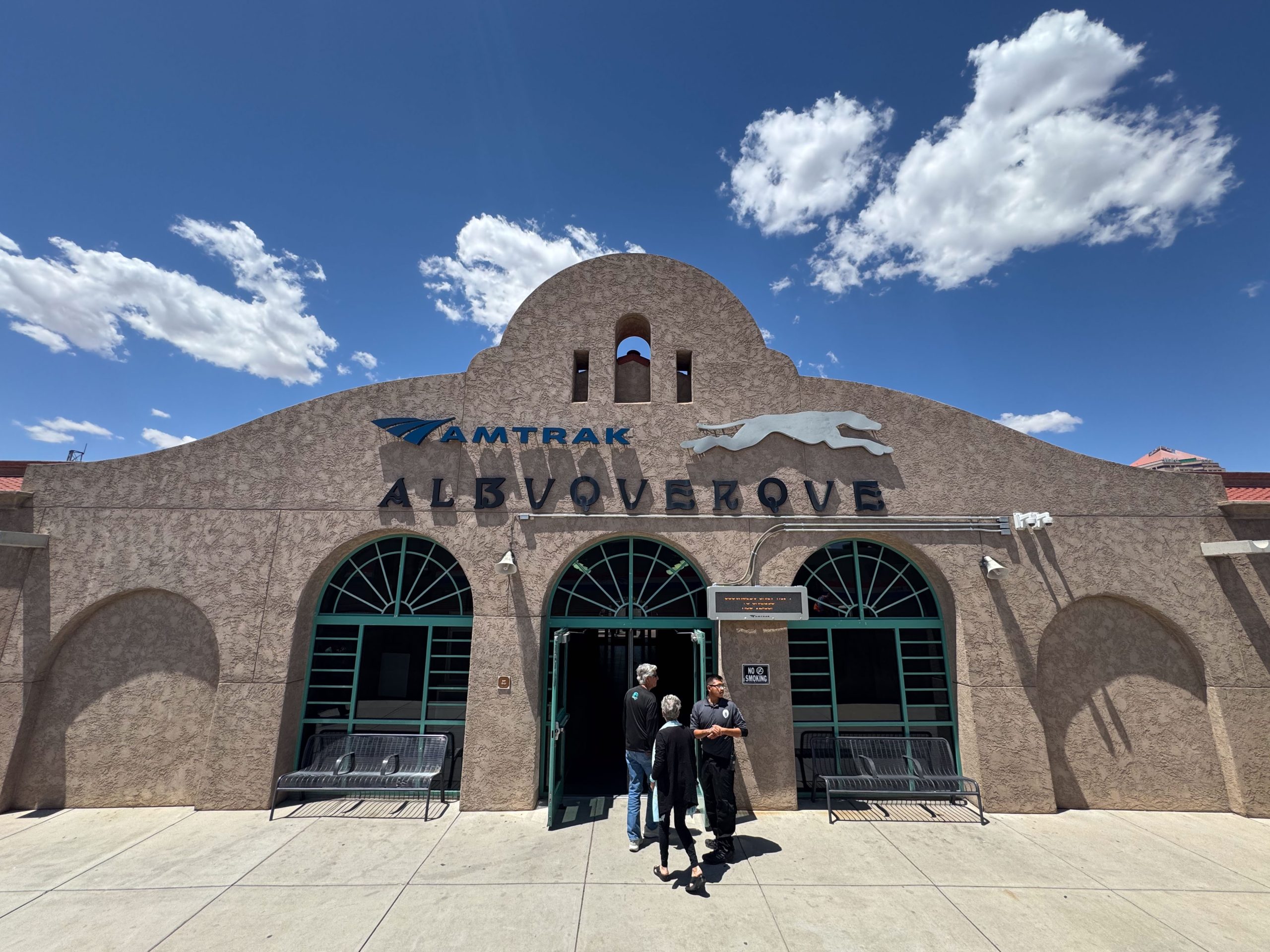
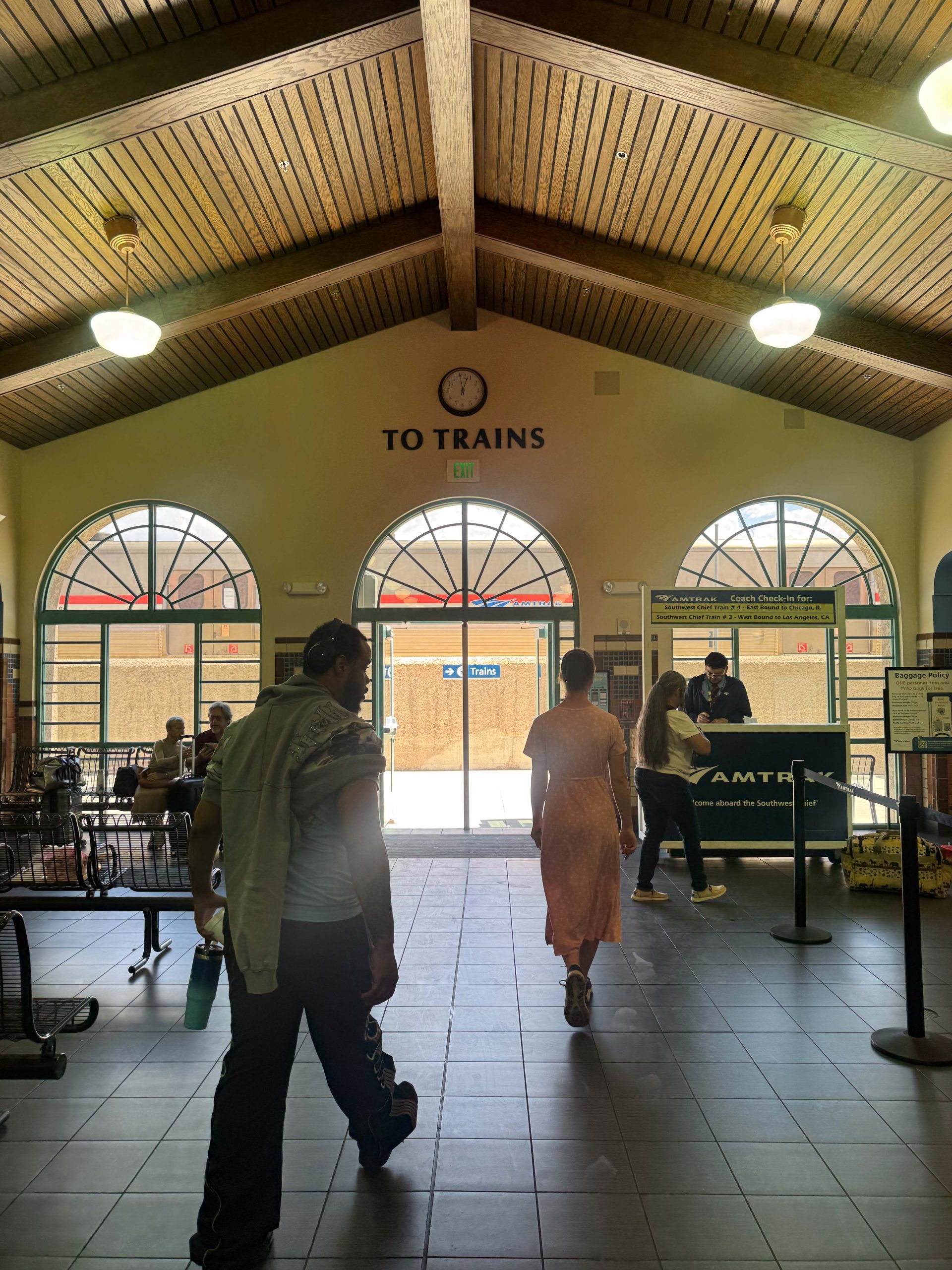
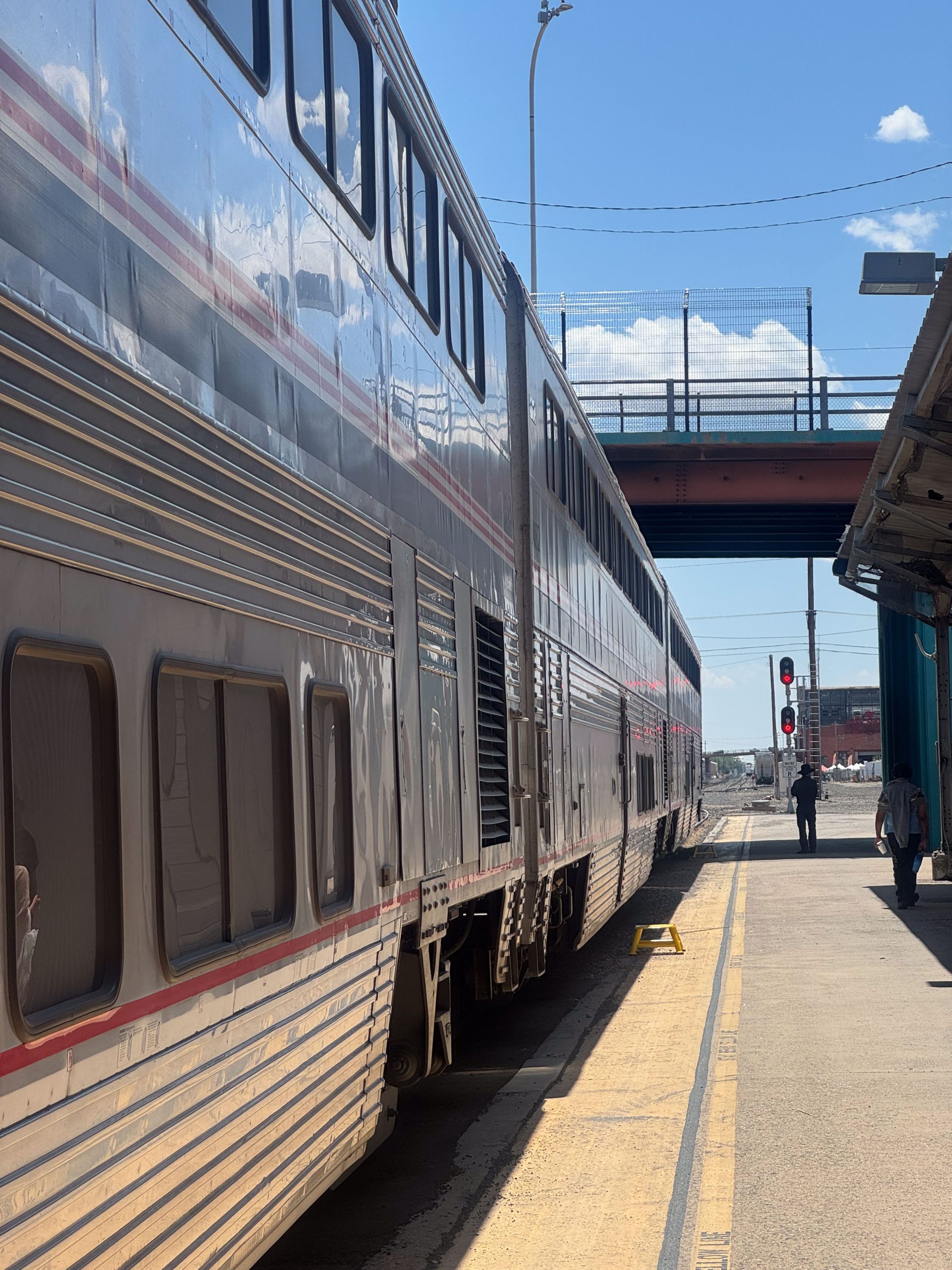
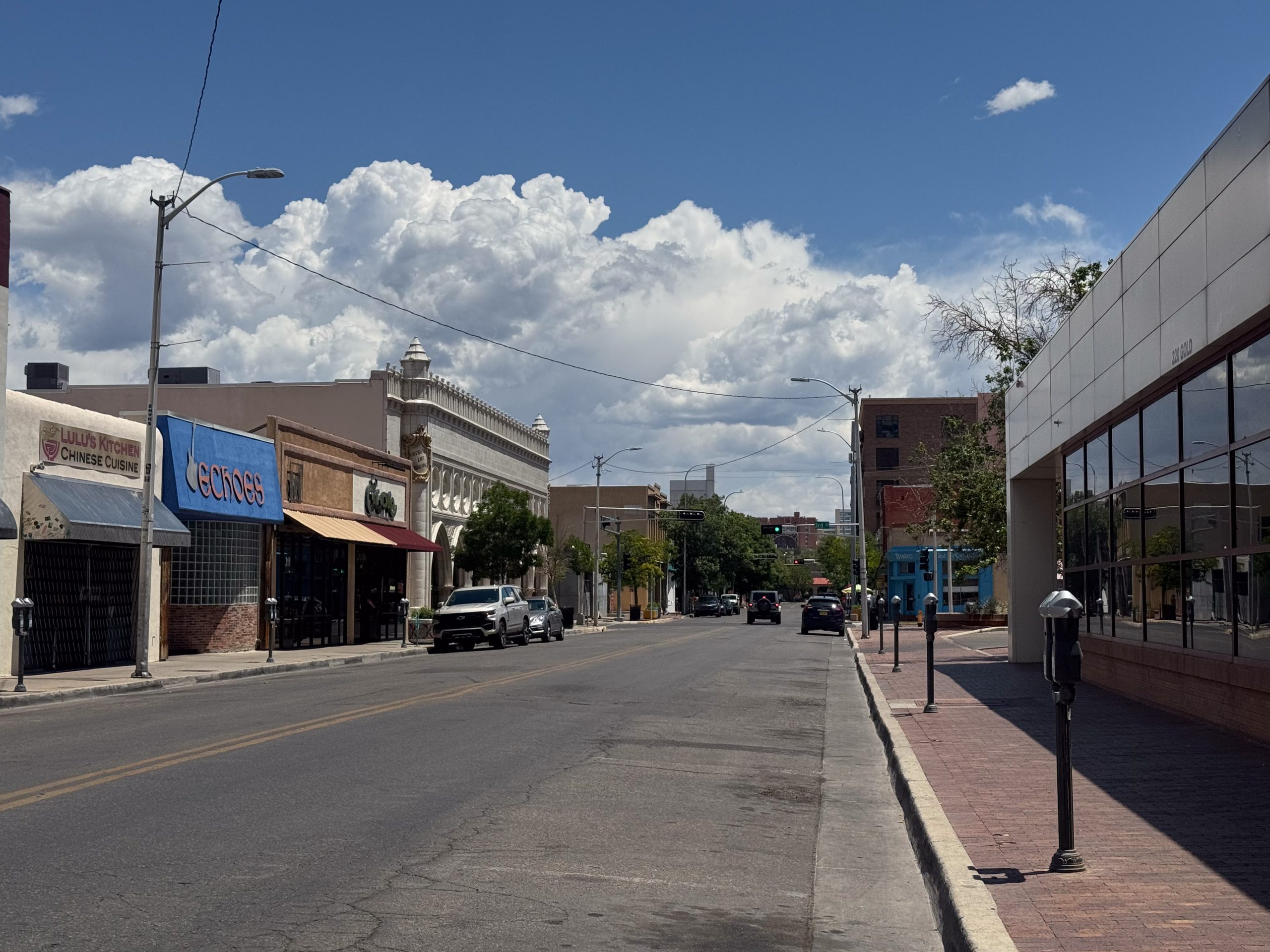
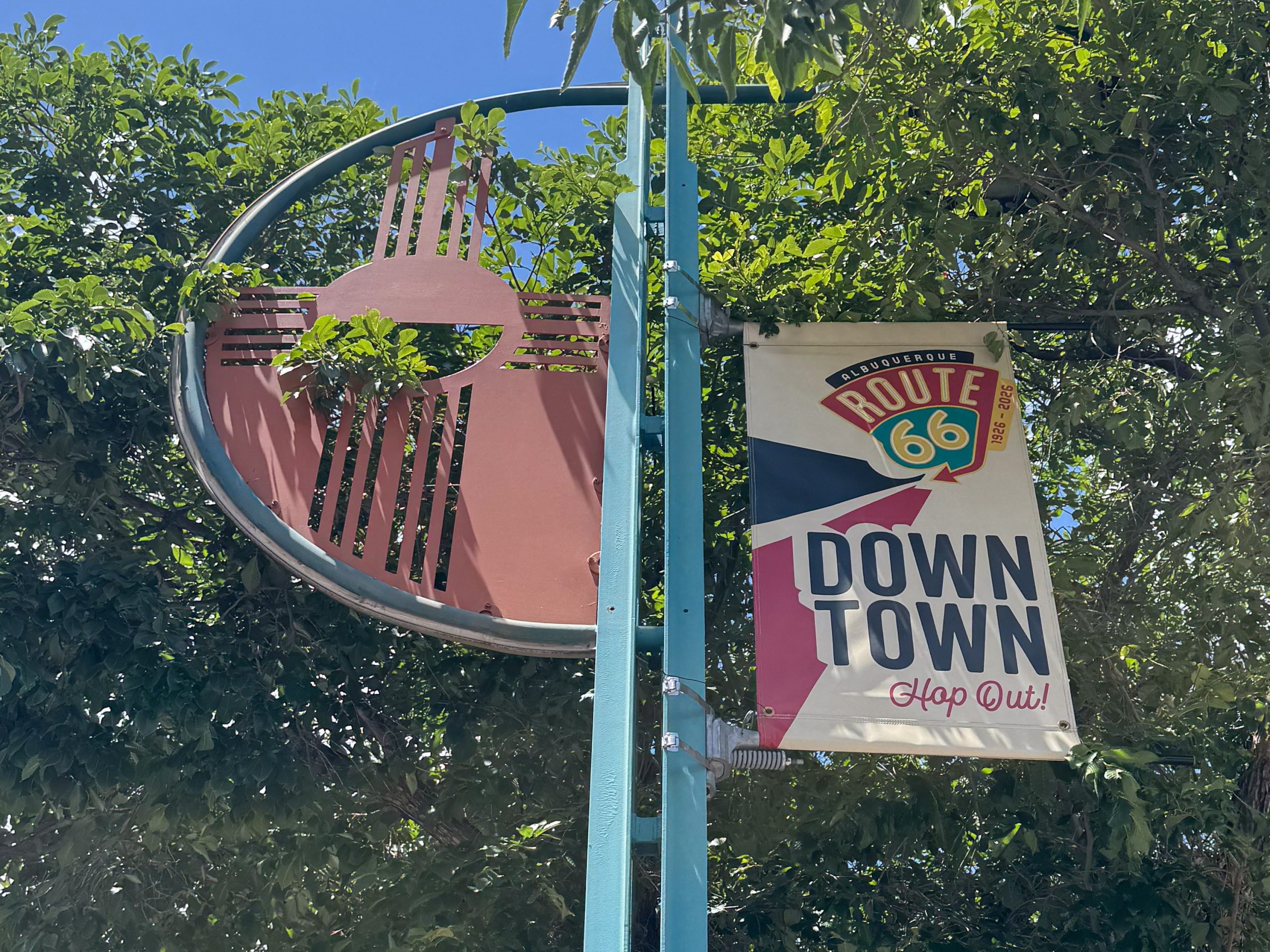
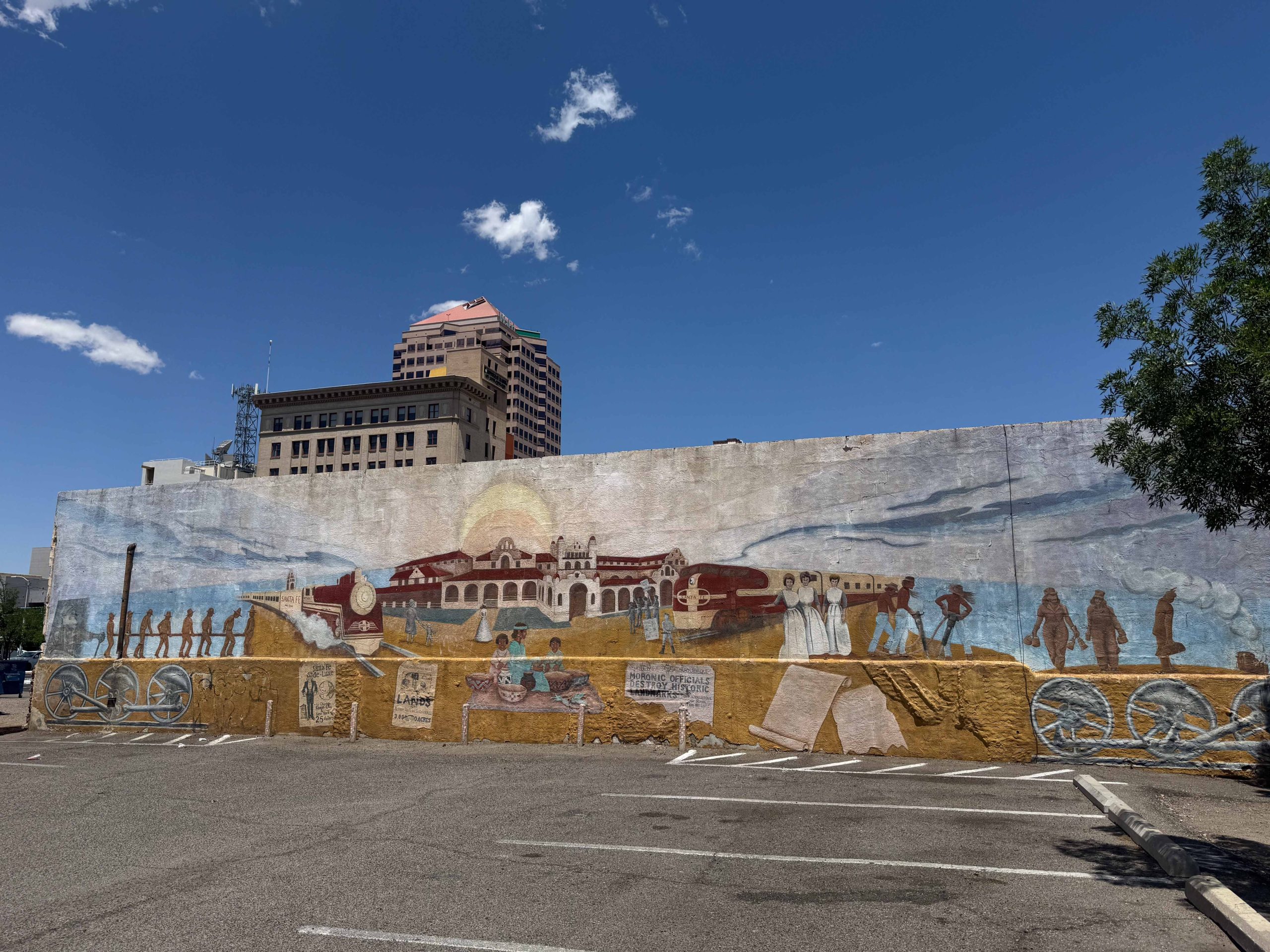
Albuquerque was the longest stop on the trip – about 40 minutes. I hadn’t realized how much time I would have in Albuquerque until the train stopped, so wasn’t organized about where to go. And it was very hot walking in the sun without a plan. Rapha, the cafe car attendant, walked to his favourite restaurant for lunch. This was one of the busiest stops on the route with a significant number of people boarding and disembarking.
After our stop, was lunch. There were several options for each meal. As I was trying to eat vegan or vegetarian, I avoided some of the selections, but everything I had was tasty. The food was cooked downstairs in the dining car after placing our orders. Eating multi-course meals for two days was very filling and I was never hungry, even when being called for dinner!
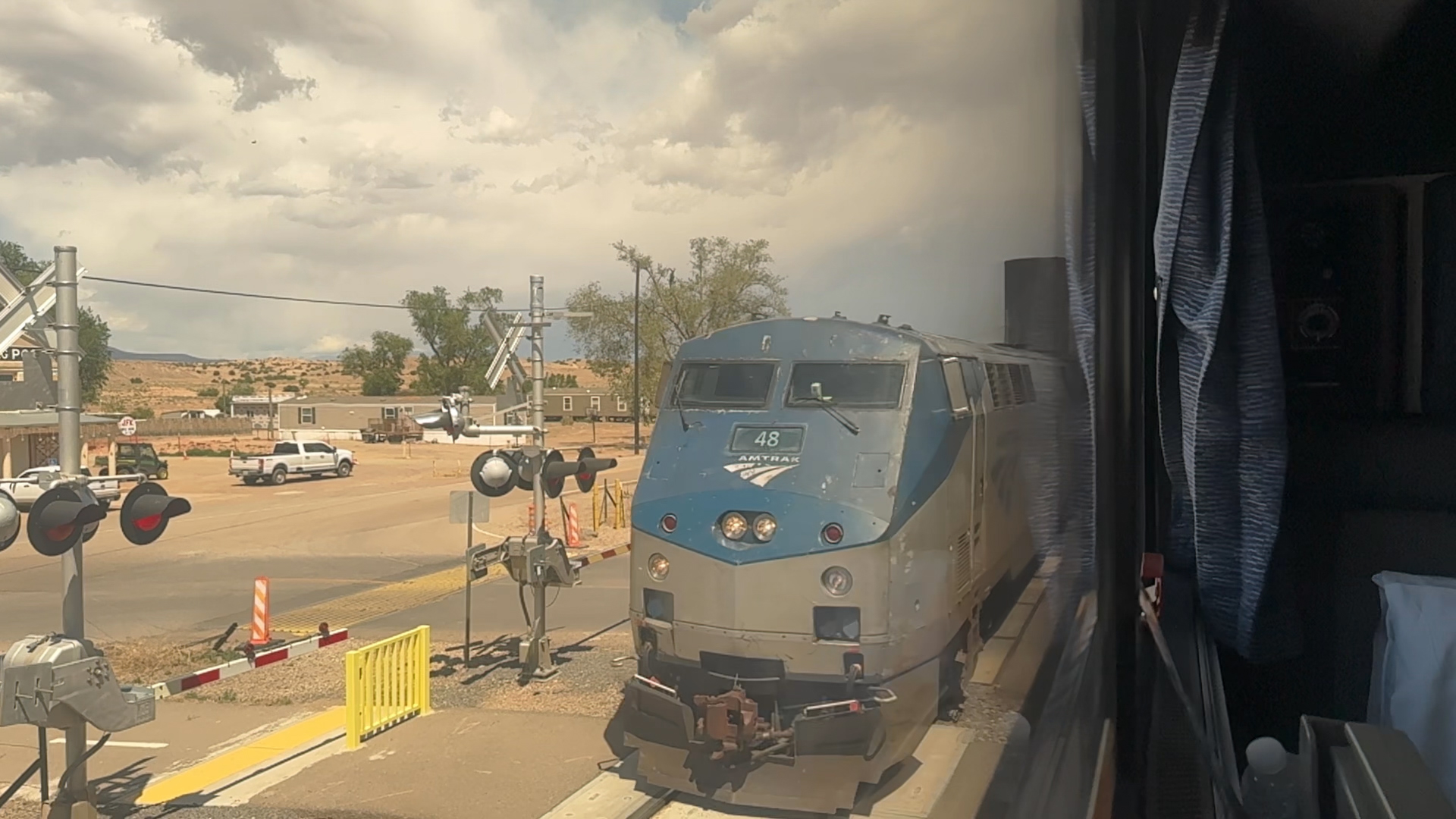
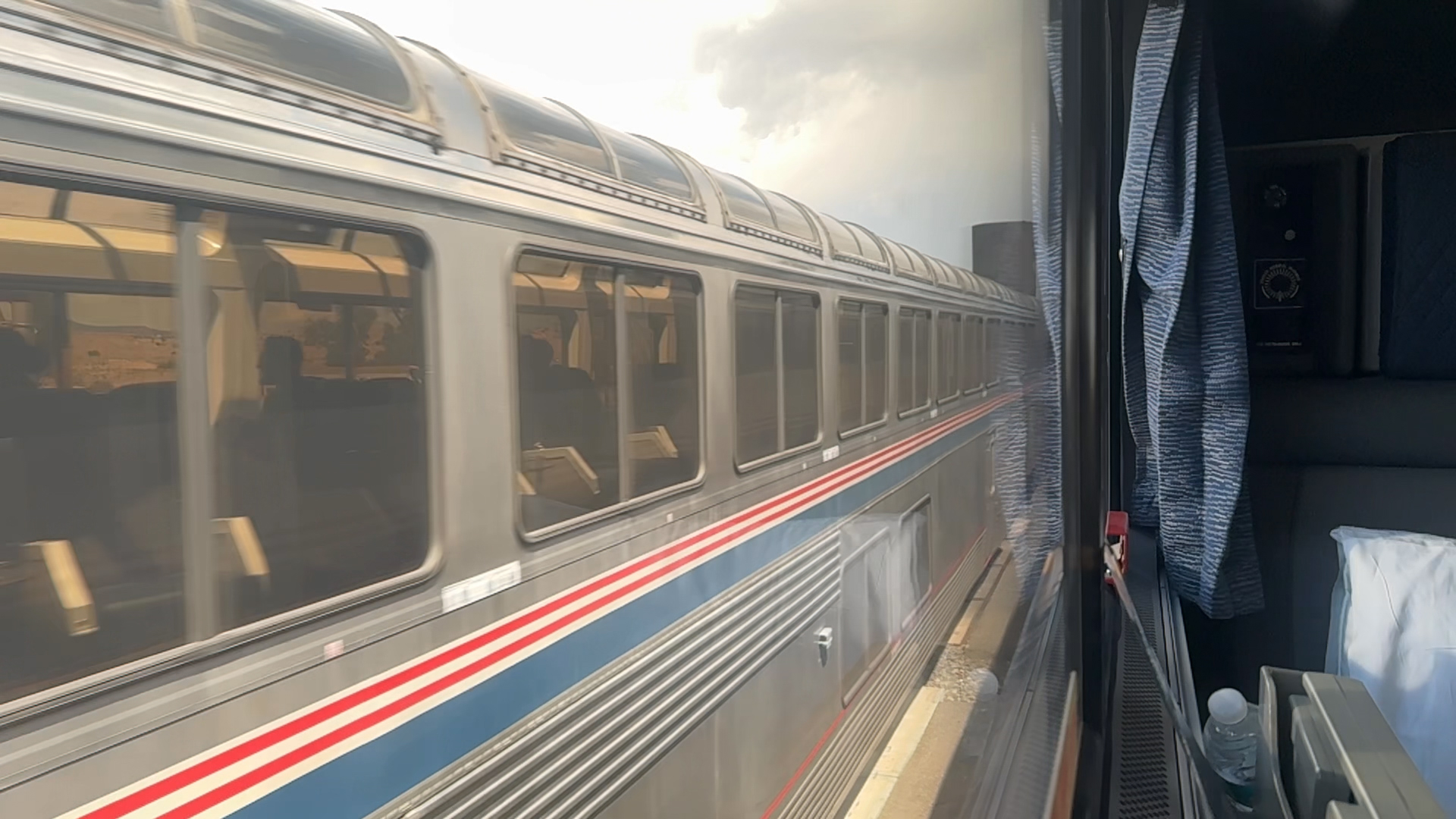
Shortly after Albuquerque, we were held up for over half an hour waiting for the westbound Southwest Chief to meet us at the Kewa Rail Runner Station. The train crew made a joke on the radio about “blocking the Mother’s Day parade” because our train was blocking a level crossing, and the cars started to stretch out into the distance on either side – and it was Mothers’ Day.
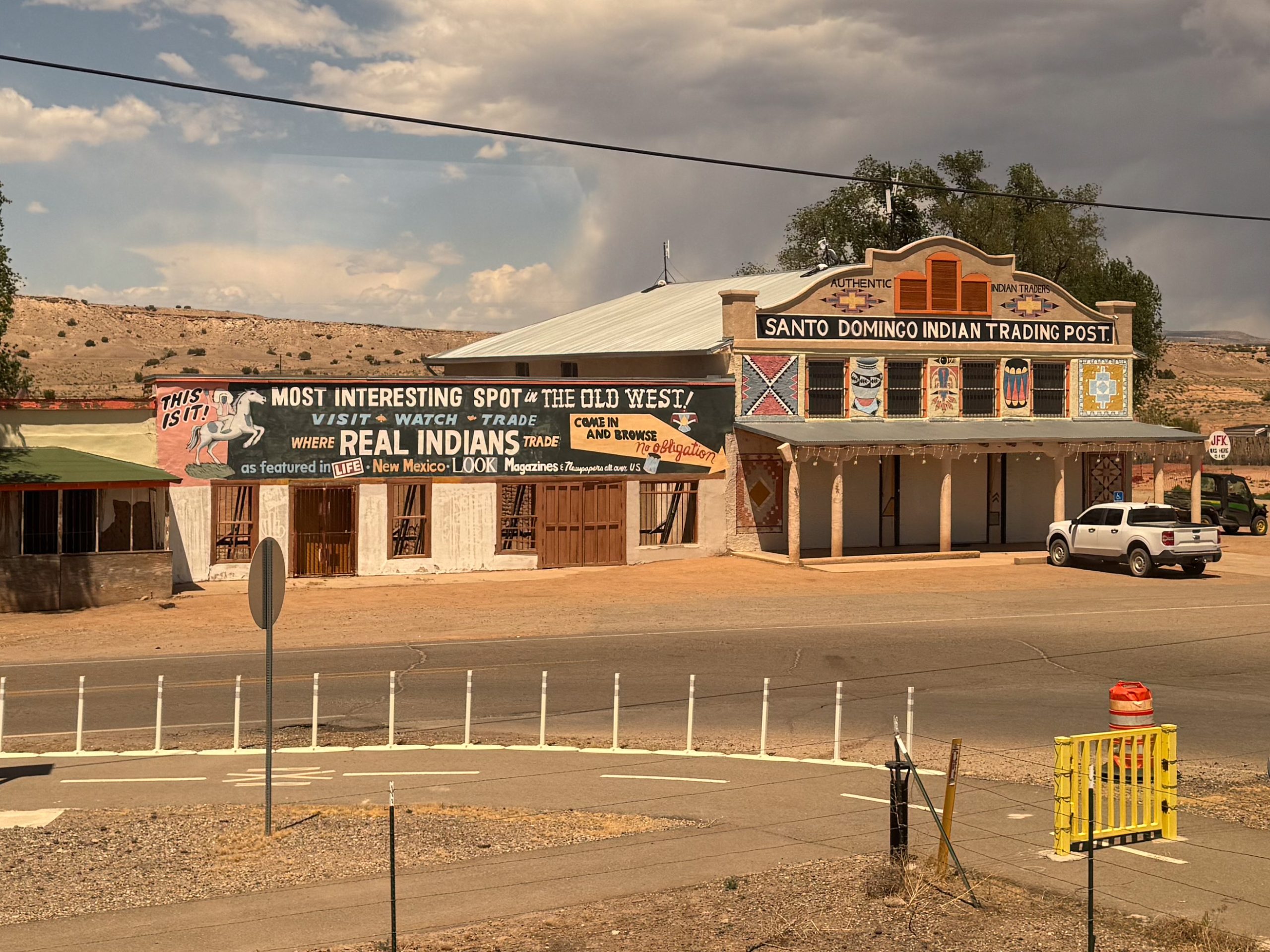
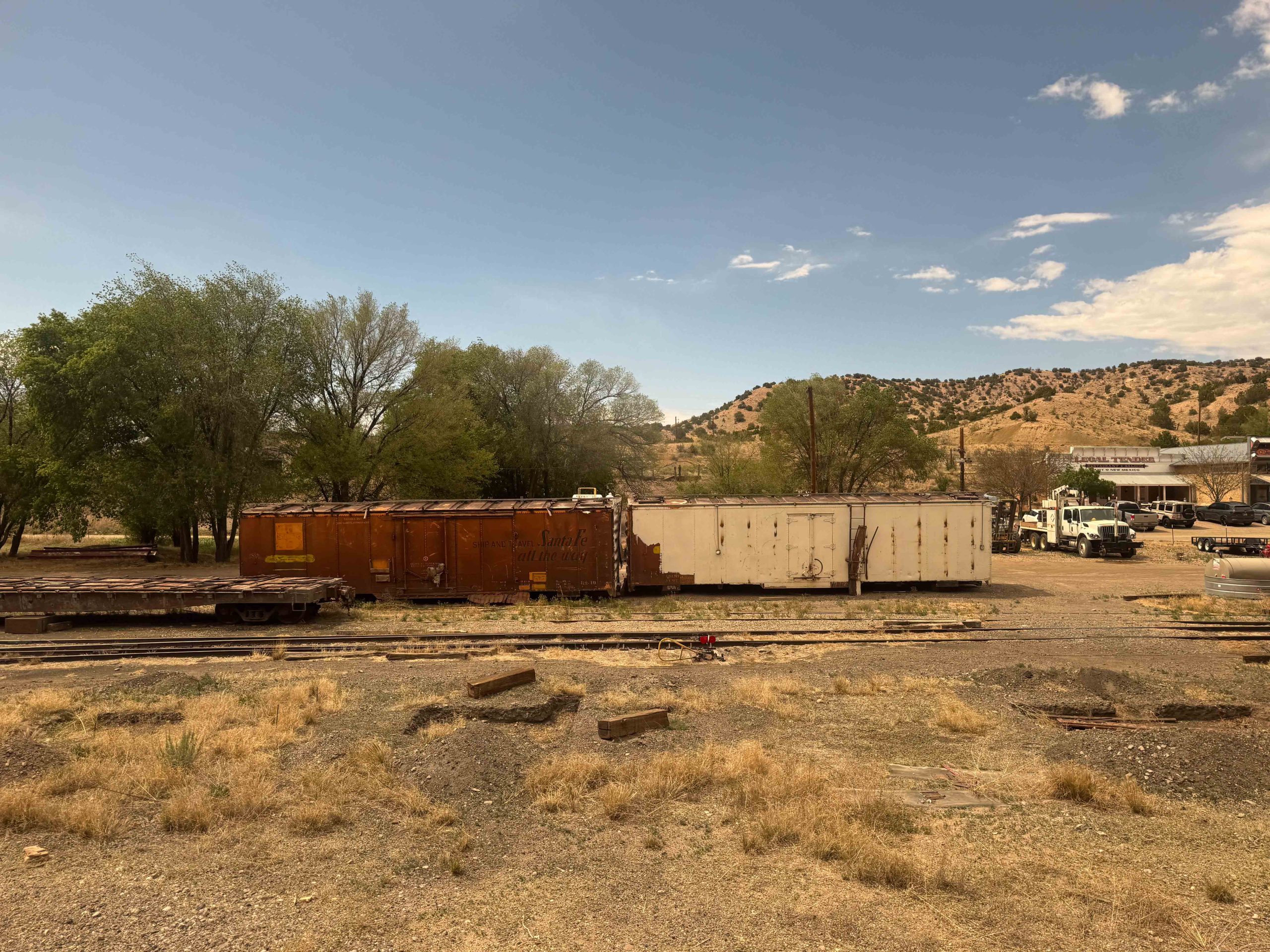
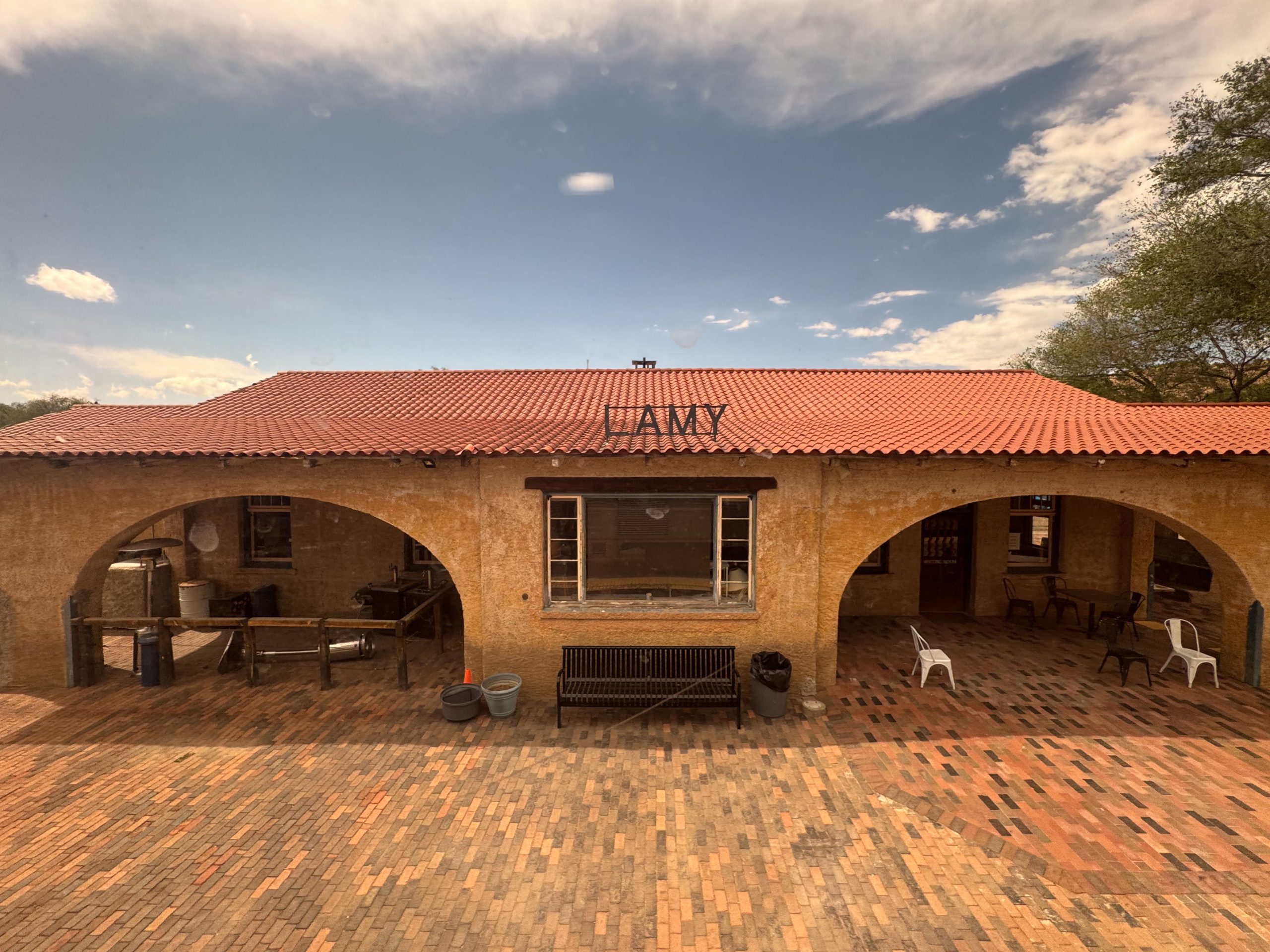
From Lamy (no time to get off), the train went through Apache Canyon with cliffs “only a few feet” from the train (according to Amtrak’s promotional language). Lamy had a bus connection to Santa Fe.
This section is part of the route’s climb over Glorieta Pass involving a steep winding route through juniper and pine forests. There was a discussion on the radio that due to forecasts for high winds, the train would have to go slowly – forecast winds of 60mph meant a maximum speed of 40mph.
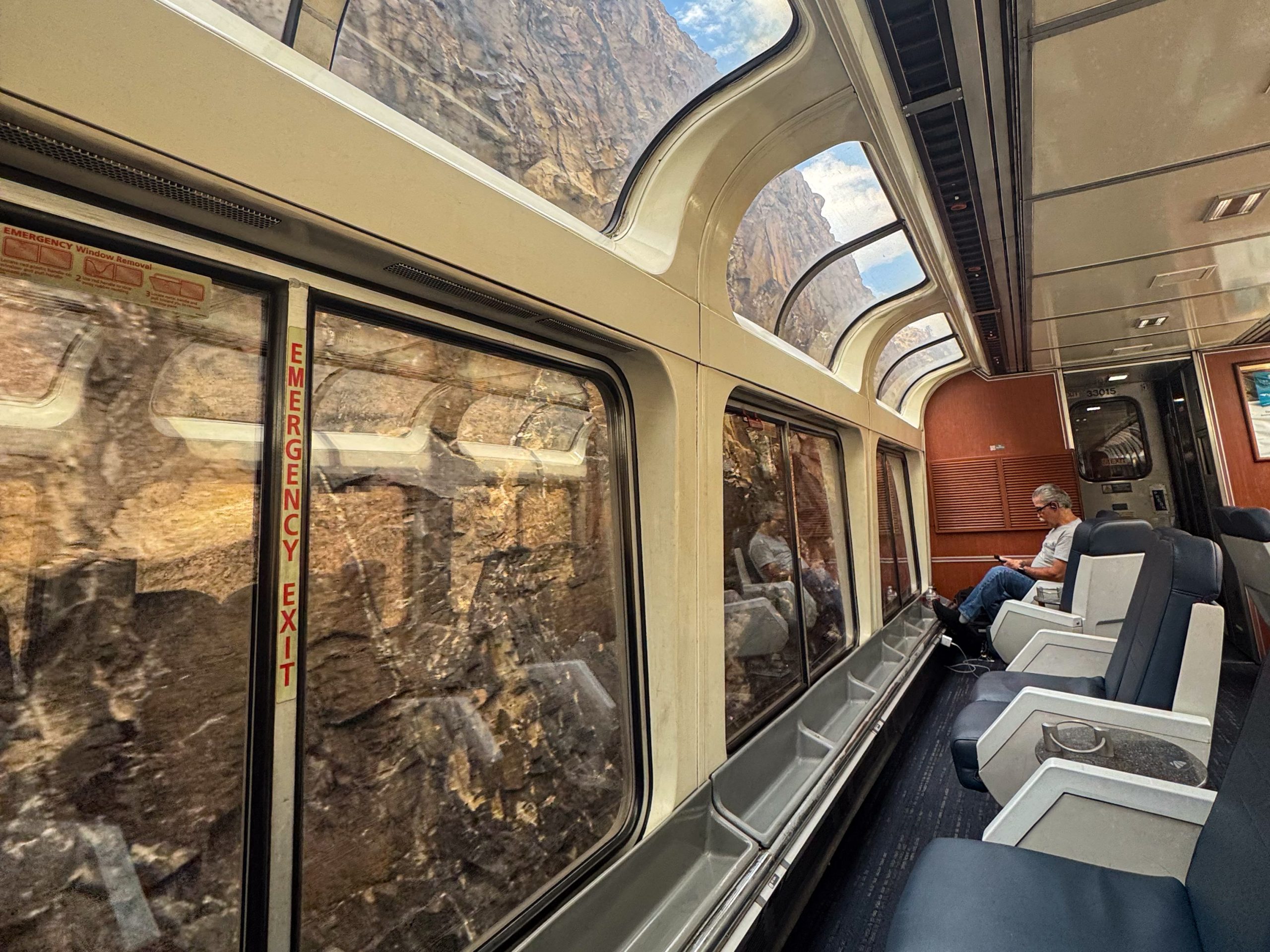
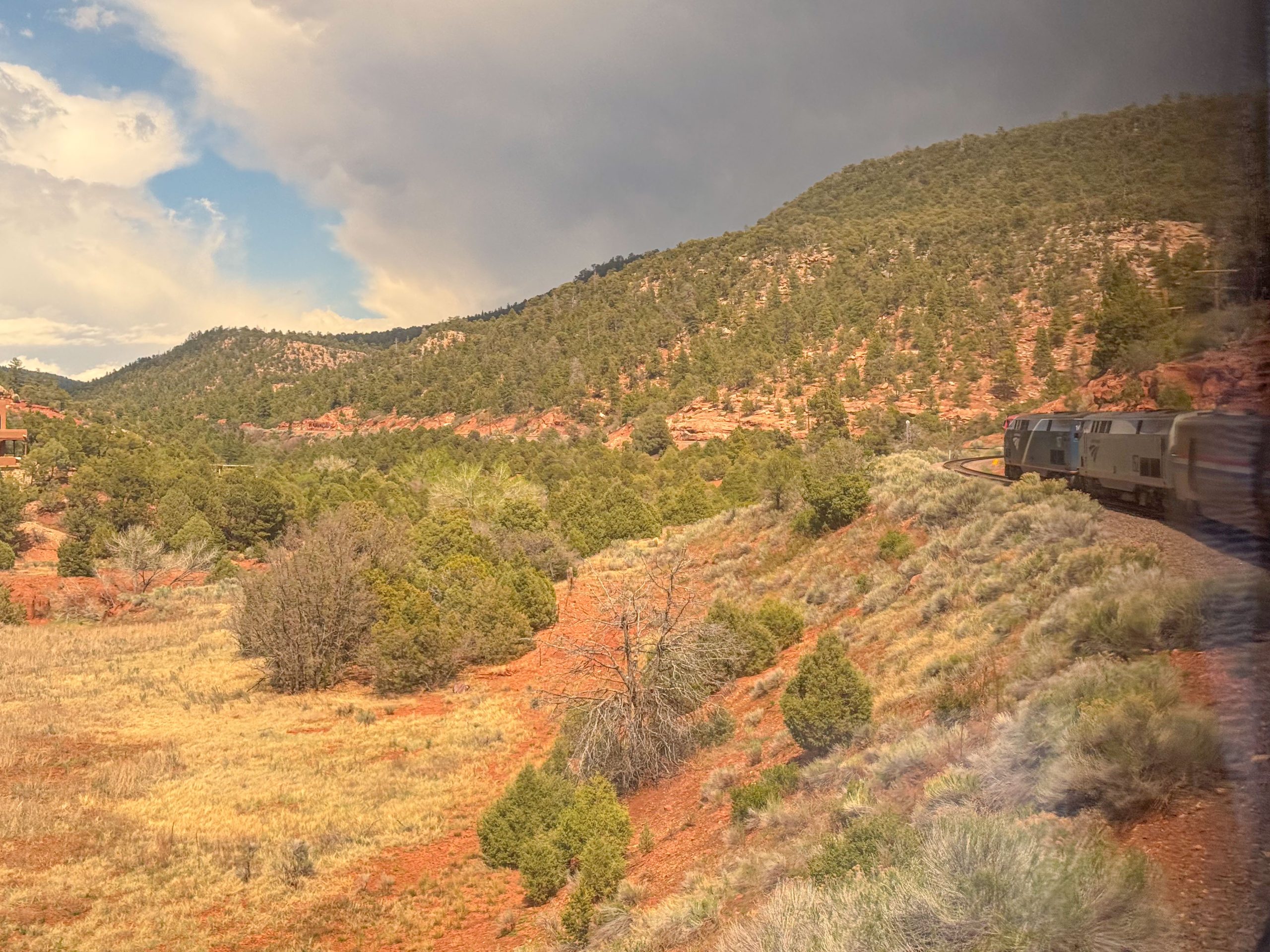
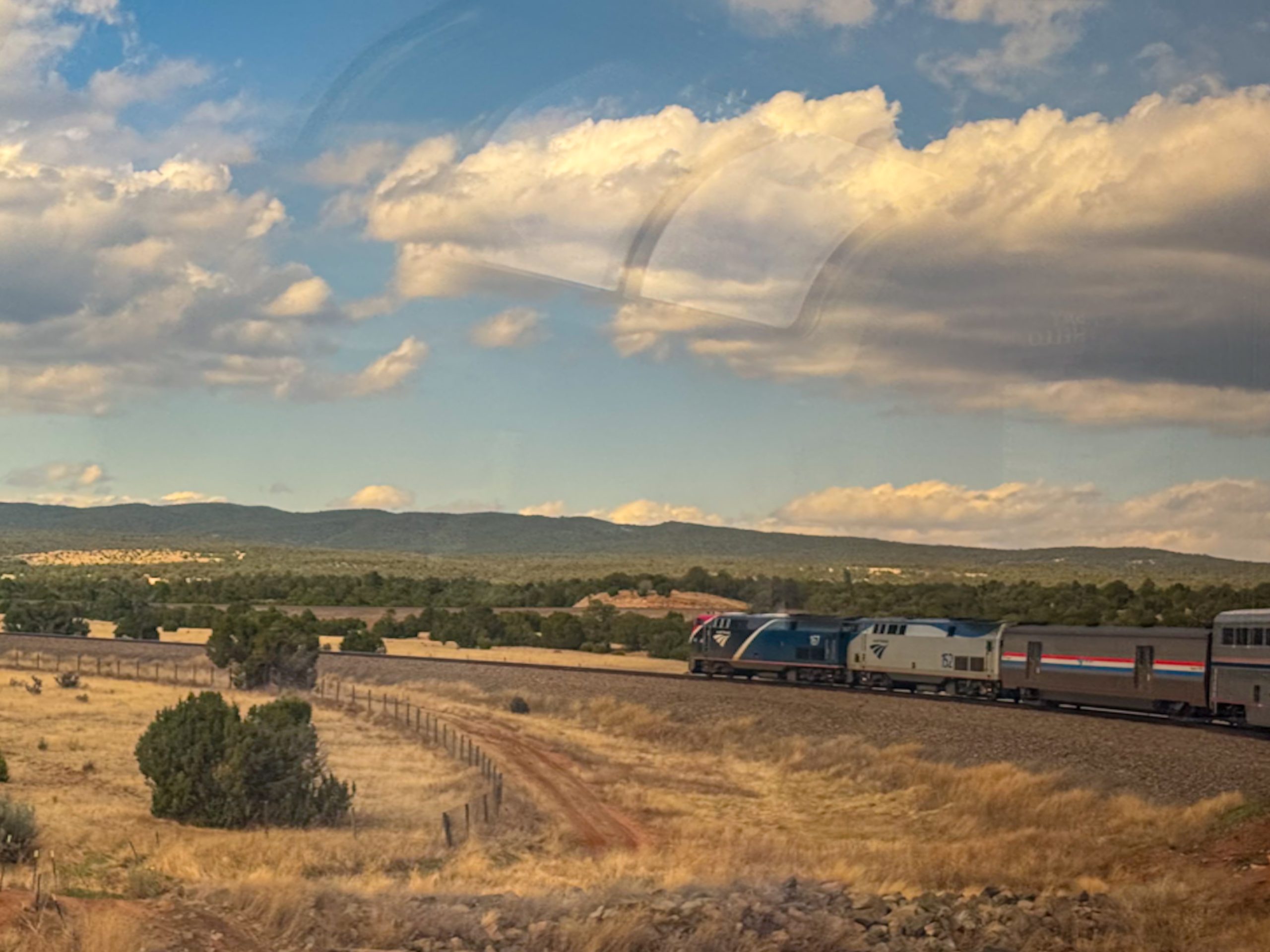
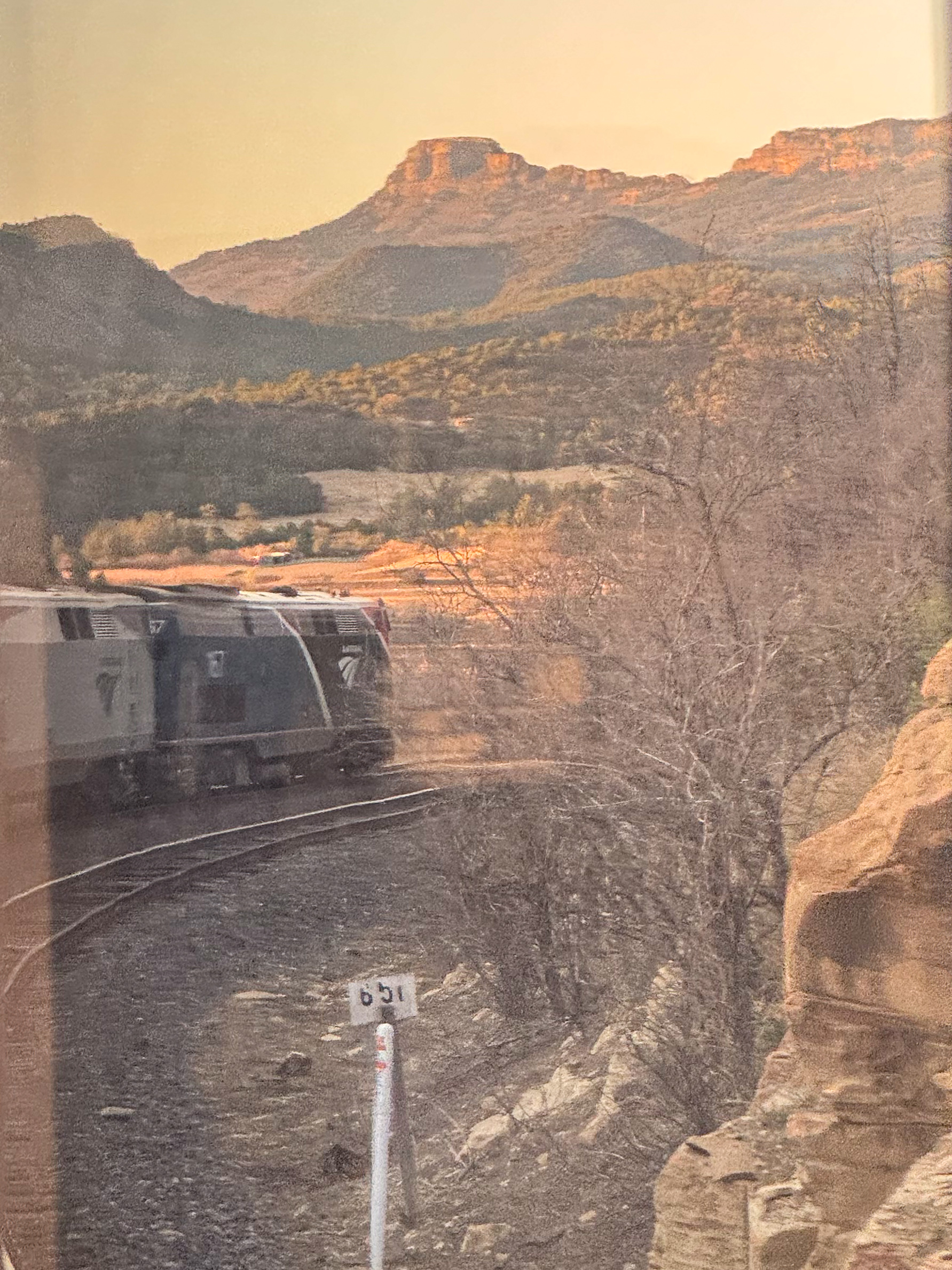
At one point, the train does some loops (map) to gain elevation so everyone crowded the windows to see the curves. In this photo below, you can see the upper track in the distance above the locomotive.
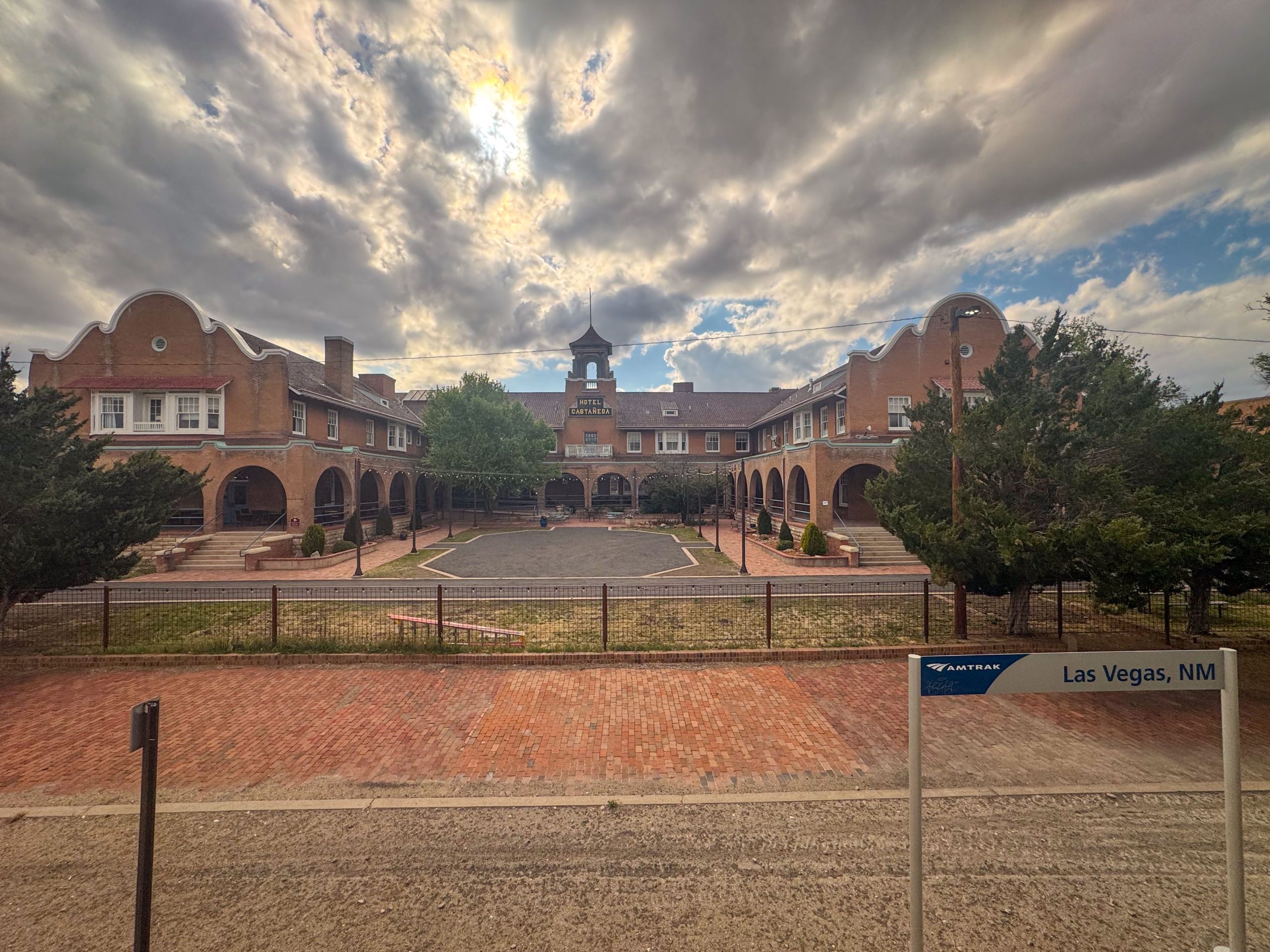
Our next stop was in Las Vegas, New Mexico at about 5pm. Other than jokes about the name, the other point of interest was the first of the “Harvey House” hotels dating back to the 1890s, the Castañeda Hotel.
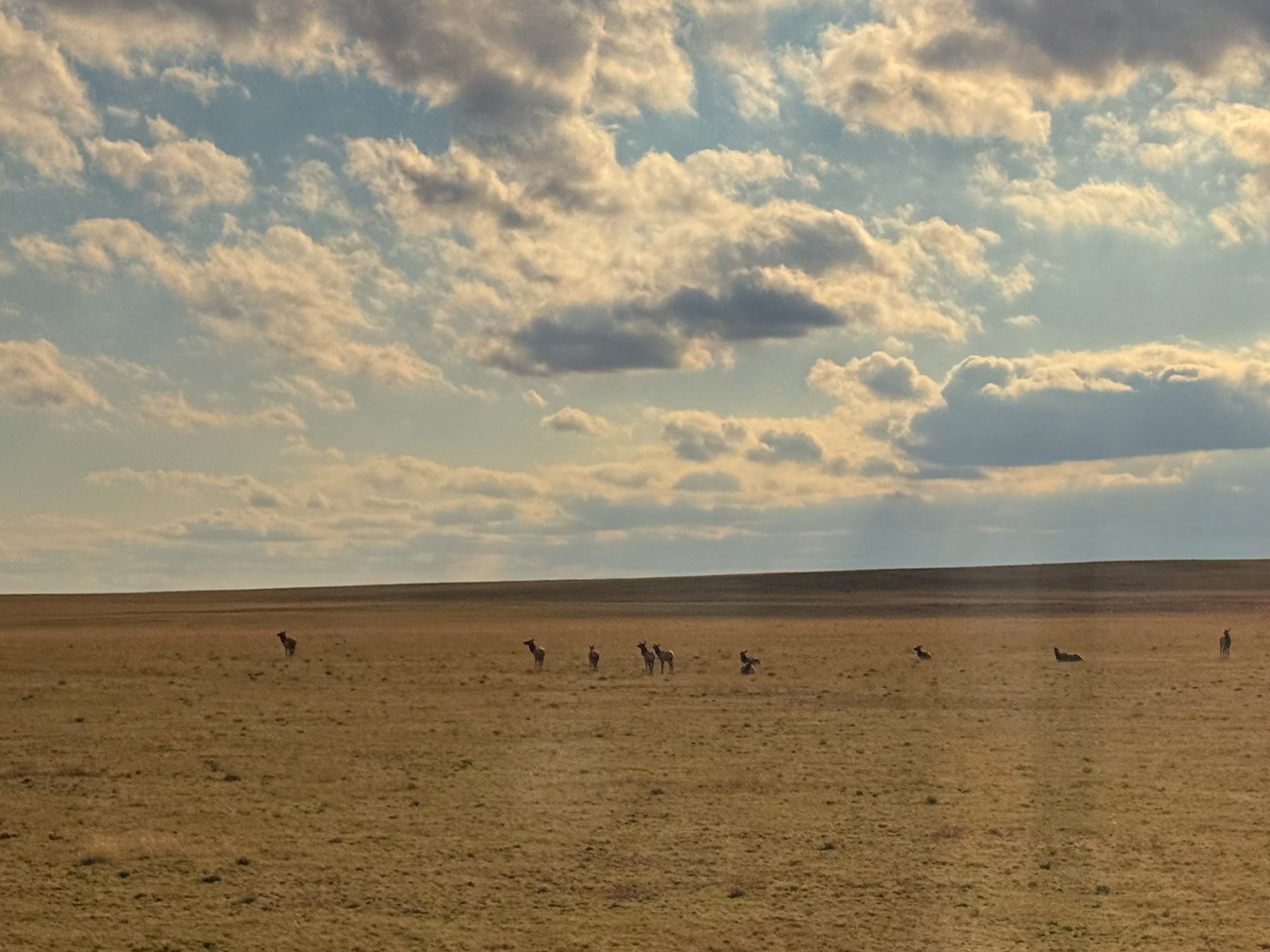
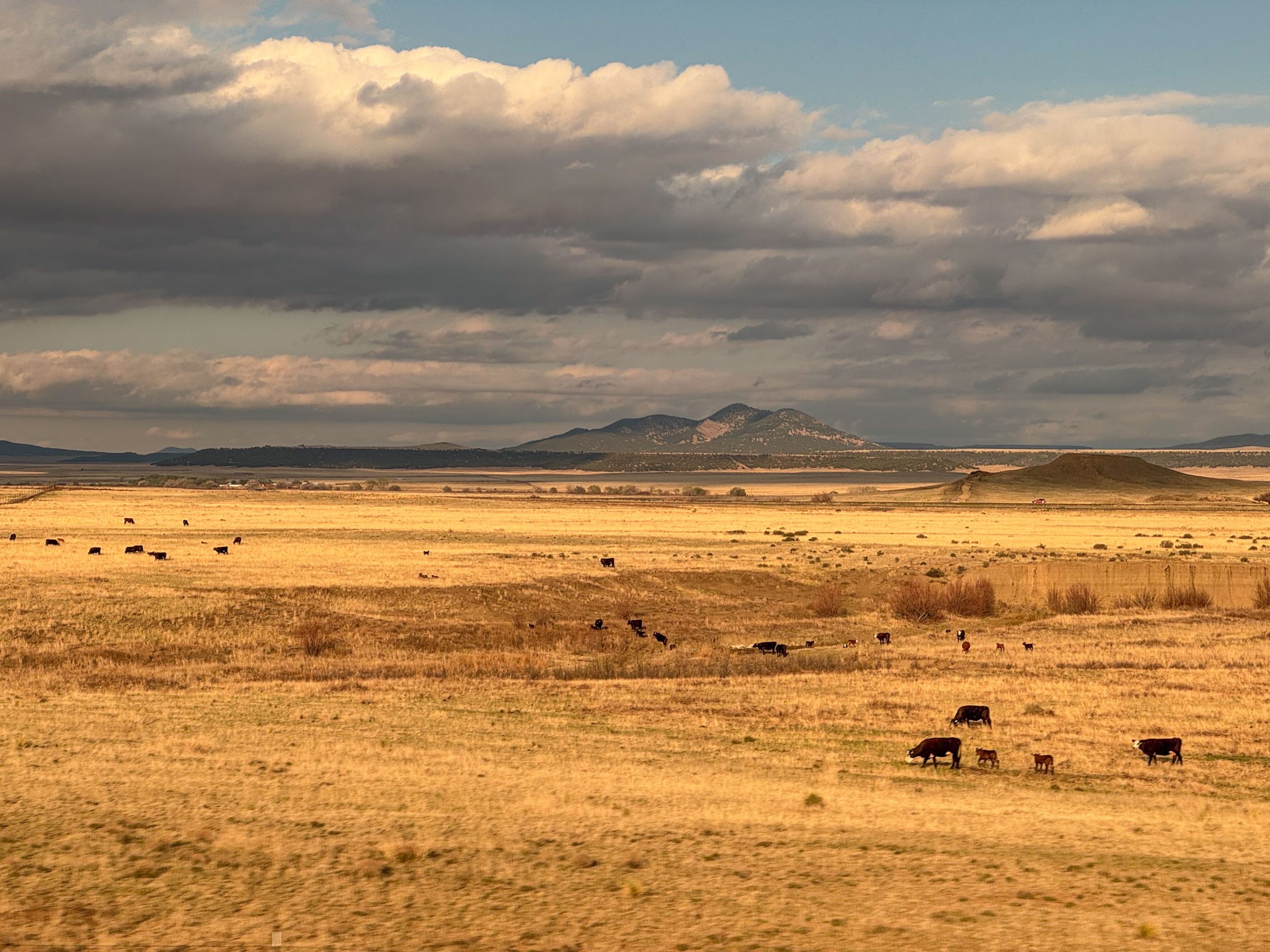
Las Vegas is the edge of the Great Plains and we were soon passing through endless fields. Along with some award winning New Mexico cows (“They are outstanding in their field”, according to Chuck, the train manager and comedian), we saw a herd of elk and wild turkeys. I shared the view with a traveller from Utica, NY on his way home. He was traveling coach on an Amtrak monthly pass and making trips all over the U.S. visiting family and friends.
Our last stop in New Mexico was in Raton. What was supposed to be a 10 minute stop turned into a 5 minute stop and I had to quickly hop on at the back of the train when they blew the whistle and called “All aboard!” Raton Pass separates New Mexico from Colorado and included our only tunnel that I saw in daylight at the highest point on the route at 2,313m (7,588ft).
Colorado
Once through the tunnel, we were in Colorado for a short section (mostly in the dark) before passing into Kansas. The fading light made for difficult photography as we descended the pass.
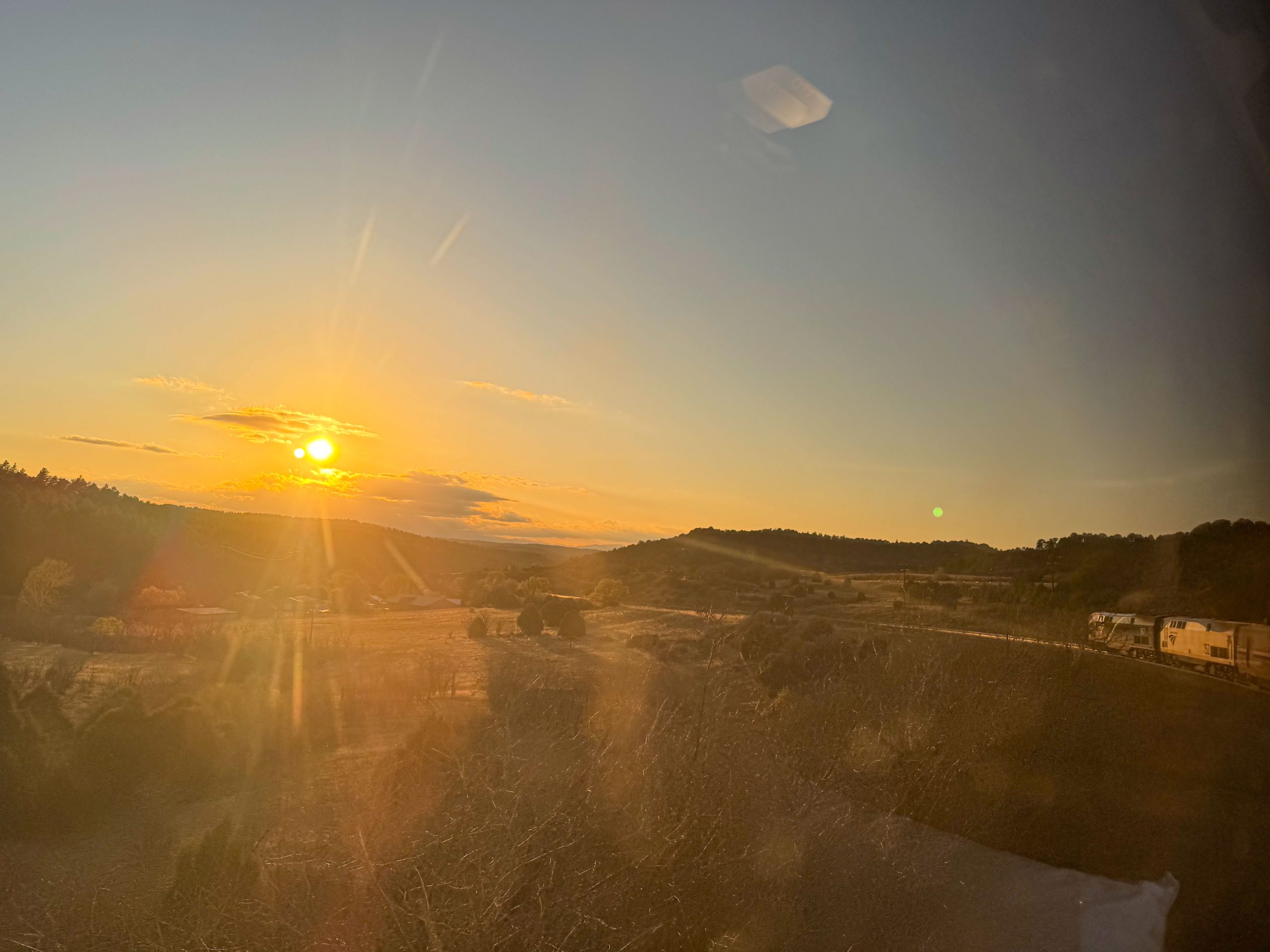
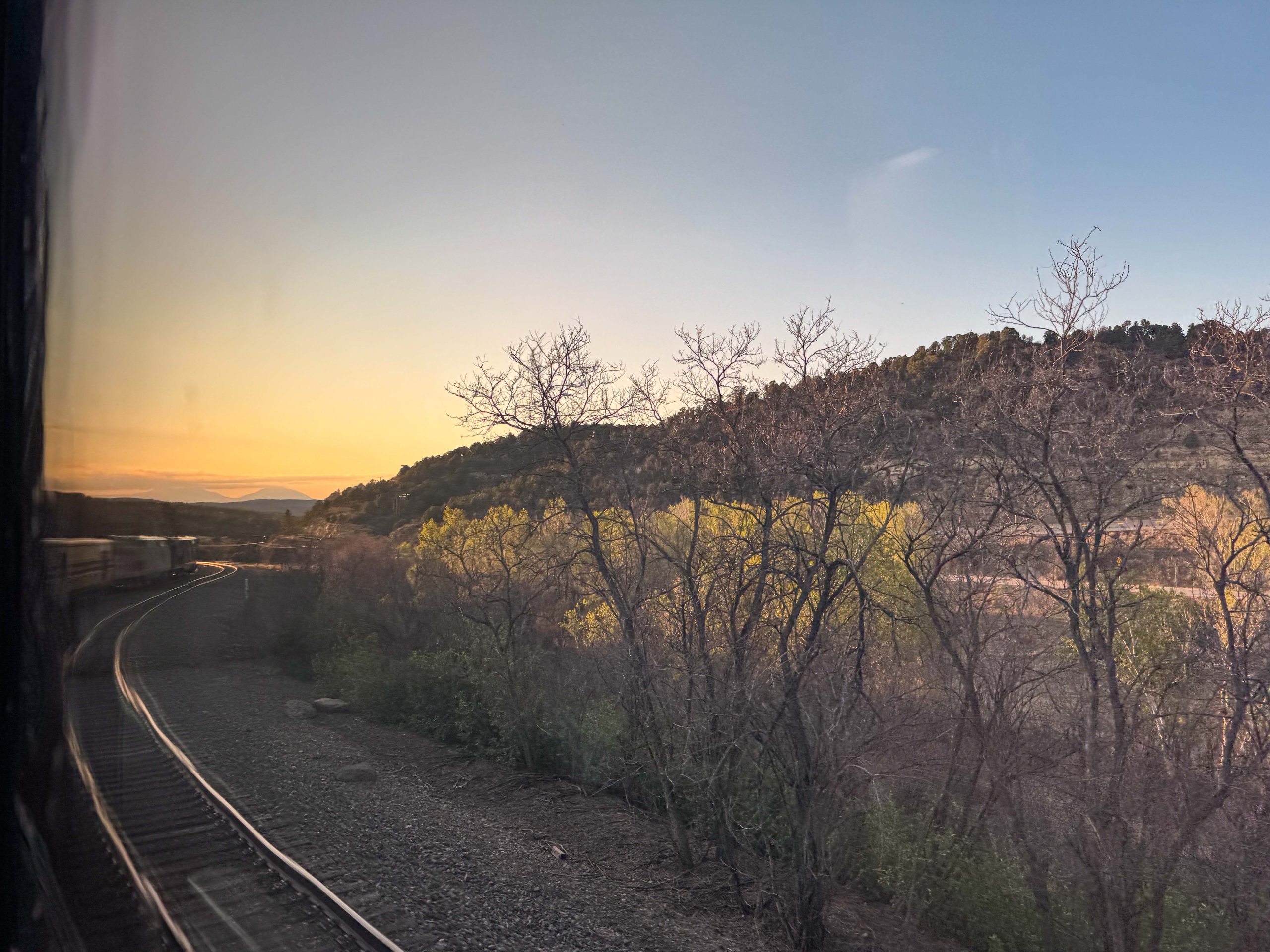
As it got dark, I had my second dinner of the trip. Among the people at my table at dinner was a YouTuber traveling solo by train to various National Parks (Wushu Traveler). She had just been camping on the Channel Islands and was heading to Chicago to meet friends.
The last stop of the night was in La Junta at 9:30pm for a crew change for the train conductors and engineers. Most of the attendants and staff traveled the whole route with us, including Jeremiah who took care of my sleeper car, Chuck who managed the dining car and Rapha in the cafe car. On my first evening Rapha had paged me over the PA system “as the Canadian” when the card reader had an error after I bought a beer. He has to ID everyone so knew where I was from – he had family in Toronto and Montreal so we shared stories about Canada. I should have brought more cash for tips for this hard working crew.
I was able to put my own bed together for the evening after watching Jeremiah the night before. Because I spent so much time in the lounge car and dining car, he did not know when I wanted my bed made up (or taken down). The roomette had a good sound proof door but the curtains still let in a lot of light from the hallway making for significant reflections on the windows – hard to see the stars at night!
Kansas
I woke up to my alarm but was so tired I went back to bed until sunrise. We were over 2 hours late from the schedule and about 40 minutes west of Topeka, the capital of Kansas passing through green fields and farms as the sun came up.
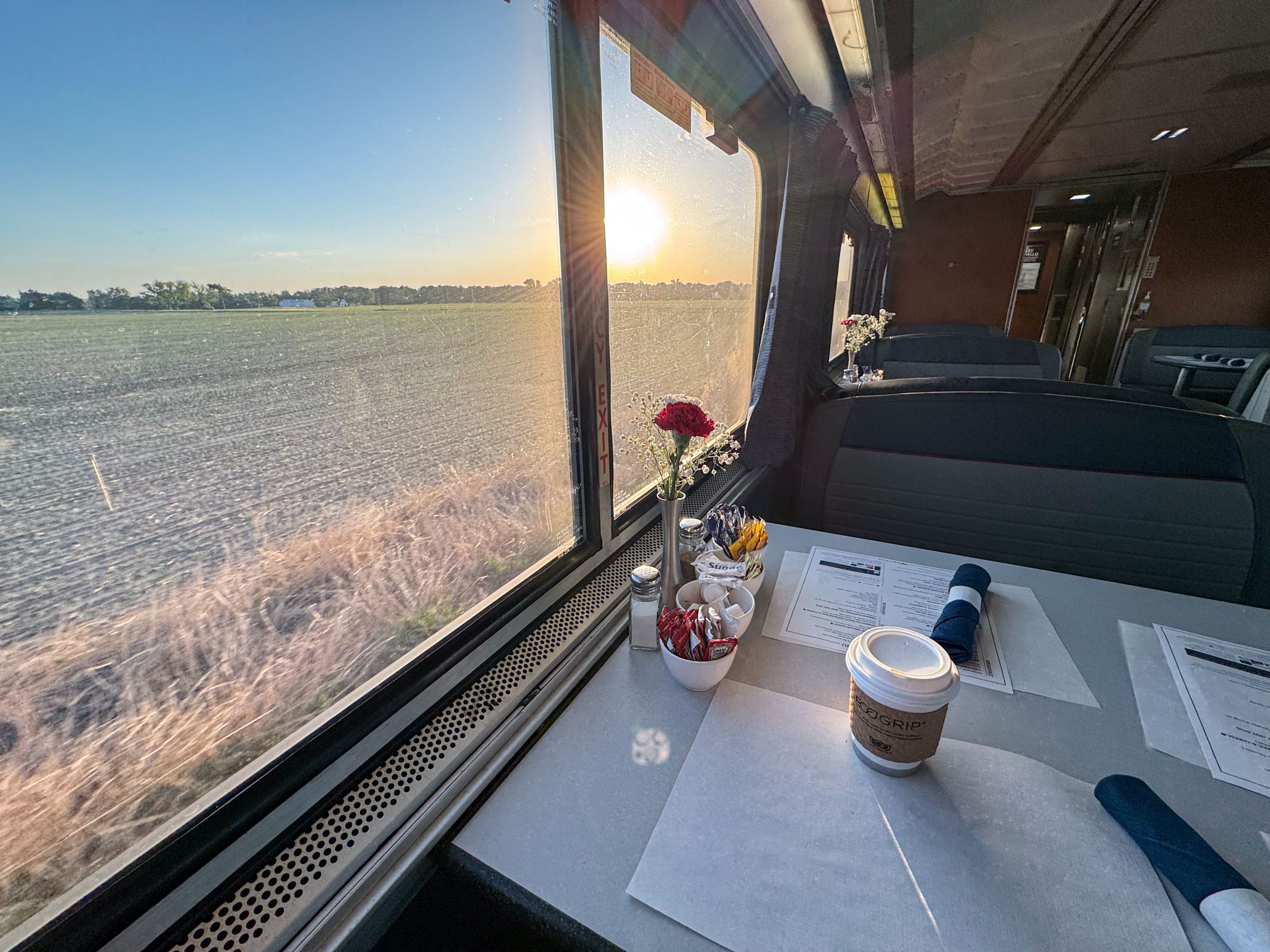
Coffee and “Amtrak’s Signature Railway French Toast” was what I had for breakfast, sharing the table with a couple from Iowa who were heading home after a hiking trip out of Albuquerque.
Missouri
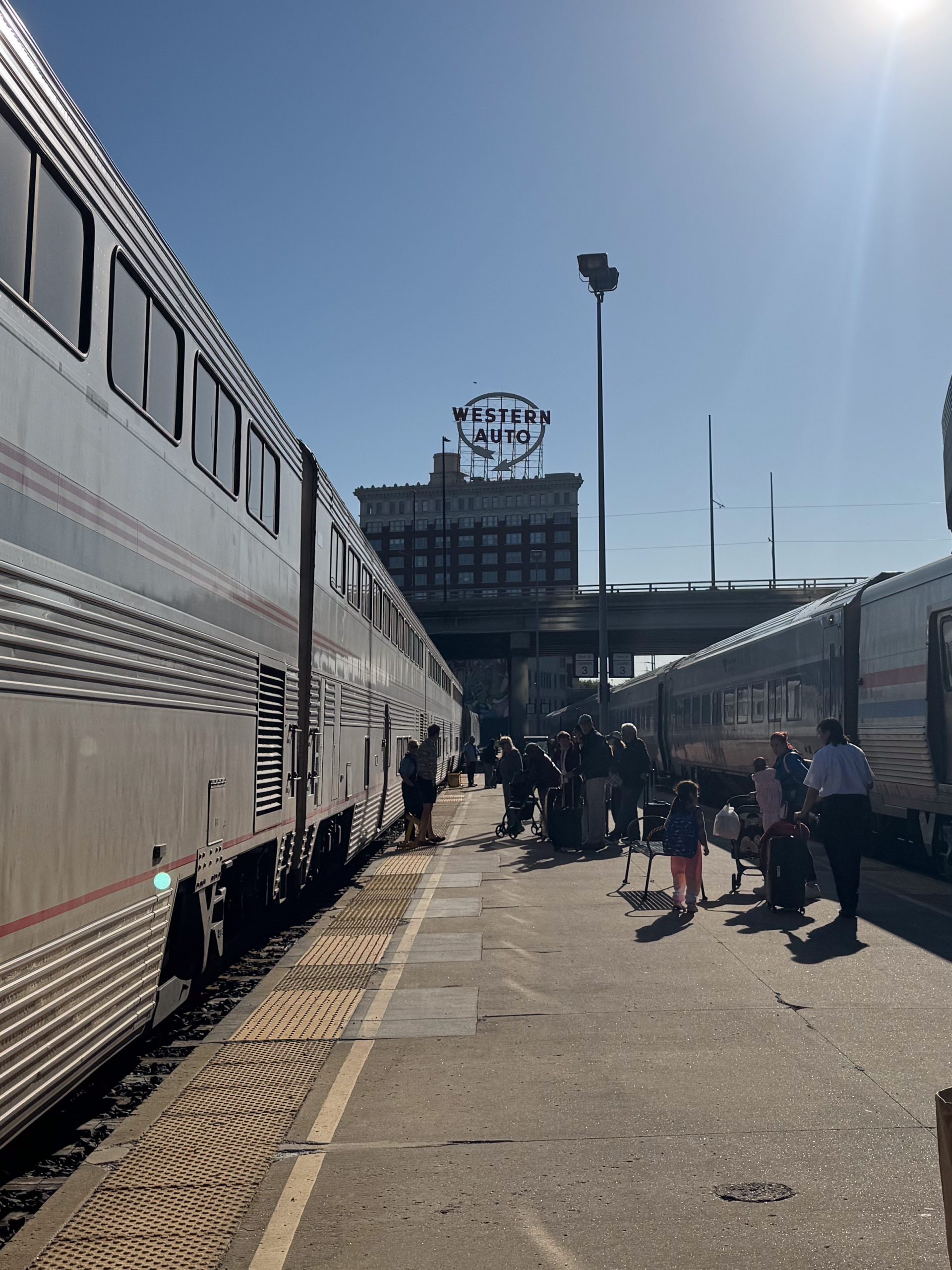
Mid-morning was a long stop in Kansas City, the first chance to stretch our legs for the day. This was the busiest stop on the trip with opportunities for passengers to connect with other Amtrak routes, including to St. Louis.
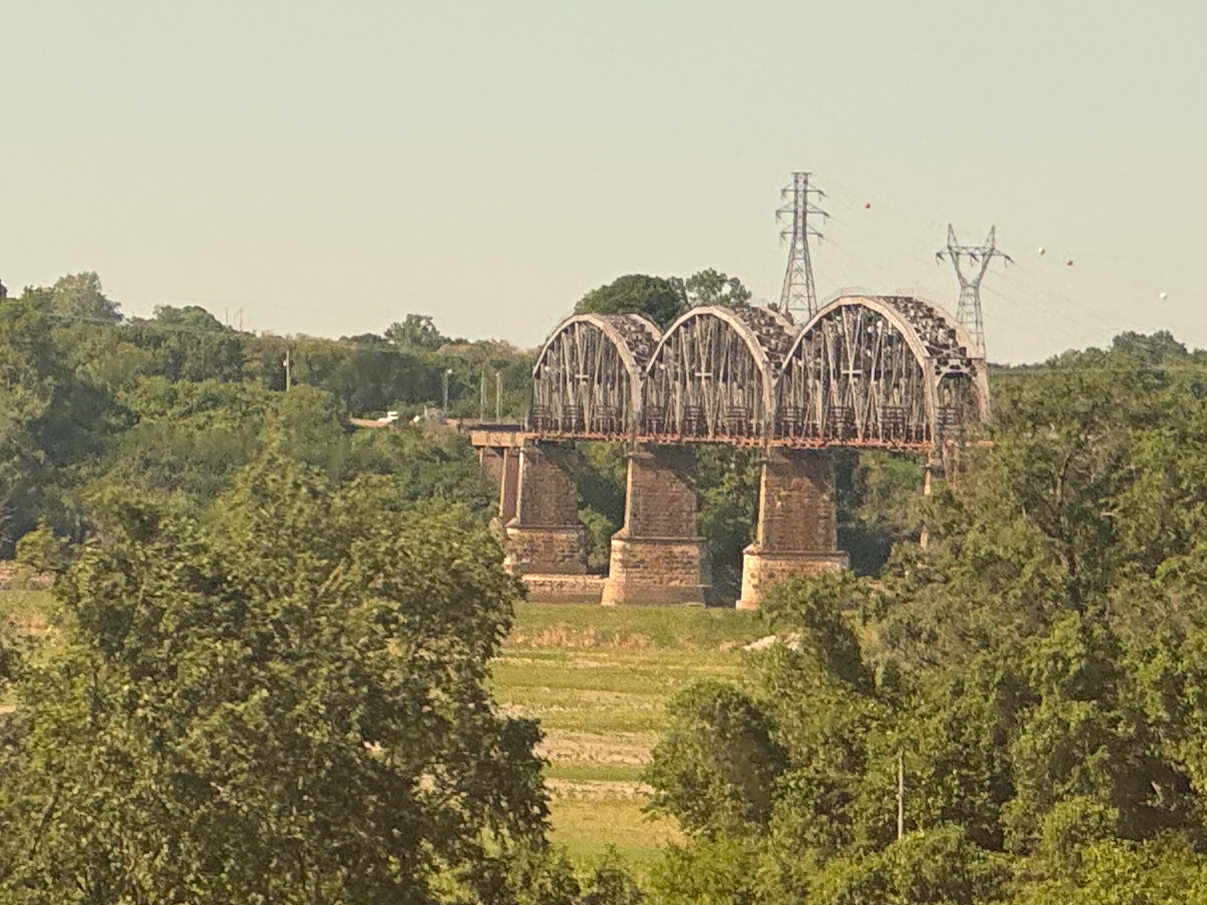
Shortly after leaving Kansas City, we crossed the Missouri River.
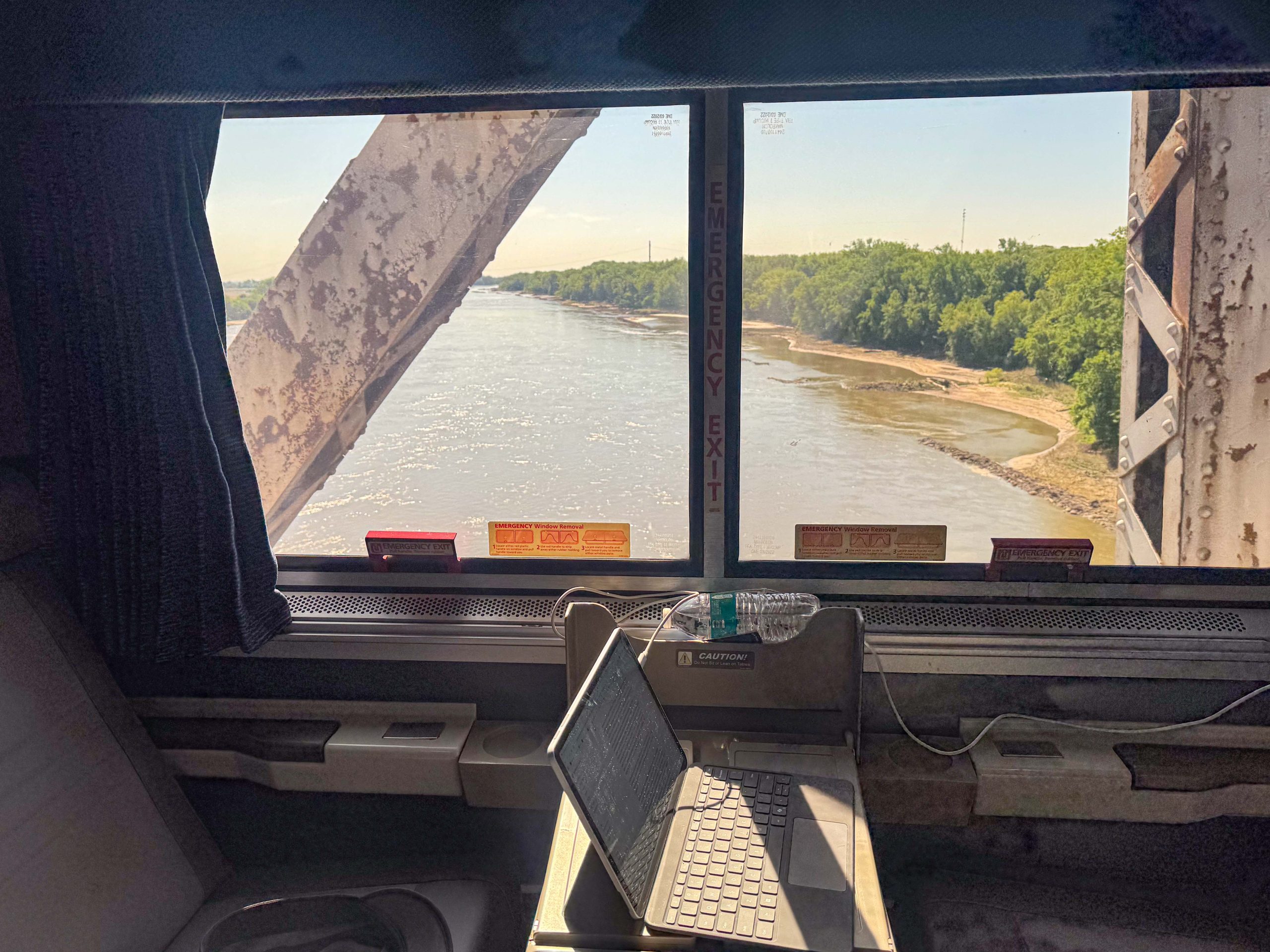
There wasn’t much else of interest in Missouri! I had a nap and watched the fields go by but trees made the views difficult.
Iowa
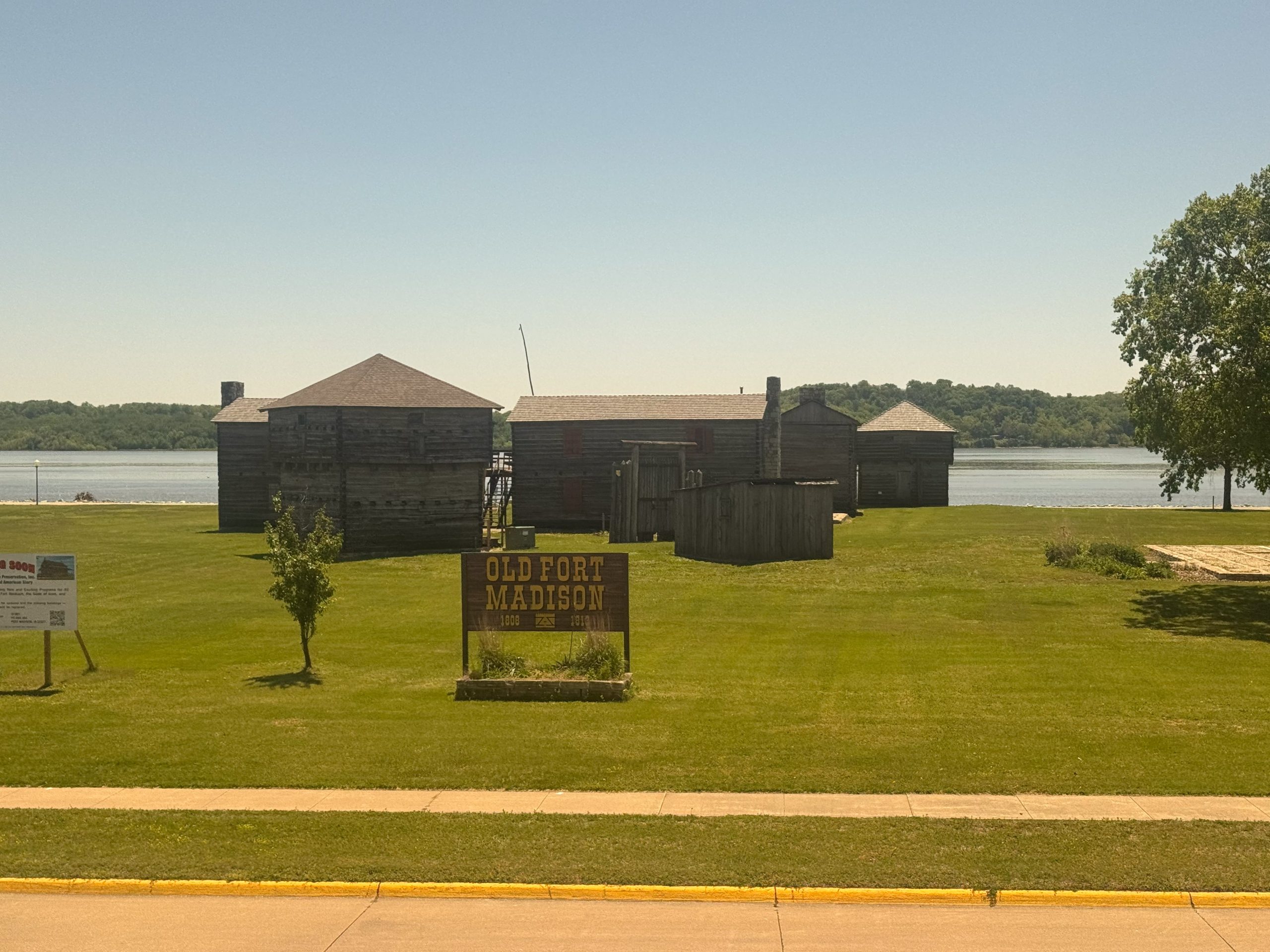
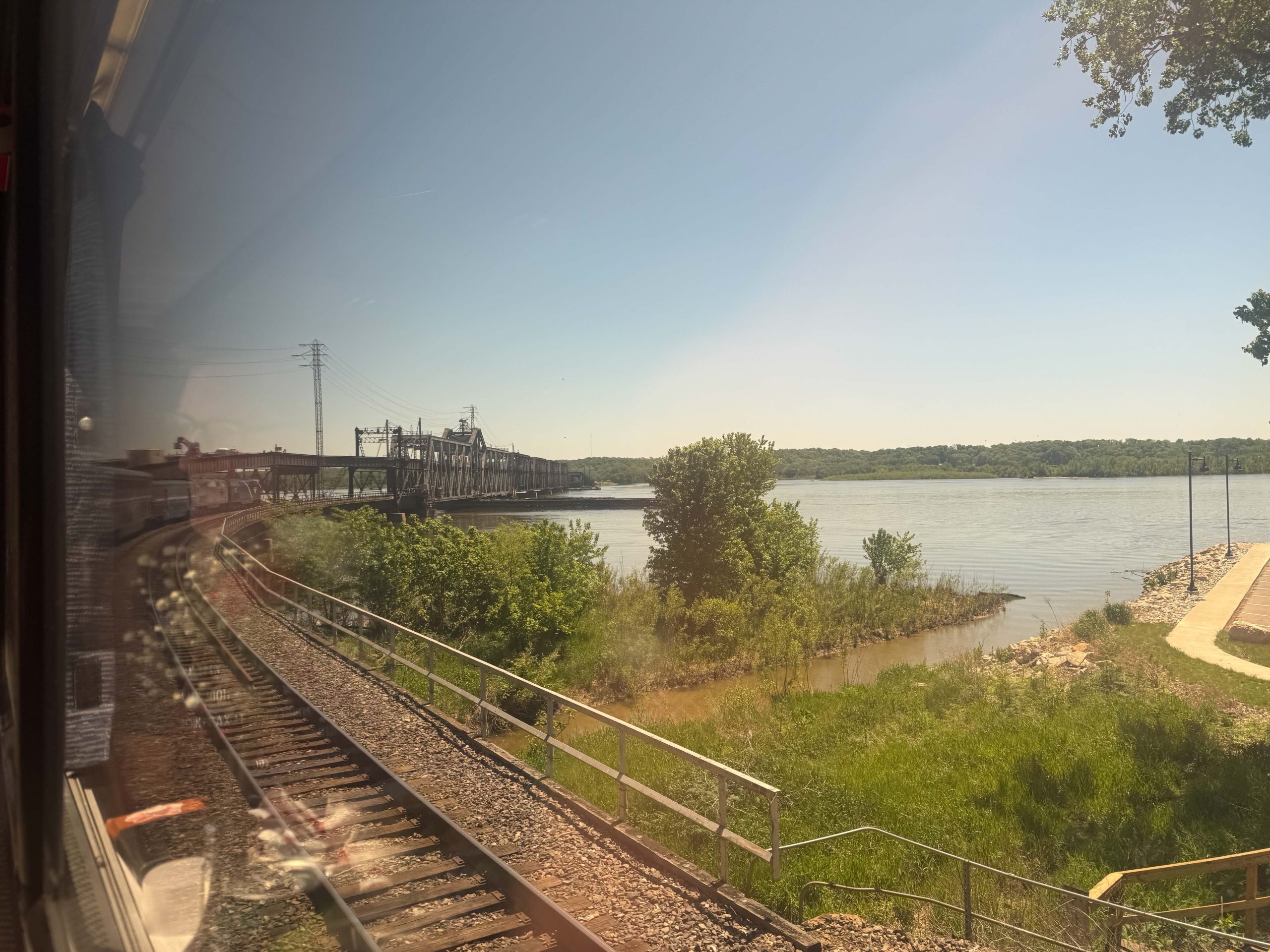
The train is only in Iowa for a short section – perhaps 10km – but stops in Fort Madison. This is where my friends from breakfast were disembarking. After the station stop, we crossed the Mississippi River into Illinois.
Illinois
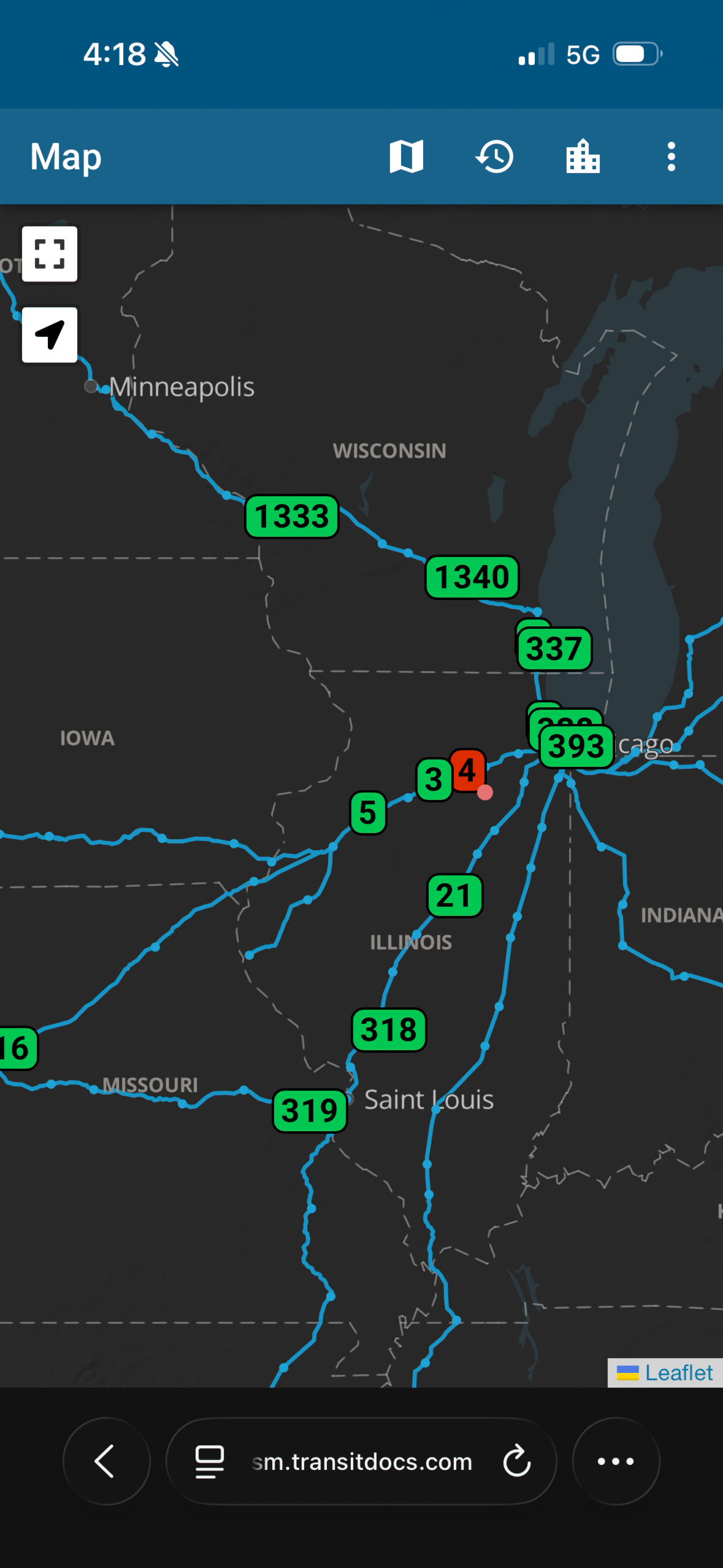
By this point, I was trying to get work done (it was now Monday), the cell coverage was sporadic, and I was tracking our timing as we approached Chicago for my connecting flight since there is not much to see out the window. We hadn’t made up any time and my tracker shows that we were the only late train in the area.
Other than some interesting track arrangements, including some flyovers, even my train guide had run out of points of interest!
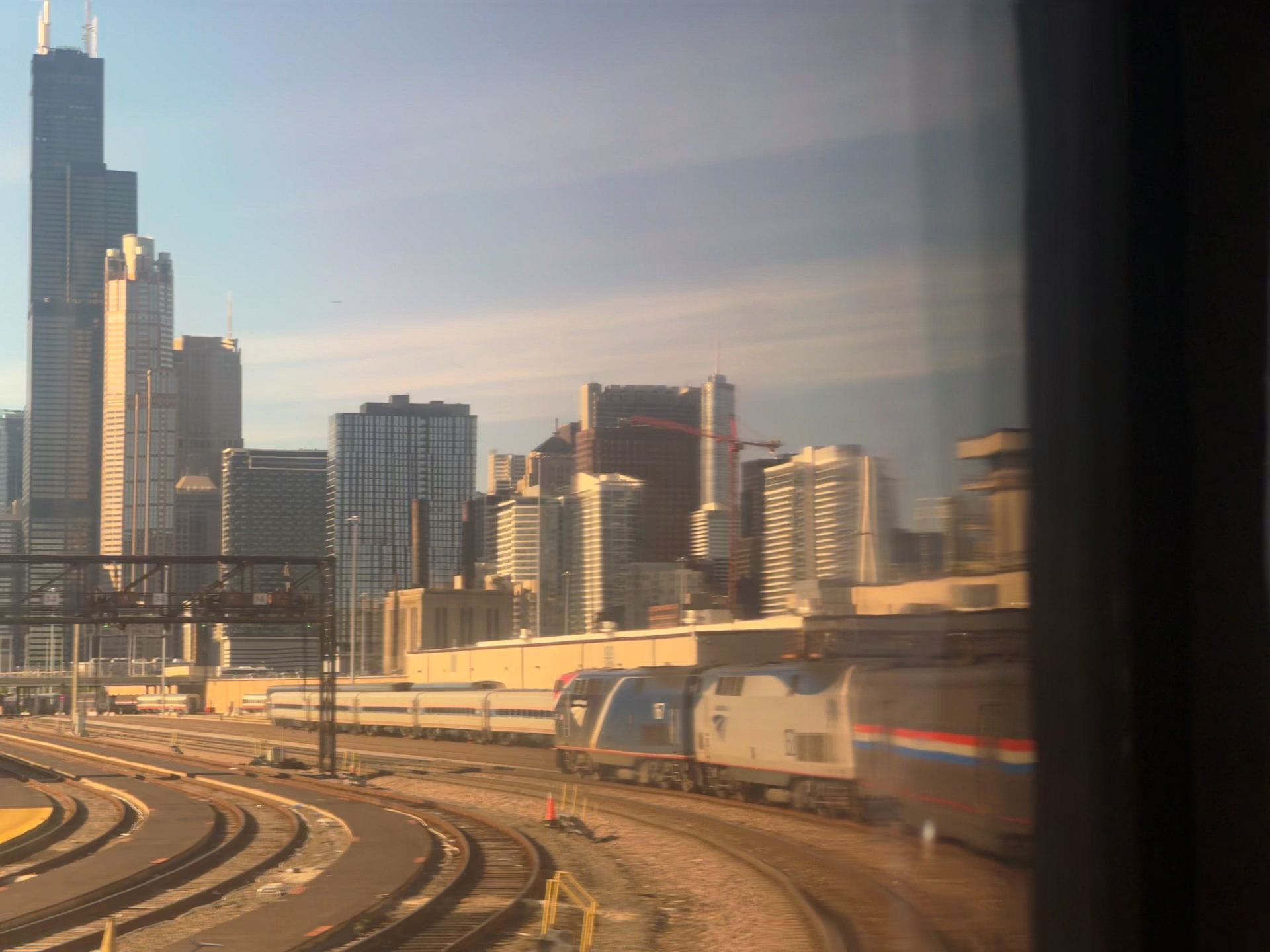
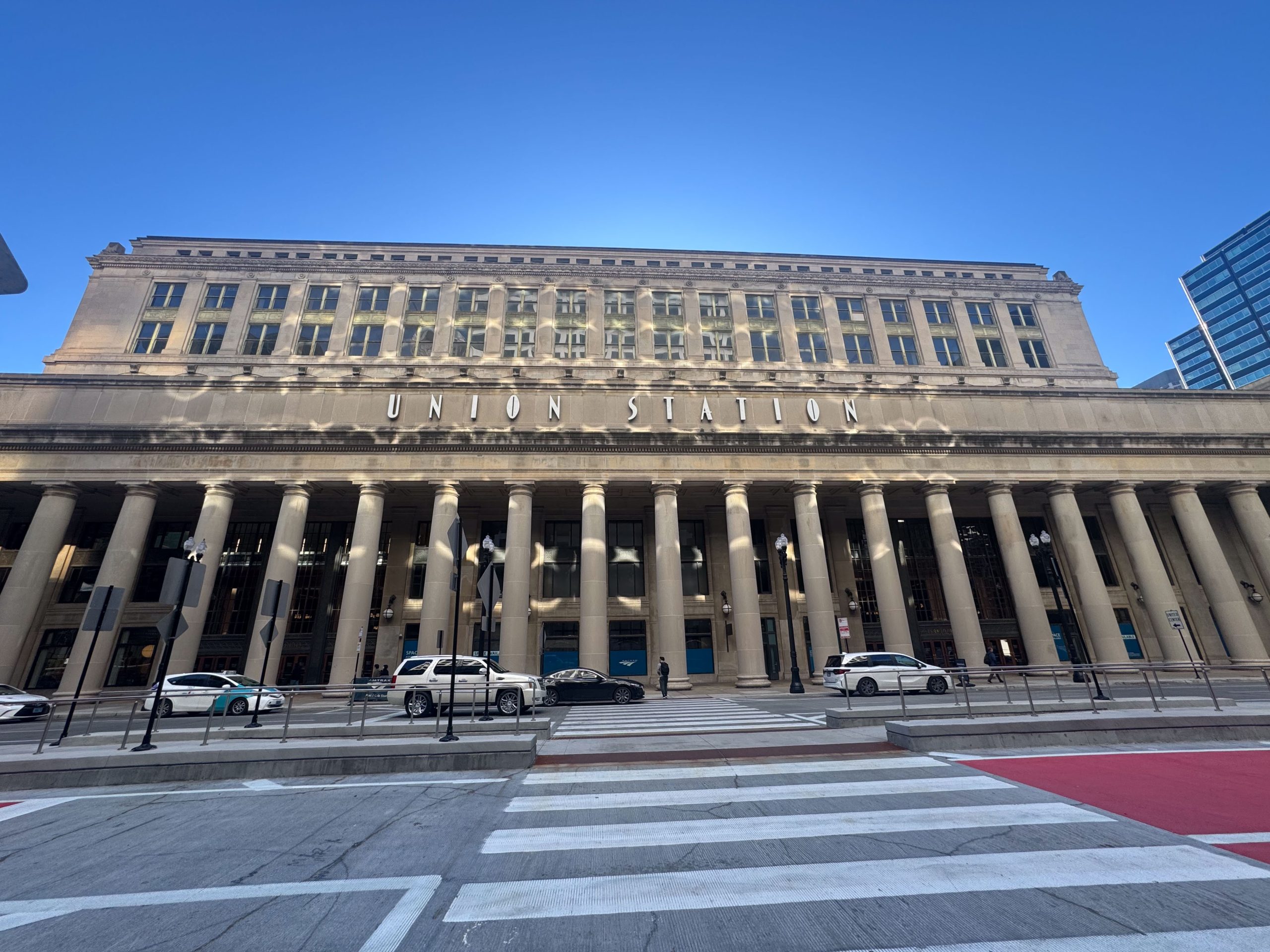
Soon we were entering Chicago with its distinctive skyline and its Union Station. Once we disembarked, I grabbed the subway to the airport for my flight home to Toronto. It would have been nice to try out the Lake Shore Limited from Chicago on to Buffalo but I didn’t have the time on this trip.